
The Debt Avalanche vs. Debt Snowball: Two Payoff Strategies Explained
Understand how the debt avalanche and debt snowball methods work, what they cost over time, and which approach fits different financial situations.
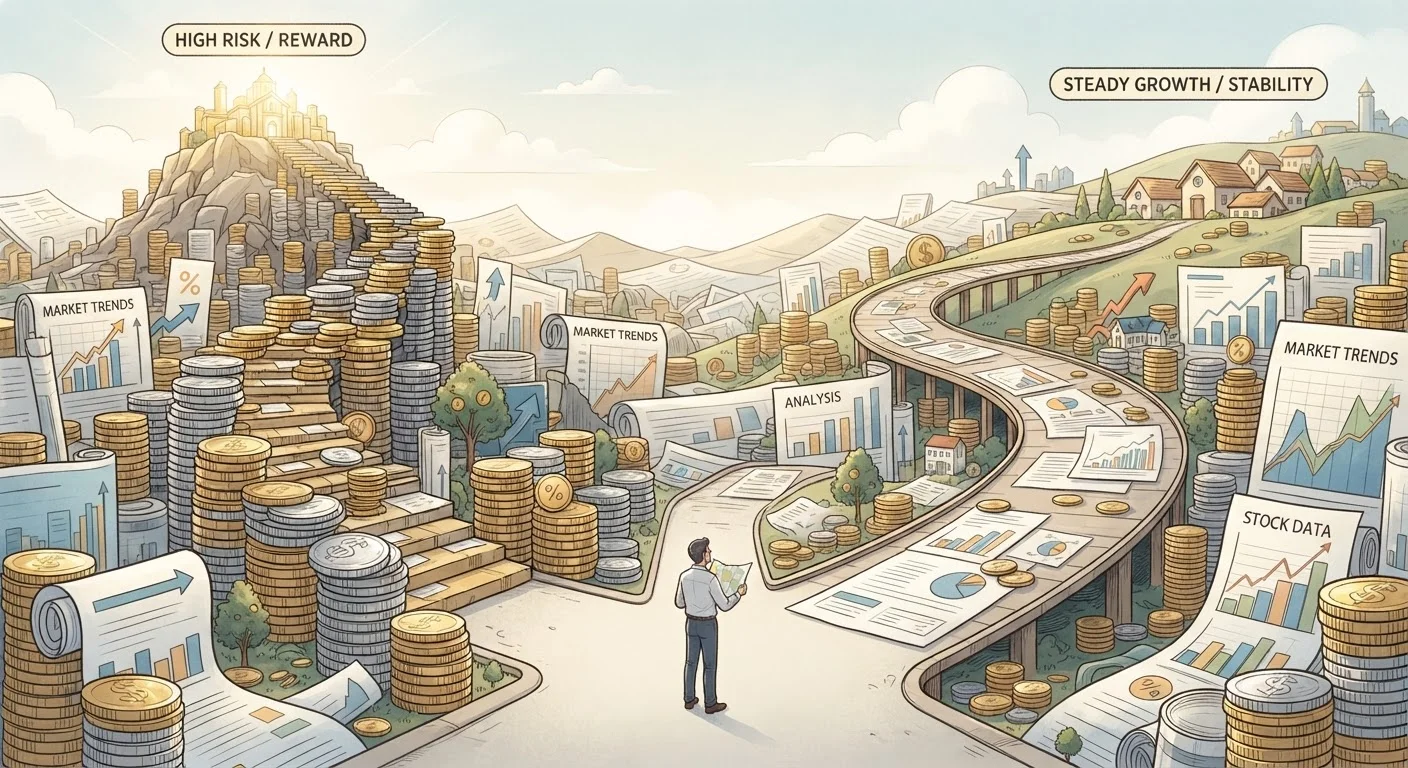
Photo: HorizonMetric.com | One Destination For Everyday Insights editorial
—— In This Article
Key Takeaways
- The debt avalanche targets the highest-interest balance first, reducing the total interest paid over time.
- The debt snowball pays off the smallest balance first, building motivation through quick wins.
- Neither method requires extra income — both work by redirecting freed-up payments to the next debt.
- The avalanche typically saves more money; the snowball often supports better follow-through.
- Choosing a method you'll stick with consistently matters more than choosing the "perfect" one on paper.
- A licensed financial professional can help tailor a debt payoff plan to your specific situation.
How Each Strategy Works
Both the debt avalanche and debt snowball share the same mechanical foundation: you make minimum payments on all debts, then direct every available extra dollar toward one target account at a time. Once that account reaches zero, you roll its payment into the next target — a process sometimes called a "debt roll-up." The difference lies entirely in how you rank those targets.
Debt Avalanche: Rank your debts from highest annual percentage rate (APR) to lowest. Attack the highest-rate balance first regardless of its size. When it's gone, redirect its payment to the next-highest rate, and so on. Because high-interest debt compounds fastest, eliminating it early shrinks the total amount you'll repay.
Debt Snowball: Rank your debts from smallest balance to largest. Pay off the smallest account first regardless of its interest rate. Each account you close gives you a concrete win and frees up one payment to stack onto the next. The strategy, popularized by financial educator Dave Ramsey among others, leans on the motivational power of visible progress.
To understand both in context, see approaches that consistently help people pay down debt faster, which examines the habits associated with sustained repayment.
| Criterion | Debt Avalanche | Debt Snowball |
|---|---|---|
| Payoff order | Highest APR first | Smallest balance first |
| Total interest paid | Lower (mathematically optimal) | Higher (rate not prioritized) |
| Time to first win | Longer (if high-rate debt is large) | Shorter (smallest balance closes fast) |
| Motivational structure | Driven by long-term savings | Driven by frequent milestones |
| Best suited for | Disciplined, goal-oriented savers | Those needing visible, regular progress |
| Complexity | Requires tracking APRs carefully | Simple — sort by balance size |
The Real Cost Difference
The interest savings from the avalanche can be significant. Consider someone with three debts: a $5,000 credit card at 22% APR, a $2,000 medical bill at 0% APR, and an $8,000 personal loan at 11% APR. The avalanche would target the credit card first; the snowball would target the medical bill. Over a multi-year payoff timeline, the avalanche approach could save hundreds to over a thousand dollars in interest, depending on balances and payment amounts.
However, that savings is only realized if you stay the course. Behavioral finance research consistently shows that people who abandon a plan midway end up paying more than those who finish a slightly less optimal plan. This is why the snowball, despite costing more in pure interest terms, has a strong track record among people who have previously struggled with debt repayment consistency.
~$1,000+
Potential interest savings with avalanche vs. snowball
Estimated difference varies widely based on balance sizes, rates, and payment amounts — individual results differ significantly.
77%
U.S. adults carrying some form of debt
According to Federal Reserve surveys, the large majority of American households carry at least one form of debt at any given time.
It's also worth noting that neither method is a substitute for addressing the root causes of debt. Check out common myths about paying off debt to avoid missteps that can quietly extend your repayment timeline.
Choosing the Right Fit for Your Situation
Before picking a method, take stock of your debt profile. List every balance, its interest rate, and its minimum payment. This inventory helps you see both the mathematical case and the emotional one clearly.
If your highest-rate debt is also relatively small, the avalanche and snowball may point you toward the same account — a natural starting point. If your highest-rate debt is a large balance that will take years to clear, ask yourself honestly whether you can maintain momentum without any early wins along the way.
Some people blend the two methods: they wipe out one or two tiny balances first for a quick psychological reset, then shift to an avalanche order for the remaining accounts. This hybrid isn't textbook, but it reflects a practical truth — the method you follow through on is more valuable than the theoretically perfect one you abandon.
Both Methods Assume Extra Payment Capacity
The avalanche and snowball strategies only accelerate payoff if you have at least some amount above the combined minimums to apply each month. If your budget is stretched to minimums only, the priority is first finding room to free up cash — through budgeting or reduced spending. The budgeting basics hub offers practical frameworks for identifying that extra capacity.
If you're also trying to build savings alongside debt repayment, the tradeoffs are worth thinking through carefully. Our article on saving while in debt walks through when that balance makes sense and when it doesn't. And if you're considering consolidating multiple debts into one, review what debt consolidation changes and what it doesn't before deciding.
Finally, be alert to the patterns that quietly derail progress. Ways people undermine their own debt payoff progress covers the habits worth watching for once you're underway.
This article is for general informational and educational purposes only and does not constitute personalized financial, tax, or legal advice. Readers should consult a qualified, licensed financial professional before making decisions about their own debt repayment strategy.

Finance Editorial Team
Finance Editorial Team is the collective byline for our editorial team and contributor network. Articles published under this byline or an editorial pen name are researched, written, and reviewed according to our editorial standards for clarity, consistency, and independence before publication.
View author profile