
Craft Beer Styles Decoded: Ales, Lagers, Stouts, and Everything In Between
A plain-language guide to the most common craft beer styles — what sets them apart, how they're brewed, and what to expect in the glass.
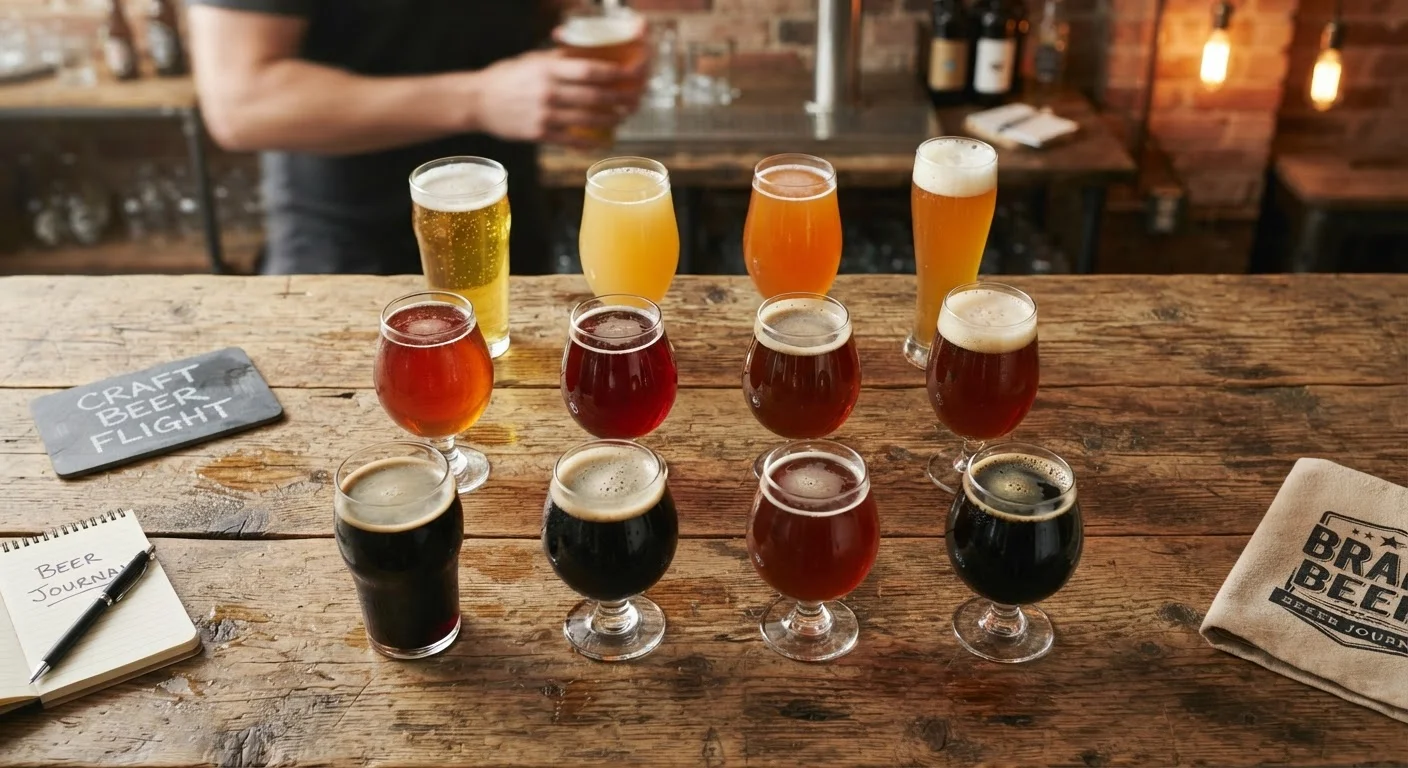
Photo: HorizonMetric.com | One Destination For Everyday Insights editorial
—— In This Article
The Two Families: Ales vs. Lagers
Every beer in existence — from a hazy New England IPA to a crisp German-style pilsner — belongs to one of two fundamental families: ales or lagers. The difference comes down to yeast and fermentation temperature, not ingredients or color.
Fermentation
The process by which yeast consumes sugars in the brewing liquid (wort) and converts them into alcohol and carbon dioxide. The type and temperature of fermentation defines whether a beer is an ale or a lager.
Wort
The sweet liquid extracted from malted grain during brewing, before yeast is added. It contains the fermentable sugars that yeast will convert into alcohol.
Hops
The cone-shaped flowers of the hop plant added to beer during brewing. They contribute bitterness to balance malt sweetness, and can add aromas ranging from floral and citrusy to piney and earthy.
Malt
Grain — usually barley — that has been soaked, sprouted, and dried to activate enzymes that convert starches to sugar. The degree to which malt is roasted determines a beer's color and contributes flavors from biscuity to chocolate to coffee.
Conditioning
A rest period after primary fermentation during which beer clarifies, carbonates, and develops cleaner flavor. Lagers undergo extended cold conditioning, which contributes to their characteristic crispness.
IBU
International Bitterness Units — a standardized scale measuring the concentration of bittering compounds from hops in beer. Higher numbers indicate more potential bitterness, though perceived bitterness also depends on malt character.
Ales use top-fermenting yeast that works at warmer temperatures (roughly 60–75°F). The result is a faster brew with more expressive, fruity, and complex flavors. Most craft beer styles Americans encounter — IPAs, stouts, porters, wheat beers — are ales.
Lagers use bottom-fermenting yeast at colder temperatures (around 35–50°F) and typically condition (rest) for weeks to months. This slower process produces cleaner, crisper, more neutral flavors. The mass-market beers most Americans grew up with — and many underrated craft styles — are lagers.
Understanding this split is the single most useful shortcut when navigating a tap list or bottle shop shelf.
Common Ale Styles and What to Expect
| Number of U.S. craft breweries | Over 9,000 (Brewers Association, 2023) |
| Most popular craft style by volume | IPA (Brewers Association industry data) |
| Typical ale fermentation temperature | 60–75°F (General industry standard) |
| Typical lager fermentation temperature | 35–50°F (General industry standard) |
| Standard ABV for session beers | Under 5% (Brewers Association style guidelines) |
| Yeast types | Top-fermenting (ales) and bottom-fermenting (lagers) |
Ales cover tremendous ground. Here are the styles you're most likely to encounter in American craft beer culture:
- Pale Ale / American Pale Ale (APA): The gateway craft beer. Balanced malt and hops, moderate bitterness, approachable. Often citrusy or floral from American hop varieties.
- India Pale Ale (IPA): The dominant craft style. Highly hopped, ranging from aggressively bitter (West Coast IPA) to soft and juicy (New England / Hazy IPA) to lower-alcohol (Session IPA). Expect big aromas — pine, citrus, tropical fruit, or resin depending on the hops used.
- Stout: Dark, roasty, and rich. Brewed with roasted barley that delivers flavors of coffee, dark chocolate, and sometimes molasses. Dry Irish stouts are lighter-bodied; imperial stouts are thick, high-alcohol, and intensely flavored.
- Porter: The stout's close relative — dark and malt-forward but generally smoother and less roasty. Excellent entry point for drinkers exploring darker beers.
- Wheat Beer: Brewed with a significant proportion of wheat alongside barley malt. American wheat beers are clean and refreshing; German Hefeweizens are unfiltered and carry distinctive banana and clove notes from their yeast.
- Sour Ale: Intentionally tart and acidic, produced through wild fermentation or added cultures. Styles include Berliner Weisse (light and tart), Gose (slightly salty and citrusy), and Flemish-style reds (complex, wine-like).
Lager Styles Worth Knowing
Lagers often get dismissed as generic, but the craft beer world has enthusiastically reclaimed the category. Quality lagers are technically demanding to brew well.
- Pilsner: The world's most popular beer style. Pale gold, brilliantly clear, with a crisp hop bitterness. German and Czech pilsners differ subtly — Czech versions tend to be slightly fuller and softer.
- Munich Helles: Even softer and maltier than a pilsner, with minimal bitterness. Clean, refreshing, and dangerously drinkable.
- Märzen / Oktoberfest: Amber, malt-forward, and medium-bodied. Traditionally brewed in spring and lagered through summer for autumn drinking.
- Dark Lager (Dunkel / Schwarzbier): Uses dark malts but retains lager's characteristic clean finish. Approachable even for drinkers who think they dislike dark beer.
Craft Lagers Are Having a Moment
For years, IPAs dominated craft taps, but many American breweries have shifted attention back to well-made lagers. These 'craft lagers' use quality ingredients and traditional lagering methods that mass-market producers often skip. If you've previously dismissed lager as boring, a craft version from a local brewery may genuinely surprise you.
Reading a Beer Label and Tap List
9,000+
Active craft breweries in the U.S.
According to the Brewers Association's 2023 annual report, the U.S. has more craft breweries operating today than at any point in history.
~24%
Craft beer's share of U.S. beer market by dollars
The Brewers Association reported that craft beer represented roughly 24% of total U.S. beer market revenue in 2022.
100+
Recognized beer style categories
The Beer Judge Certification Program (BJCP) recognizes over 100 distinct beer styles in its official style guidelines.
Two numbers appear on almost every craft beer label and are worth understanding:
- ABV (Alcohol by Volume)
- The percentage of alcohol in the beer. A standard session beer runs 4–5% ABV. Most IPAs land at 6–7.5%. Imperial and double styles can reach 10–15% — closer to wine territory. Knowing ABV helps you pace yourself responsibly.
- IBU (International Bitterness Units)
- A measure of bittering compounds from hops. More IBUs generally means more perceived bitterness, though malt sweetness and hop aroma can make a high-IBU beer taste less harsh than the number suggests. Very bitter beers typically land above 60 IBU; most easy-drinking styles fall below 30.
Tap lists and bottles also often note style, hop varieties, and tasting notes — all of which can help you narrow in on what you'll enjoy. Don't hesitate to ask a knowledgeable bartender or taproom staff member for a small taste before committing to a full pour.

Food Editorial Team
Food Editorial Team is the collective byline for our editorial team and contributor network. Articles published under this byline or an editorial pen name are researched, written, and reviewed according to our editorial standards for clarity, consistency, and independence before publication.
View author profile