
Fermented Foods Beyond Yogurt: A Starter's Map to Kimchi, Kefir, and Kombucha
Get oriented in the world of fermented foods — what they are, how they differ, and how to start exploring them at home.
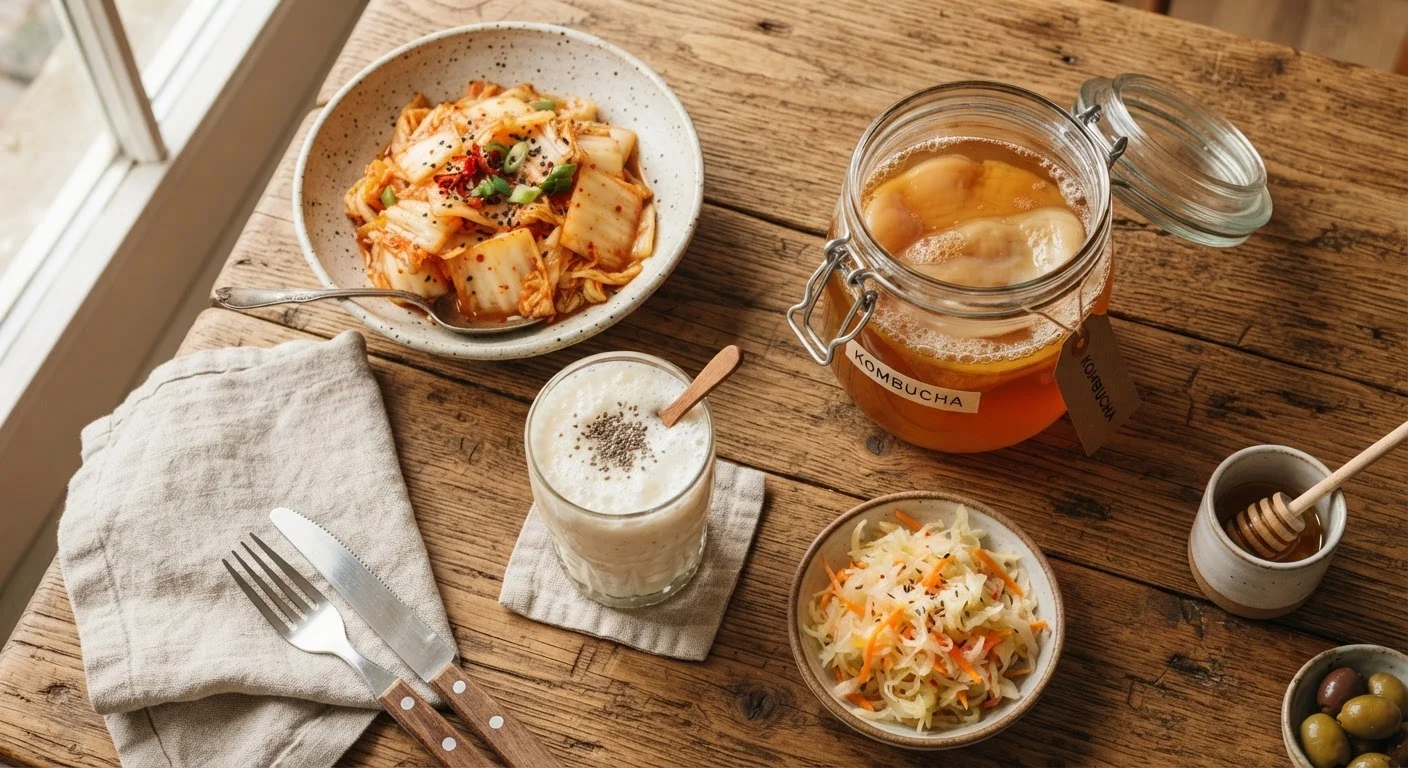
Photo: HorizonMetric.com | One Destination For Everyday Insights editorial
—— In This Article
Key Takeaways
- Fermentation is a natural process where microbes transform food — creating new flavors, textures, and shelf life.
- Kimchi, kefir, and kombucha each use different microbes and starting ingredients, giving each a distinct character.
- You can explore fermented foods by buying them first before committing to making them at home.
- Flavor intensity varies widely — starting mild helps you find what you enjoy without overwhelming your palate.
- Fermented foods are part of food cultures worldwide, and many are now widely available across the US.
What Fermentation Actually Means
Fermentation is one of the oldest food preservation techniques humans know. At its core, it's a biological process: microorganisms — primarily bacteria, yeasts, or a combination of both — consume sugars in food and produce acids, gases, or alcohol as byproducts. Those byproducts are what give fermented foods their signature tang, fizz, and complexity.
Yogurt, which most Americans are already familiar with, is a great reference point. Milk ferments when specific bacterial cultures convert lactose (milk sugar) into lactic acid, thickening the milk and creating that familiar tart flavor. The same basic logic applies across the fermented foods world — the microbes change, the starting ingredient changes, and the result is something entirely new.
Fermentation
A natural process where microorganisms like bacteria or yeast break down sugars in food, producing acids, gases, or alcohol that preserve and transform it.
Lactic acid bacteria (LAB)
A group of bacteria that produce lactic acid during fermentation — responsible for the sour taste in kimchi, yogurt, kefir, and sauerkraut.
SCOBY
Short for Symbiotic Culture of Bacteria and Yeast — the rubbery, living starter culture used to brew kombucha. It ferments sweetened tea into the finished drink.
Kefir grains
Clusters of bacteria and yeast held in a gel-like matrix, used to ferment milk into kefir. They can be reused indefinitely with proper care.
Gochugaru
Korean red pepper flakes used as a key seasoning in kimchi. They give kimchi its characteristic heat and deep red color.
Live active cultures
Living microorganisms still present in a fermented food at the time you eat it, as opposed to products where fermentation is complete but microbes have been removed or killed.
It's worth knowing that not all fermented foods contain live active cultures by the time you eat them. Some are pasteurized or cooked after fermentation, which kills the microbes. Whether or not that matters to you depends on your reasons for exploring fermented foods in the first place.
Meet the Big Three: Kimchi, Kefir, and Kombucha
These three fermented foods get a lot of attention — and for good reason. They're flavorful, culturally rich, and increasingly easy to find in American supermarkets and farmers markets.
Kimchi
Kimchi is a Korean fermented vegetable dish — most commonly made with napa cabbage, but radish, cucumber, and other vegetables are also used. Salt draws water out of the vegetables, creating a brine. Seasonings like garlic, ginger, scallions, and gochugaru (red pepper flakes) are mixed in, and the whole mixture ferments at room temperature before being moved to the refrigerator. The result is crunchy, pungent, spicy, and deeply savory. Kimchi is a staple in Korean cuisine and has become genuinely popular in US kitchens as a condiment, side dish, and cooking ingredient.
Kefir
Kefir is a fermented milk drink that originated in the Caucasus region. It's made by adding kefir grains — clusters of bacteria and yeasts held together in a matrix — to milk. After fermenting for around 24 hours, the grains are strained out and the liquid is a thin, tangy, slightly effervescent drink. Kefir tends to be thinner than yogurt but sharper in flavor. Non-dairy versions made with coconut milk or water (water kefir) are also available for those who avoid dairy.
Kombucha
Kombucha is a fermented tea beverage made using a SCOBY — a Symbiotic Culture of Bacteria and Yeast. Sweetened black or green tea is fermented over one to four weeks, producing a tangy, lightly carbonated drink. Many commercial kombucha products add fruit juice or botanicals after fermentation for additional flavor. You'll find it widely sold bottled in refrigerated sections across the US.
Try Kimchi as a Cooking Ingredient
Beyond eating kimchi straight, try stirring it into fried rice, adding it to a grilled cheese sandwich, or folding it into scrambled eggs. Heat mellows its intensity and adds a savory, tangy depth that works in many everyday dishes. It's a low-effort way to get familiar with the flavor before committing to eating it on its own.
How to Start Exploring Fermented Foods
The smartest first move is to buy before you brew. Most grocery stores — and certainly specialty or natural food stores — carry commercially made kimchi, kefir, and kombucha. Trying them this way costs little, requires no equipment, and lets you figure out which flavors and textures actually appeal to you before investing time or supplies.
- Kimchi: Look for it in the refrigerated section near tofu or international foods. Try it alongside rice or scrambled eggs before deciding if you'd like a spicier or milder version.
- Kefir: Find it near yogurt in the dairy aisle. Plain kefir is a good starting point — flavored varieties can be sweeter and less challenging for new palates.
- Kombucha: Start with a lightly flavored variety (ginger or citrus are crowd-pleasers) rather than an unflavored, very tart brew.
Once you've found what you enjoy, home fermentation is a genuinely rewarding next step. Kimchi is particularly approachable — it needs only a large bowl, a jar, and widely available ingredients. Kefir requires reusable kefir grains (available online or from fermentation communities). Kombucha requires a SCOBY, which friends who brew often share for free.
Fermentation Communities Are a Great Resource
Home fermenters are a genuinely welcoming community. Online forums and local fermentation clubs often share SCOBYs, kefir grains, and kimchi-making tips for free. If you're nervous about your first batch, connecting with experienced home fermenters can give you practical, real-world guidance that goes beyond any single recipe.
What to Expect When You First Try Them
Fermented foods can be an acquired taste. Their flavors are intentionally sharp, sour, or funky — and that can be surprising if your palate is used to milder foods. That's completely normal, and it doesn't mean the food is bad or that fermented foods aren't for you.
Flavor intensity
Kimchi that has fermented longer is more sour and pungent than freshly made kimchi. Kombucha fermented for longer is more tart. If you find a product too intense, try a fresher or more lightly fermented version of the same food — the difference can be significant.
Digestive changes
Some people notice changes in digestion when they introduce fermented foods — often mild bloating or a shift in gut rhythm. This typically settles down. If you have a digestive condition or health concern, it's worth speaking with a healthcare professional before making significant changes to your diet. This article is general food education and is not medical advice.
Building a routine
You don't need to eat fermented foods every day to enjoy them. Many people incorporate them casually — a spoonful of kimchi with dinner, a glass of kefir at breakfast, a kombucha with lunch. Explore at your own pace, and let your taste preferences guide you rather than any sense of obligation.
Frequently Asked Questions

Food Editorial Team
Food Editorial Team is the collective byline for our editorial team and contributor network. Articles published under this byline or an editorial pen name are researched, written, and reviewed according to our editorial standards for clarity, consistency, and independence before publication.
View author profile