
Plant-Based Proteins at the Dinner Table: Tofu, Tempeh, Seitan, and Legumes Compared
Not all plant proteins cook or taste the same. Compare tofu, tempeh, seitan, and legumes to find what works best for different dishes.
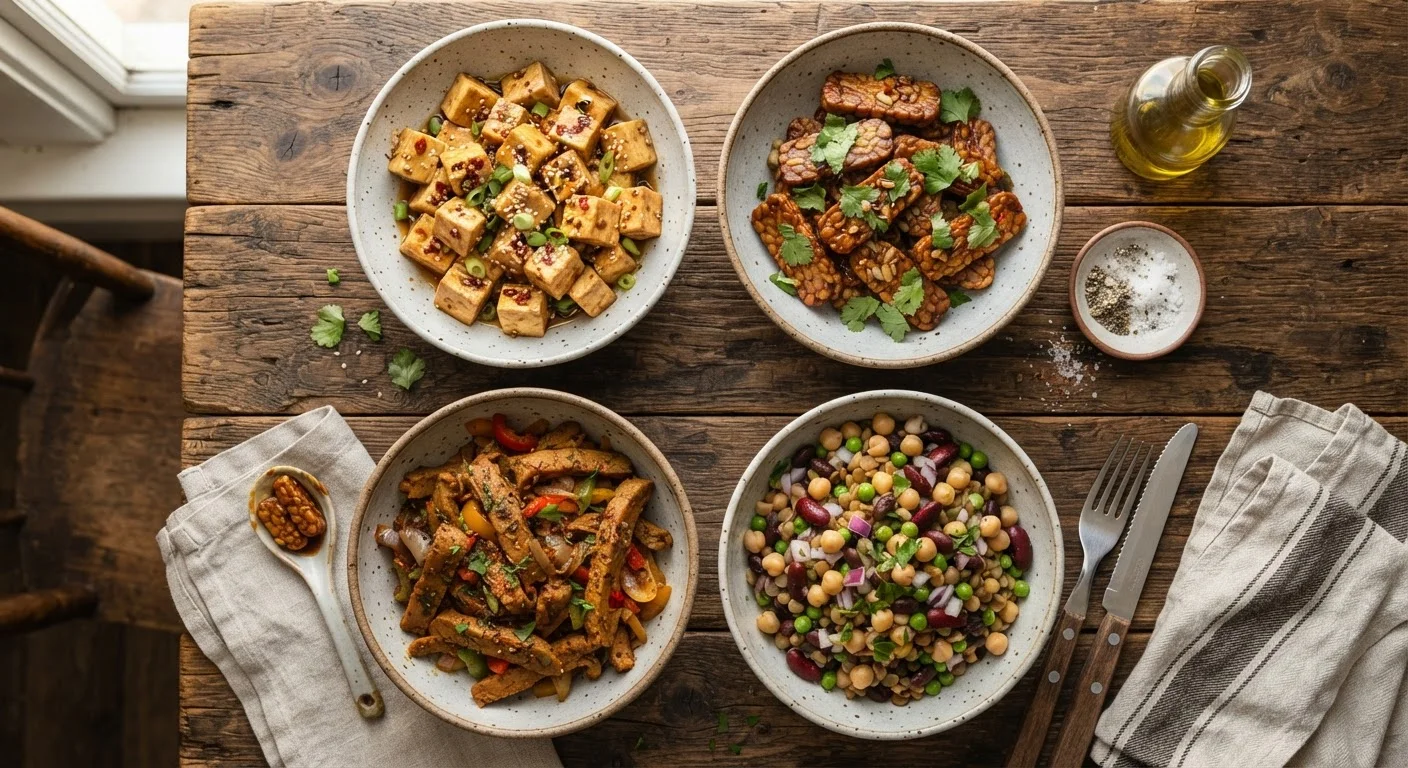
Photo: HorizonMetric.com | One Destination For Everyday Insights editorial
—— In This Article
Key Takeaways
- Tofu is mild and versatile, absorbing marinades well and suiting stir-fries, soups, and baked dishes.
- Tempeh is fermented, denser than tofu, and delivers a nutty flavor with more protein per serving.
- Seitan is wheat-based, chewy, and meaty in texture — not suitable for those with gluten intolerance.
- Legumes like lentils, chickpeas, and black beans are affordable, fiber-rich, and widely available.
- Each protein source has a different amino acid profile; variety across the week supports balanced nutrition.
Why Plant Proteins Vary So Much
Walk down the protein aisle of most grocery stores today and you'll find more plant-based options than ever before. But tofu, tempeh, seitan, and legumes are not interchangeable — they come from different ingredients, carry different nutrients, and behave very differently in the kitchen. Understanding what each one is made of helps you choose the right protein for the right dish, rather than defaulting to the same ingredient out of habit.
For a broader look at how plant proteins compare to animal-based options on amino acid completeness and bioavailability, see our guide to protein sources across every type of diet.
| Tofu | Tempeh | Seitan | Legumes | |
|---|---|---|---|---|
| Main ingredient | Soybeans (curdled) | Fermented soybeans | Vital wheat gluten | Whole beans/lentils |
| Protein per 3 oz (approx.) | 8–9 g | 16–17 g | 20–25 g | 7–9 g (½ cup cooked) |
| Texture | Soft to firm | Dense and firm | Chewy, meat-like | Soft, creamy, or firm |
| Flavor profile | Mild and neutral | Nutty, earthy | Savory, absorbs broth | Earthy, mild to hearty |
| Gluten-free | Yes | Yes (plain) | No | Yes |
| Best cooking methods | Stir-fry, bake, blend | Pan-sear, crumble, grill | Braise, sauté, roast | Simmer, roast, puree |
| Fiber content | Low | Moderate | Very low | High |
| Relative cost | Moderate | Moderate–high | Moderate | Low |
Tofu: The Adaptable Staple
Tofu is made by curdling fresh soy milk and pressing the resulting curds into white blocks — a process similar to cheesemaking. It comes in silken, soft, firm, and extra-firm varieties. Silken tofu blends smoothly into sauces and dressings; extra-firm holds its shape in stir-fries, sheet-pan dinners, and kebabs.
Its mild, almost neutral flavor is both its strength and its challenge. Tofu needs seasoning and marinating to shine. Because it's porous, it absorbs soy sauce, citrus, garlic, and spice blends readily — especially after pressing out excess water. A typical 3-oz serving of firm tofu provides around 8–9 grams of protein and is a source of calcium when made with calcium sulfate.
Press Tofu Before Marinating
Pressing firm or extra-firm tofu for 20–30 minutes before marinating dramatically improves flavor absorption and helps it crisp up in the pan or oven. Wrap the block in a clean kitchen towel and place a heavy skillet on top. The drier the tofu, the better the final texture.
Tempeh: Dense, Fermented, and Flavorful
Tempeh originates from Indonesian cuisine and is made by fermenting cooked soybeans with a mold culture until they form a firm, compact cake. That fermentation process sets it apart: it adds a pleasantly nutty, earthy flavor and partially breaks down the soybeans, which some people find easier to digest than unfermented soy.
Protein content is notably higher than tofu — a 3-oz serving typically contains around 16–17 grams. Tempeh also retains more of the whole bean's fiber. It crumbles well for taco filling, slices cleanly for sandwiches, and holds up beautifully when marinated and pan-seared. Its stronger flavor means it pairs well with bold sauces like smoky barbecue or ginger-miso glazes.
Seitan: The Wheat-Meat Option
Seitan (say-TAN) is made from vital wheat gluten — essentially the protein that remains after wheat starch is washed away. It has the highest protein content of this group, often 20–25 grams per 3-oz serving, and a dense, chewy texture that genuinely mimics the bite of chicken or beef more closely than soy-based options.
This makes seitan ideal for dishes where texture matters most: pulled sandwiches, braised stews, fajita strips, and gyros-style wraps. It takes on flavor from whatever liquid or spice it's cooked in. One important note: seitan is made entirely from gluten and is completely off-limits for anyone with celiac disease or a serious gluten sensitivity.
Seitan Is Not Safe for Gluten Intolerance
Because seitan is made almost entirely from wheat gluten, it is not appropriate for anyone with celiac disease or non-celiac gluten sensitivity. Even small amounts can trigger a serious immune response in people with celiac disease. Always check labels carefully, and choose tofu, tempeh, or legumes as gluten-free alternatives.
Legumes: Affordable, Fiber-Rich, and Foundational
Lentils, chickpeas, black beans, kidney beans, and edamame are among the most nutritionally complete foods available to everyday cooks. Unlike the other proteins in this comparison, legumes are whole foods with minimal processing — and their protein comes packaged with significant dietary fiber, iron, folate, and complex carbohydrates.
Protein per serving varies: lentils offer about 9 grams per half-cup cooked, chickpeas around 7–8 grams. Legumes are generally not complete proteins on their own — meaning they don't provide all essential amino acids in ideal ratios — but eating a varied diet with grains, vegetables, or other plant proteins throughout the day covers that gap naturally. They're also the most affordable option in this group and store well in dried or canned form.
~16 g
Protein in 3 oz of tempeh
Tempeh generally provides roughly double the protein of an equivalent serving of firm tofu, according to USDA FoodData Central.
15 g
Fiber in one cup of cooked lentils
The USDA reports cooked lentils contain approximately 15 grams of dietary fiber per cup, making them one of the most fiber-dense common foods.

Food Editorial Team
Food Editorial Team is the collective byline for our editorial team and contributor network. Articles published under this byline or an editorial pen name are researched, written, and reviewed according to our editorial standards for clarity, consistency, and independence before publication.
View author profile