
Regional BBQ Styles Across America: What Makes Each One Distinct
From Texas brisket to Carolina pulled pork, explore what sets each American barbecue tradition apart in technique, wood, and sauce.
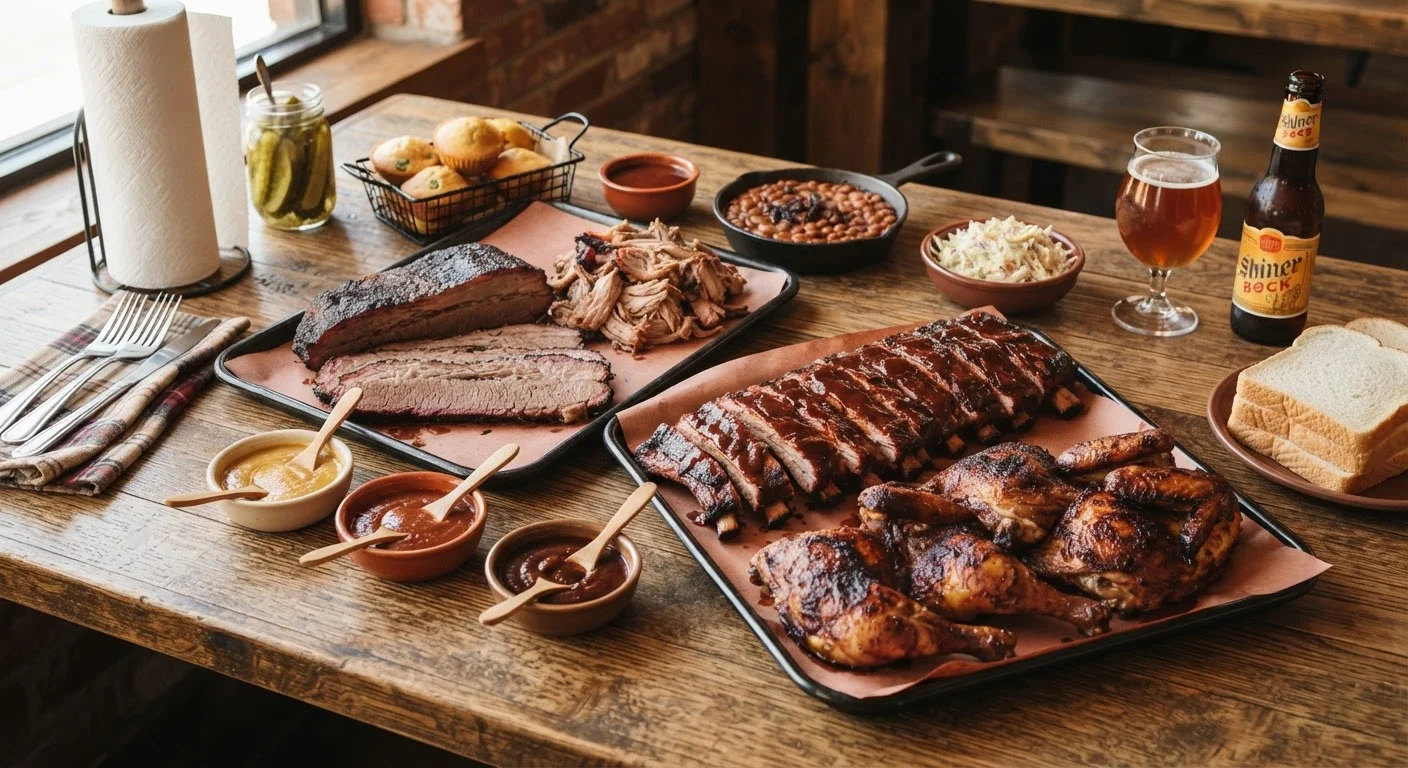
Photo: HorizonMetric.com | One Destination For Everyday Insights editorial
—— In This Article
Key Takeaways
- American barbecue divides broadly into four major regional traditions: Texas, the Carolinas, Kansas City, and Memphis.
- The type of wood used for smoking profoundly shapes the final flavor of the meat.
- Each region favors different cuts — brisket in Texas, whole hog or shoulder in the Carolinas, ribs in Memphis and Kansas City.
- Sauce is central in some traditions and barely present in others — it's never one-size-fits-all.
- These traditions reflect local agriculture, immigrant history, and Indigenous cooking practices.
Texas: Beef Is King
When most Americans picture barbecue, they often imagine something close to the Texas tradition — enormous smoked briskets with a deep, peppery bark and a smoke ring visible in every slice. Texas BBQ is built around beef, and brisket is its crown jewel.
Pitmasters in Central Texas — the style most celebrated nationally — rely on simple dry rubs, typically just coarse salt and black pepper, and long smokes over post oak wood. The goal is to let the meat and smoke speak without interference. Sauce, if offered at all, sits on the side and is rarely considered essential.
East Texas diverges slightly, favoring chopped beef and sweeter, tomato-based sauces. South Texas incorporates barbacoa traditions — slow-cooking beef cheeks or head meat — that reflect deep Mexican culinary influence on the region's food culture.
4
Major regional BBQ traditions in the U.S.
Food historians broadly recognize Texas, the Carolinas, Kansas City, and Memphis as the four foundational American barbecue traditions.
12–18 hrs
Typical cook time for a whole hog
Eastern North Carolina whole-hog pitmasters often smoke a pig for 12 to 18 hours over hardwood coals.
225°F–275°F
Standard low-and-slow smoking temperature
This temperature range is used across nearly all regional BBQ traditions to break down collagen in tough cuts over time.
The Carolinas: Pork and Vinegar
Carolina BBQ is pork-centric and divided into two distinct sub-traditions — Eastern and Western (Lexington-style) North Carolina — plus the unique mustard-based sauce culture of South Carolina.
Eastern North Carolina is one of America's oldest BBQ traditions. Whole hogs are cooked over hardwood coals for 12 hours or more, and the meat is dressed with a thin, sharp vinegar-and-pepper sauce. There are no tomatoes in sight. In Lexington-style BBQ, pork shoulder replaces the whole hog, and a small amount of ketchup enters the sauce — still vinegar-forward, but slightly sweeter.
South Carolina stands apart with its mustard-based sauce, a tradition tracing back to German immigrant communities who settled the region in the 18th century. The yellow sauce is tangy, slightly sweet, and unlike anything found elsewhere in American BBQ.
Try Regional Sauces Side by Side
One of the best ways to understand how different American BBQ traditions taste is to sample vinegar-based, mustard-based, and tomato-based sauces on the same cut of pork. The contrast is striking and makes the regional distinctions immediately clear. Many grocery stores carry bottled versions of each style for an easy comparison at home.
Kansas City and Memphis: The Rib Capitals
Kansas City and Memphis share a love of ribs but express it differently. Kansas City is arguably America's most sauce-obsessed BBQ city. Its signature style involves almost any protein — pork, beef, chicken, even lamb — slathered in a thick, sweet, tomato-and-molasses sauce with heavy smoke from hickory and fruit woods. Burnt ends, the caramelized cubed tips of smoked brisket or pork belly, are a Kansas City invention now beloved nationally.
Memphis is defined by its dry rub ribs. A blend of paprika, garlic, and other spices is pressed into the meat before a long hickory smoke. Ribs ordered "dry" arrive with no sauce at all — the crust of spices is the point. "Wet" ribs do get a thin sauce, but Memphis pitmasters take pride in the rub as the primary flavor vehicle. Memphis also champions pulled pork sandwiches, typically served with coleslaw piled directly on the meat.
“Barbecue is the closest thing we have in the U.S. to Europe's wine or cheese — every region has a distinctly different product rooted in its history and landscape.”
— John Shelton Reed, Co-author of 'Holy Smoke: The Big Book of North Carolina Barbecue'
What Sets Each Tradition Apart
Beyond the marquee regions, American BBQ is remarkably varied. Kentucky is famous for smoked mutton — a tradition rooted in the state's sheep-farming history. Alabama's white barbecue sauce, made with mayonnaise, vinegar, and pepper, is unlike anything elsewhere. Hawaii incorporates Pacific influences with kalua pig, slow-cooked in an underground imu oven, representing its own deeply rooted tradition.
The common thread across all these styles is patience. Every regional tradition is built on low, slow cooking that transforms tough, inexpensive cuts into something tender and deeply flavorful. The differences in wood, rub, cut, and sauce reflect the geography, agriculture, and cultural history of each place — making American barbecue one of the richest food traditions in the country.
BBQ Terminology Varies by Region
The word "barbecue" itself means different things depending on where you are. In the South and much of the Midwest, it refers exclusively to slow-smoked meat. In other parts of the country, it may simply mean cooking outdoors on a grill. Understanding this distinction helps when exploring regional traditions or reading about them in different contexts.
Frequently Asked Questions

Food Editorial Team
Food Editorial Team is the collective byline for our editorial team and contributor network. Articles published under this byline or an editorial pen name are researched, written, and reviewed according to our editorial standards for clarity, consistency, and independence before publication.
View author profile