
Nutrition Labels Decoded: Reading the Fine Print Without a Degree
Serving sizes, % Daily Values, added sugars — a step-by-step walkthrough of what every section of a nutrition label is telling you.
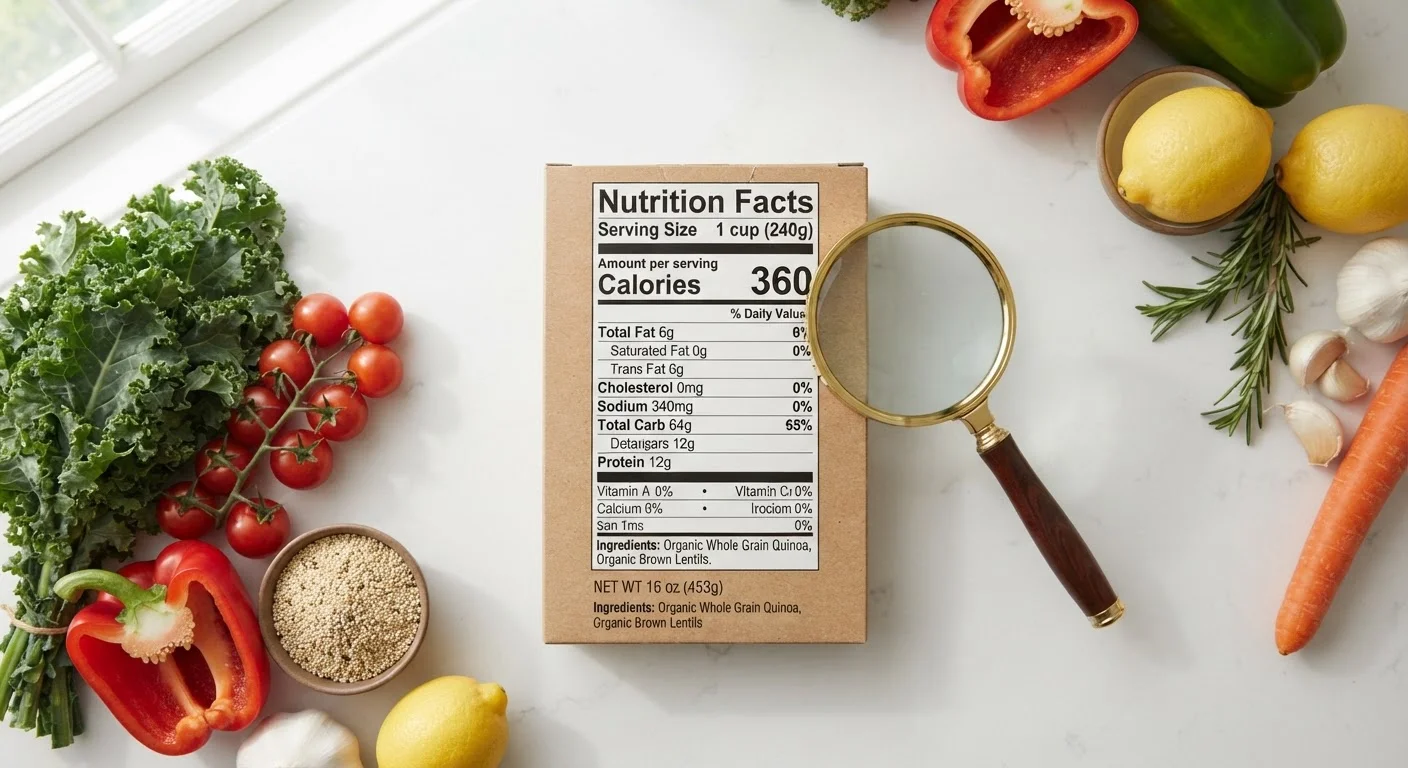
Photo: HorizonMetric.com | One Destination For Everyday Insights editorial
—— In This Article
Key Takeaways
- Serving size is the foundation of every number on the label — always check it first.
- % Daily Value (DV) tells you how much a nutrient contributes to a 2,000-calorie reference diet.
- 5% DV or less is considered low for a nutrient; 20% DV or more is considered high.
- Added sugars are listed separately from total sugars to help you spot hidden sweeteners.
- Ingredients are listed in descending order by weight — the first few dominate the product.
Why Nutrition Labels Exist — and What They're Based On
The Nutrition Facts label is a legal requirement for most packaged foods sold in the United States, governed by the FDA. The current format — updated in 2020 — was redesigned to make the most actionable information easier to find at a glance. Understanding its structure means you're working with the label the way it was intended.
Every figure on the label is based on standardized serving sizes set by the FDA and a reference diet of 2,000 calories per day. That reference point doesn't mean 2,000 calories is the right target for everyone — it's a benchmark that makes % Daily Values consistent across all food products so you can compare them fairly.
What you will need
Before walking through each section step by step, it helps to know what tools you're working with.
Nutrition Facts Label
The FDA-mandated panel on packaged foods that lists calorie content, macronutrients, micronutrients, and % Daily Values.
Ingredients List
Found below or near the Nutrition Facts panel; reveals what's actually in the product, listed by weight from most to least.
How to Read a Nutrition Label, Section by Section
Once you know what each part of the label is communicating, reading it becomes a quick scan rather than a puzzle. Follow these steps the next time you're comparing two products at the store or checking what's actually in a pantry staple.
Start with Serving Size and Servings Per Container
The very first block on any Nutrition Facts label shows the serving size (e.g., 1 cup, 28g) and how many servings are in the entire package. Every single calorie and nutrient figure on the label applies to one serving, not the whole container.
If a box of crackers has 4 servings and you eat the whole box, you need to multiply every number by 4. This one step corrects the most common misreading of nutrition labels.
Check Calories Per Serving
Calories appear in large, bold type directly below the serving information. This number tells you how much energy one serving provides. For general context, the FDA uses a 2,000-calorie daily reference diet — though individual needs vary based on age, sex, activity level, and health status.
Calories alone don't reveal food quality. A 200-calorie serving of almonds and a 200-calorie serving of a frosted cookie both contain 200 calories, but they differ significantly in nutrients.
Scan the Nutrients to Limit
The next section lists nutrients most Americans tend to consume in excess. Look for:
- Saturated fat — linked to cardiovascular risk when eaten in high amounts over time; dietary guidelines recommend keeping this low.
- Sodium — excess intake is associated with high blood pressure in some individuals.
- Added sugars — listed separately from total sugars since the 2020 label update. See our explainer on added vs. natural sugars for why this distinction matters nutritionally.
The % Daily Value column to the right helps you gauge how significant each amount is within a full day's eating.
Look for Nutrients to Prioritize
Lower on the label you'll find nutrients many Americans fall short on. These include:
- Dietary fiber — supports digestive health and helps you feel full longer.
- Vitamin D, calcium, iron, and potassium — nutrients flagged by the FDA because low intake is common and associated with health risks.
A higher % DV for these is generally a positive sign. Foods that deliver meaningful amounts of fiber and key micronutrients are a practical way to build what dietitians call a truly balanced meal.
Use % Daily Value as Your Quick Compass
The % Daily Value (%DV) column is based on a 2,000-calorie reference diet set by the FDA. It shows what fraction of a full day's recommended intake one serving provides for each nutrient.
You don't need to calculate anything — just apply the 5/20 rule: 5% DV or less means the food is low in that nutrient per serving; 20% DV or more means it's high. This applies equally whether you're trying to get more of a nutrient (like fiber) or less of one (like sodium).
Read the Ingredients List
The ingredients list sits below the Nutrition Facts panel and tells you what's actually in the product. Ingredients appear in descending order by weight — so the first ingredient is the most abundant. If sugar, refined flour, or a type of oil appears in the first two or three spots, that ingredient makes up the bulk of what you're eating.
Also scan for ingredients you may need to avoid due to allergies or dietary preferences. Allergen statements are typically bolded or listed separately at the end of the ingredients.
The 5/20 Rule Makes It Simple
A quick shortcut: if a nutrient's % Daily Value is 5% or below, the product is low in that nutrient. If it's 20% or above, the product is high. Use this rule to quickly judge whether a food is a meaningful source of fiber or vitamins — or whether it's loading you up on sodium or saturated fat.
"Serving Size" Is Not a Recommendation
The serving size printed on a label reflects how much people typically eat in one sitting, based on FDA surveys — it is not a suggestion of how much you should eat. A bag of chips listing 7 chips as a serving doesn't mean 7 chips is the right portion for you. Always multiply the nutrient numbers by the actual number of servings you consume.
Labels Are a Guide, Not a Verdict
Nutrition labels give useful context, but no single food defines a healthy diet. A product high in sodium isn't automatically off-limits if the rest of your day is balanced. Use labels as one tool among many, and consider your whole eating pattern rather than any individual item. If you have a specific health condition or dietary restriction, a registered dietitian can give you personalized guidance.
This article is for general informational and educational purposes only and is not a substitute for personalized nutrition or medical advice. Consult a registered dietitian or qualified healthcare professional for guidance specific to your health needs.

Food Editorial Team
Food Editorial Team is the collective byline for our editorial team and contributor network. Articles published under this byline or an editorial pen name are researched, written, and reviewed according to our editorial standards for clarity, consistency, and independence before publication.
View author profile