
Journaling for Emotional Health: A Practical Starting Point
Never journaled before? This guide covers why it works, different formats to try, and how to build a habit that actually sticks.
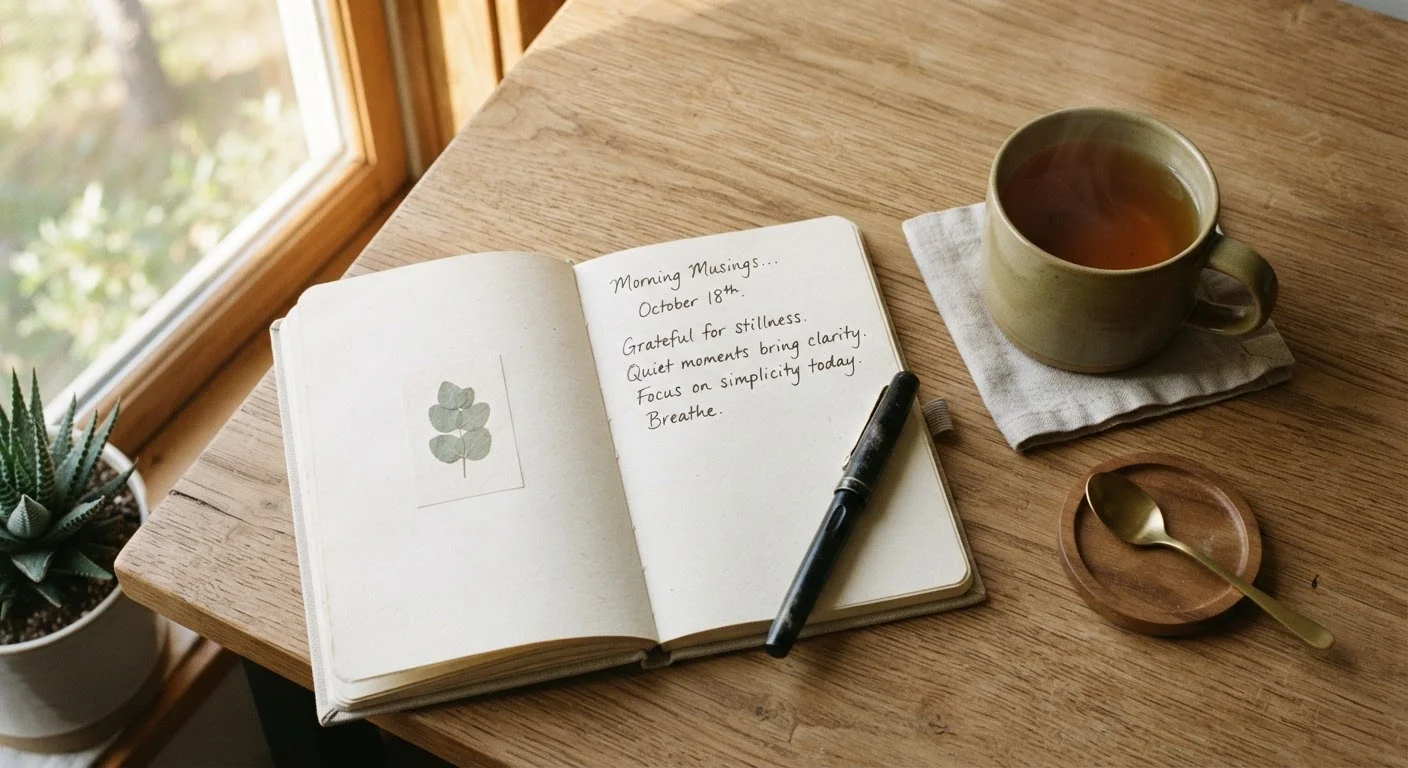
Photo: HorizonMetric.com | One Destination For Everyday Insights editorial
—— In This Article
Key Takeaways
- Journaling is a research-supported tool for processing emotions and reducing stress.
- There is no single correct format — expressive writing, gratitude logs, and bullet journals all offer different benefits.
- Even five minutes a day can build meaningful emotional awareness over time.
- Journaling is a self-help tool, not a substitute for professional mental health care.
- Consistency matters more than length — brief, regular entries outperform occasional marathons.
Why Journaling Supports Emotional Health
Writing about thoughts and feelings is one of the most studied self-help practices in psychological research. The mechanism is straightforward: externalizing emotions onto a page creates cognitive distance, helping you observe your inner experience rather than be consumed by it. This process — sometimes called affect labeling — is associated with reduced emotional reactivity in brain imaging studies.
Pioneered by psychologist Dr. James Pennebaker in the 1980s, expressive writing research has consistently linked regular journaling to improvements in mood, immune function, and stress management. These benefits are general and not guaranteed for every person, but the evidence base is more robust than for many popular wellness habits.
Journaling also pairs naturally with broader emotional self-awareness. If you find it useful, pairing it with a structured check-in routine like the one in this mental health self-assessment framework can help you notice emotional patterns over weeks and months.
You Don't Have to Be a 'Writer'
Many people avoid journaling because they think their writing has to be eloquent or coherent. It does not. Grammar, spelling, and style are irrelevant — the only audience is you. Short, messy, and honest is far more useful than polished and guarded.
Key Concepts to Know Before You Begin
Before picking up a pen, a few foundational ideas make the practice more effective from day one.
Expressive writing
A journaling technique where you write openly and honestly about your thoughts and feelings without self-editing. It is the format most commonly used in research on journaling and emotional health.
Affect labeling
The act of putting feelings into words. Research suggests this reduces emotional intensity by engaging the thinking parts of the brain, helping you feel more in control of difficult emotions.
Rumination
The habit of repeatedly going over the same negative thoughts without resolution. Journaling done without reflection can sometimes deepen rumination, so directing your writing toward insight matters.
Habit anchoring
A behavior-change strategy where you attach a new habit to an existing one — for example, journaling right after brushing your teeth. It removes the need to decide when to do it each day.
Cognitive distance
The mental separation you create when you observe your thoughts from the outside rather than being caught up in them. Writing creates this distance, which can make overwhelming emotions easier to process.
Understanding these concepts helps you approach journaling as a deliberate practice rather than a vague diary habit. The distinction matters: intentional writing engages reflection; venting without structure can sometimes reinforce rumination rather than resolve it.
Formats to Try: Finding What Fits You
There is no single correct way to journal. Different formats serve different needs, and many people rotate between them depending on what a given day calls for.
- Expressive writing: Write freely about whatever is emotionally present, without editing or judging. This is the format most studied in research. Aim for uninterrupted writing for 10–20 minutes.
- Gratitude journaling: Note two or three specific things you appreciated that day. Research suggests this shifts attention toward positive experiences over time, though the effect is modest and not universal.
- Bullet journaling: A structured, list-based system that tracks tasks, moods, and events. Better for people who find freewriting overwhelming.
- Prompt-based journaling: Respond to a single question — for example, 'What am I avoiding right now?' or 'What would I tell a friend in my situation?' Prompts lower the barrier to starting.
- Letter writing: Write an unsent letter to a person, your past self, or your future self. Useful for processing complicated relationships or transitions.
Experiment without commitment. There is no failure in trying a format and deciding it does not suit you.
Digital vs. Paper: A Practical Note
Most journaling research has been conducted using handwriting, and some evidence suggests the slower pace of writing by hand encourages deeper reflection. That said, the most important factor is accessibility — if a notes app on your phone means you actually do it, that is the right choice for you. Privacy settings matter either way: ensure your journal is stored somewhere you feel safe being honest.
Building a Habit That Actually Sticks
Most journaling habits fail not because the practice is hard, but because expectations are too high. Skipping a day feels like quitting, so people quit. Reframing consistency helps: one entry per week beats zero.
A few evidence-informed strategies for habit formation apply here:
- Anchor journaling to an existing routine — writing immediately after morning coffee or before bed removes the decision of when to do it.
- Keep your journal visible — a notebook on your nightstand is more likely to be used than one in a drawer.
- Set a minimum, not a maximum — committing to two sentences is far more sustainable than committing to a page.
- Treat missed days as data, not failure — if you skip often, the time or format may not be right. Adjust rather than abandon.
Tracking your mood alongside entries — even with a simple number or emoji — gives you meaningful data over time. After a month, patterns often emerge that are genuinely useful for self-understanding.
When Journaling Isn't Enough
Journaling is a self-help tool, and like all self-help tools, it has limits. It is not a treatment for depression, anxiety disorders, trauma, or any clinical mental health condition. If your emotional distress is persistent, intensifying, or affecting your daily functioning, that is a signal to seek professional support.
It can be helpful to understand where journaling fits relative to other options. This guide comparing therapy and self-help offers a grounded look at when professional care is the more appropriate path.
If someone you care about is struggling and you are not sure how to help, the guidance in this article on talking to someone who is struggling emotionally is a practical place to turn.
Journaling Is Not a Crisis Tool
If you are experiencing thoughts of self-harm, suicidal ideation, or a mental health emergency, please reach out to a qualified professional or a crisis line immediately. Journaling is a wellness habit for everyday emotional maintenance — it is not designed to address acute mental health crises, and using it as a substitute for urgent care can delay necessary help.
This article is for general informational and educational purposes only and is not a substitute for professional medical or mental health advice. If you are experiencing a mental health crisis or emergency, please contact a qualified healthcare provider or call a crisis helpline immediately.
Frequently Asked Questions

Health Editorial Team
Health Editorial Team is the collective byline for our editorial team and contributor network. Articles published under this byline or an editorial pen name are researched, written, and reviewed according to our editorial standards for clarity, consistency, and independence before publication.
View author profile