
Mindfulness vs. Meditation: Clearing Up the Confusion
The two terms get used interchangeably, but they're not the same thing. Here's a clear side-by-side look at what each involves and how they differ.
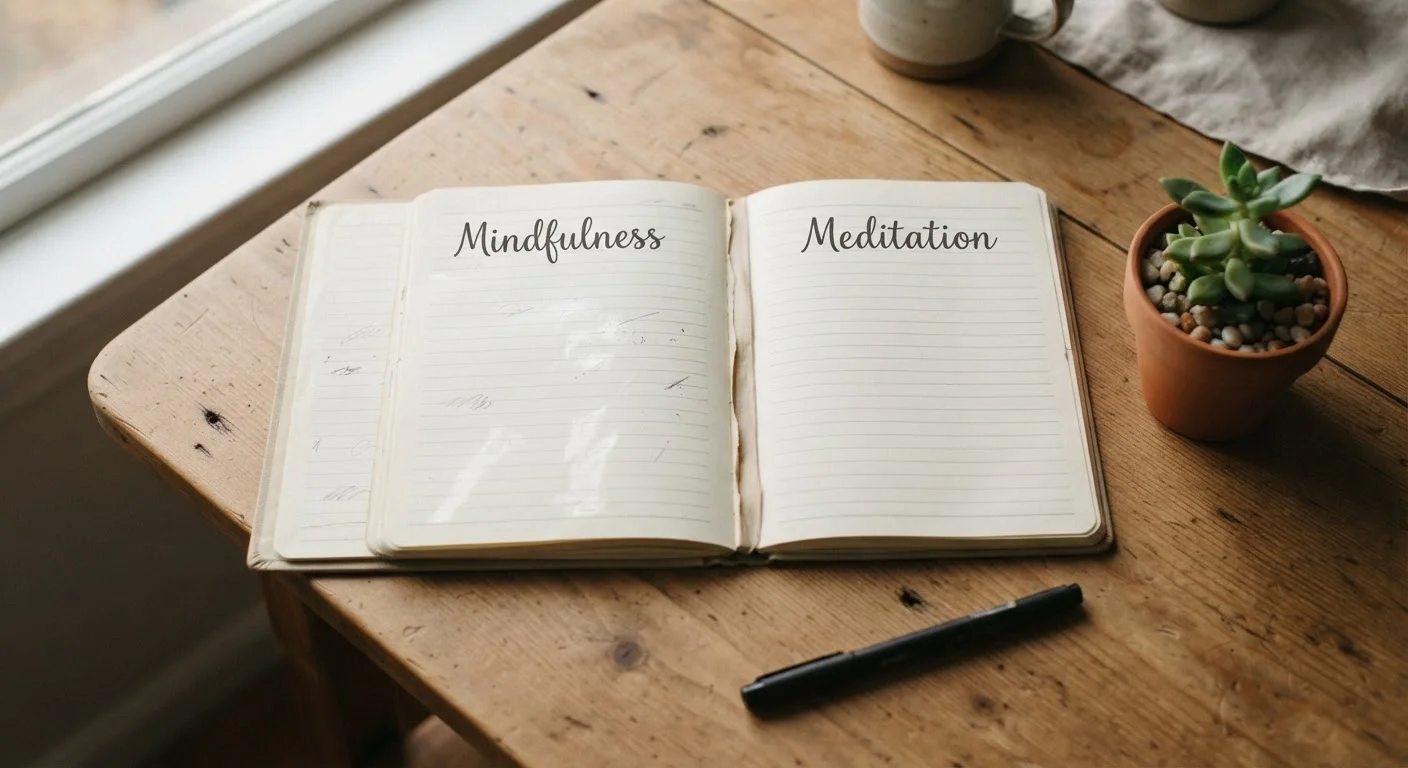
Photo: HorizonMetric.com | One Destination For Everyday Insights editorial
—— In This Article
Key Takeaways
- Mindfulness is a quality of awareness; meditation is a formal practice used to cultivate it.
- You can be mindful while washing dishes or walking — no session required.
- Meditation typically involves a set time, posture, and technique such as breath focus or body scanning.
- Both practices are supported by a growing body of peer-reviewed research on stress and well-being.
- The two approaches complement each other and are not in competition.
Why the Terms Get Mixed Up
Scroll through any wellness app or self-help article and you'll notice mindfulness and meditation used as if they mean the same thing. They don't — and the confusion is understandable, because the two are genuinely related. Meditation is one of the most common tools for developing mindfulness, so they naturally appear together. But treating them as synonyms can leave people frustrated when a formal sitting practice doesn't fit their life, or when they assume a few mindful breaths equal a meditation session.
Understanding the distinction helps you choose what actually works for your situation — and use both more effectively. For a broader look at how a third related practice fits in, see how breathwork, meditation, and mindfulness each differ.
What Mindfulness Actually Means
Mindfulness is a mental quality — specifically, the ability to pay deliberate, non-judgmental attention to what is happening in the present moment. It is a state and a trait, not a technique. You can be mindful while eating, having a conversation, or doing yard work. The practice doesn't require a timer, a cushion, or silence.
Rooted in Buddhist contemplative traditions and later studied extensively in clinical psychology, mindfulness gained mainstream traction through programs like Mindfulness-Based Stress Reduction (MBSR), developed at the University of Massachusetts Medical School in the late 1970s. Research published in peer-reviewed journals suggests that regularly practicing mindful awareness is associated with reduced perceived stress, improved emotional regulation, and lower levels of anxiety — though individual results vary and no outcomes can be guaranteed.
Mindfulness Is Not Emptying Your Mind
A common misconception is that both mindfulness and meditation require you to stop thinking. Neither does. The goal is not a thought-free state but rather a changed relationship to your thoughts — observing them without automatically being swept away by them. This distinction reduces frustration for beginners who feel they're 'doing it wrong' because thoughts keep arising.
The key skill mindfulness builds is attentional flexibility — noticing when your mind has wandered and redirecting it without self-criticism. That skill is useful everywhere, from difficult conversations to managing chronic pain.
What Meditation Actually Involves
Meditation is a formal practice — a set of deliberate techniques performed during a dedicated session, usually with a defined posture, duration, and object of focus. Common meditation techniques include:
- Focused-attention meditation: Concentrating on a single object, such as the breath or a sound, and returning attention to it when the mind wanders.
- Open-monitoring meditation: Observing all mental events (thoughts, sensations, sounds) without attachment or reaction.
- Loving-kindness meditation (metta): Cultivating feelings of compassion toward oneself and others through directed mental phrases.
- Body scan: Progressively directing attention through different regions of the body, often used in MBSR programs.
Meditation sessions typically last anywhere from 5 to 45 minutes. Research from institutions such as Harvard Medical School and the Max Planck Institute has explored how regular meditation may influence attention, stress hormone levels, and brain structure — though this is an active area of study and findings continue to evolve.
| Criterion | Mindfulness | Meditation |
|---|---|---|
| What it is | A quality of aware attention | A formal practice or technique |
| When it happens | Anytime, during daily activities | During a dedicated session |
| Time required | None — integrated into existing tasks | Typically 5–45 minutes per session |
| Equipment or setting | None needed | Quiet space; optional cushion or app |
| Primary skill built | Present-moment awareness | Sustained, directed attention |
| Learning curve | Low — can start immediately | Moderate — technique helps consistency |
| Research backing | Extensive (MBSR, clinical studies) | Extensive (neuroscience, psychology) |
How They Work Together
Think of meditation as a training ground for mindfulness. Just as physical exercise builds the fitness you draw on during daily life, meditation builds the attentional capacity you express as mindfulness throughout the day. Most experienced practitioners use both: they meditate formally to develop the skill, then carry that awareness into ordinary moments.
~14%
U.S. adults who meditate regularly
According to a National Health Interview Survey, roughly 14% of American adults reported practicing meditation, up from about 4% a decade earlier.
8 weeks
Typical MBSR program length
The standard Mindfulness-Based Stress Reduction course, developed at UMass Medical School, runs eight weeks and incorporates both formal meditation and informal mindfulness practice.
Neither approach is superior, and neither requires the other to be useful. Some people develop genuine mindfulness without ever sitting in formal meditation — through yoga, journaling, or intentional movement. Others find that structured sessions are the only way they can consistently quiet mental noise enough to notice what's happening internally.
If you're deciding where to start, consider your daily schedule and personality. If you resist schedules or feel intimidated by sitting still, beginning with informal mindfulness practices during routine tasks is a low-pressure on-ramp. If you're drawn to clear structure and measurable habits, a brief daily meditation session may suit you better. Most mental wellness professionals suggest that both can coexist and reinforce each other over time — consult a qualified healthcare or mental health professional if you're exploring these practices to address a specific condition.
This article is for general informational and educational purposes only and is not a substitute for professional medical or mental health advice. If you are experiencing significant anxiety, depression, or other mental health concerns, please consult a qualified healthcare provider.

Health Editorial Team
Health Editorial Team is the collective byline for our editorial team and contributor network. Articles published under this byline or an editorial pen name are researched, written, and reviewed according to our editorial standards for clarity, consistency, and independence before publication.
View author profile