
Why Deep Breathing Actually Calms You Down
Controlled breathing isn't just relaxing — it has a direct physiological effect on your nervous system. Here's the science in plain terms.
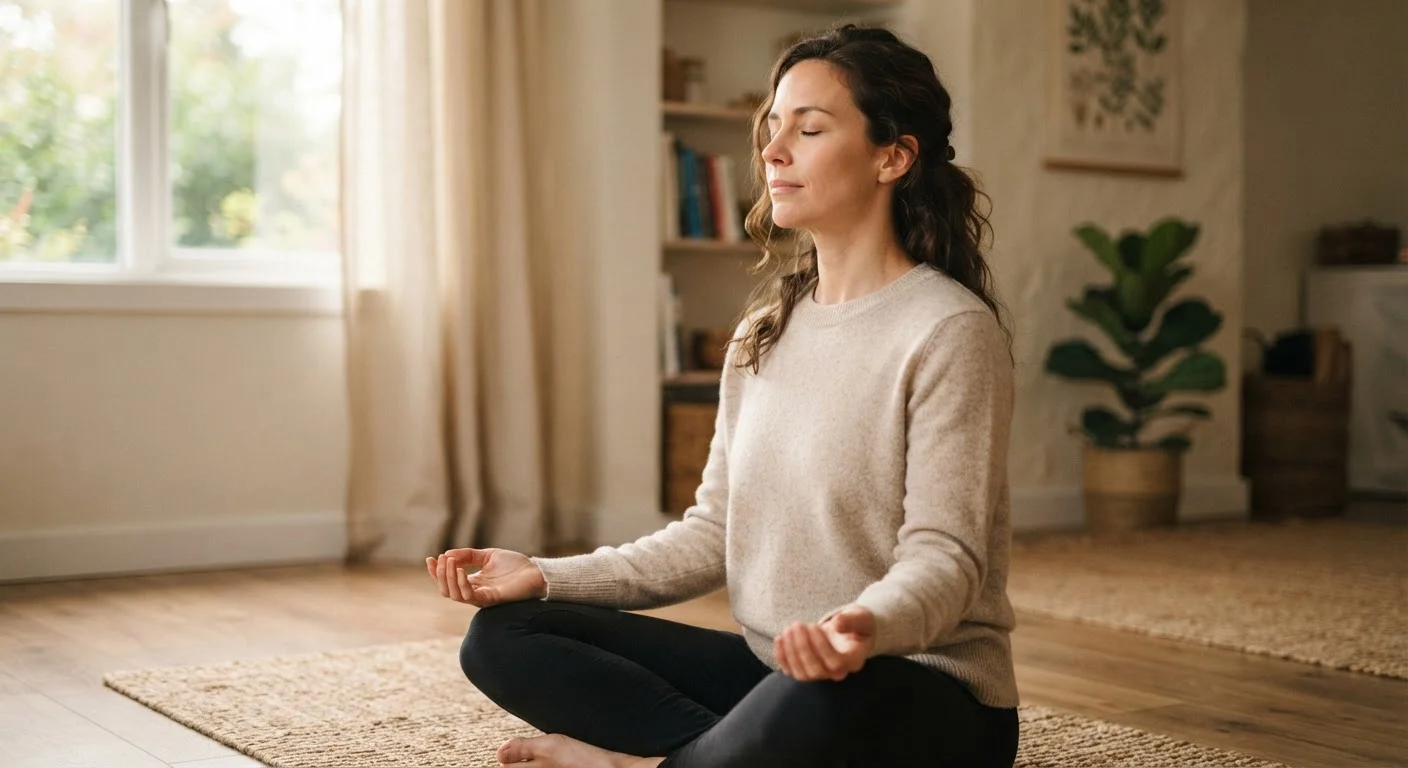
Photo: HorizonMetric.com | One Destination For Everyday Insights editorial
—— In This Article
Key Takeaways
- Deep breathing directly activates the parasympathetic nervous system, counteracting the stress response.
- Slow, controlled exhales are especially effective at lowering heart rate and reducing anxiety.
- The vagus nerve plays a central role in translating breath control into calming physiological changes.
- Even a few minutes of deliberate deep breathing can produce measurable reductions in cortisol and heart rate.
- Deep breathing is not a substitute for professional mental health care when it is needed.
Your Nervous System Has Two Modes
To understand why deep breathing works, you need to understand how your nervous system manages stress. The autonomic nervous system — the part that runs unconsciously — has two main branches. The sympathetic nervous system triggers the 'fight or flight' response: heart rate climbs, breathing quickens, muscles tense, and stress hormones like cortisol and adrenaline flood your system. The parasympathetic nervous system does the opposite, slowing your heart rate, easing muscle tension, and signaling that it's safe to settle down.
Under chronic or acute stress, the sympathetic branch dominates. The problem is that many modern stressors — a difficult email, financial worry, a crowded commute — keep that branch activated far longer than is helpful. Understanding what this sustained activation does to health over time is worth exploring: chronic stress affects far more than your mood.
Deep breathing is one of the few voluntary actions that can directly shift the balance toward the parasympathetic branch — and it works quickly.
The Vagus Nerve: Your Body's Built-In Brake
The mechanism connecting breath to calm runs largely through the vagus nerve, the longest cranial nerve in the body. It runs from your brainstem through your chest and abdomen, carrying signals between the brain and major organs including the heart and lungs.
When you inhale, your heart rate naturally rises slightly. When you exhale — especially with a long, slow exhale — the vagus nerve sends a signal to the heart to slow down. This phenomenon is called respiratory sinus arrhythmia and it's entirely normal. Deliberately extending your exhale amplifies this brake-like effect.
“The breath is the only autonomic function we can consciously control — and that makes it a uniquely powerful gateway to regulating the body's stress response.”
— Stephen Porges, Neuroscientist and originator of Polyvagal Theory, University of North Carolina
The vagus nerve also plays a role in regulating inflammation and the overall stress hormone response. Practices that consistently stimulate it — including regular slow breathing — are associated with improved heart rate variability (HRV), a measure of how flexibly your heart responds to demands. Higher HRV is generally associated with greater resilience to stress.
What Controlled Breathing Actually Changes in Your Body
When you breathe slowly and deeply, several measurable physiological changes occur:
- Heart rate decreases as vagal tone increases with each extended exhale.
- Blood pressure may drop slightly as blood vessels relax in response to reduced sympathetic activation.
- Cortisol levels can fall with sustained practice, reducing the hormonal fuel of the stress response.
- Carbon dioxide balance is restored — shallow, rapid breathing can lower CO₂ too much, contributing to dizziness and that 'wired' anxious feeling. Deeper, slower breaths normalize this balance.
~6
Breaths per minute in therapeutic slow breathing
Research on paced breathing commonly uses around six breath cycles per minute as the target associated with the strongest improvements in heart rate variability and relaxation response.
~10th cranial nerve
Vagus nerve: the calming pathway
The vagus nerve carries parasympathetic signals to the heart, lungs, and gut — and deliberate slow exhalation is one of the most direct ways to stimulate it non-invasively.
Minutes
Time to notice physiological shift
Studies on acute slow breathing interventions generally find measurable reductions in heart rate and self-reported anxiety within a few minutes of practice.
These aren't just theoretical effects. Slow-paced breathing (typically defined as around six breath cycles per minute in research settings) has shown measurable impact on anxiety symptoms and physiological stress markers in multiple controlled studies.
How to Put It Into Practice
You don't need a class or special equipment. A few simple approaches are well-supported by evidence:
- Extended exhale breathing: Inhale for a count of four, exhale for a count of six to eight. The longer exhale is the active ingredient that engages the vagal brake.
- Box breathing: Inhale for four counts, hold for four, exhale for four, hold for four. Used widely in clinical and high-performance settings to manage acute stress.
- Diaphragmatic breathing: Place one hand on your chest and one on your belly. Practice breathing so that primarily your belly rises, indicating you're engaging the diaphragm rather than taking shallow chest breaths.
Focus on the Exhale First
If you're new to breathwork, don't overthink the inhale. Simply try to make your exhale longer than your inhale — even a subtle ratio shift begins to engage the vagal brake. Start with just five to ten breath cycles and build from there at whatever pace is comfortable.
Deep breathing is an accessible entry point into a broader set of evidence-informed habits. If you want to explore what lies beyond breathing exercises, stress management approaches that go beyond deep breathing covers a range of complementary strategies. And for a clearer picture of how breathing compares to breathwork and meditation, understanding the differences between breathwork, meditation, and mindfulness offers a useful breakdown.
This article is for general informational and educational purposes only and is not a substitute for professional medical or mental health advice. If you are experiencing significant anxiety, stress-related symptoms, or any health concern, please consult a qualified healthcare provider.
Frequently Asked Questions

Health Editorial Team
Health Editorial Team is the collective byline for our editorial team and contributor network. Articles published under this byline or an editorial pen name are researched, written, and reviewed according to our editorial standards for clarity, consistency, and independence before publication.
View author profile