
Reading a Nutrition Facts Label Without Getting Lost
Percent Daily Values, serving sizes, added sugars — a plain-language walkthrough of everything printed on a standard nutrition label.
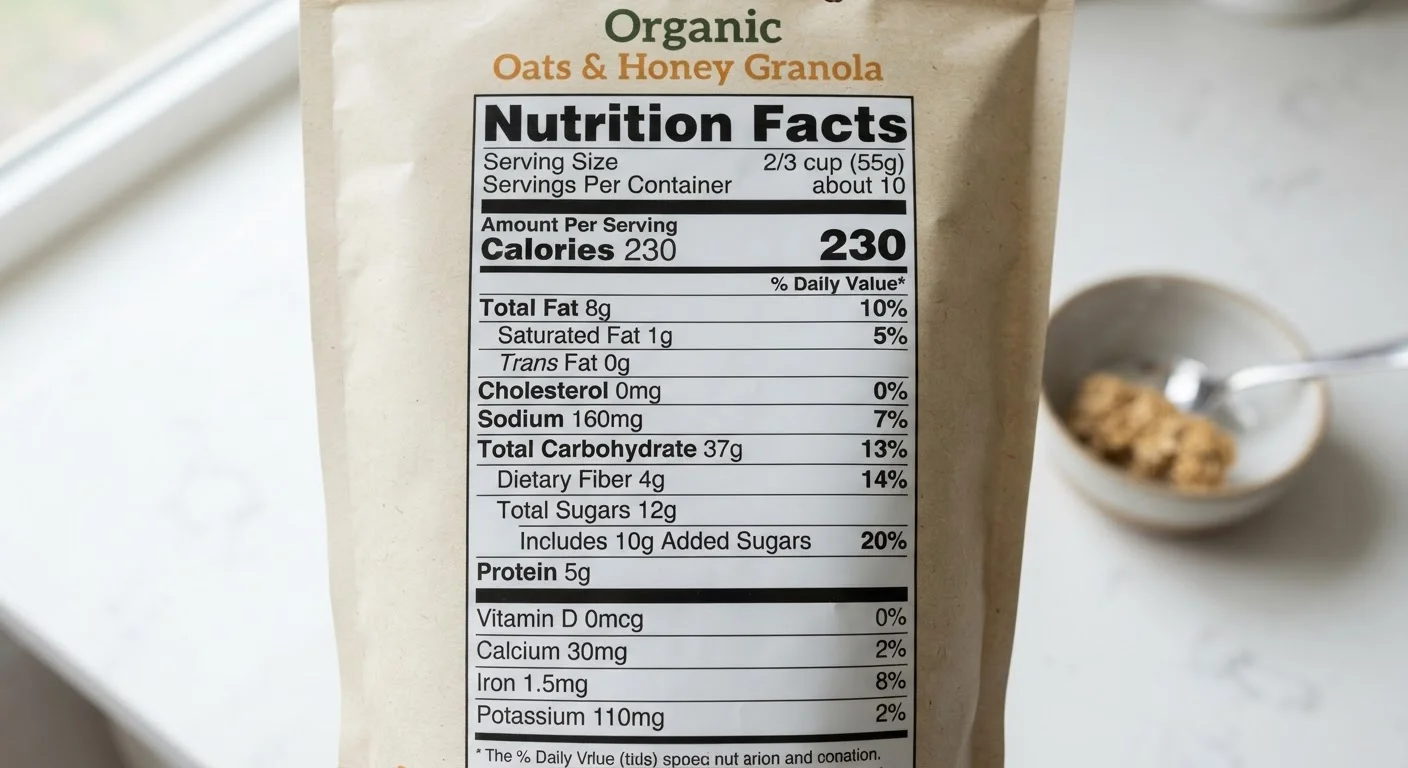
Photo: HorizonMetric.com | One Destination For Everyday Insights editorial
—— In This Article
Key Takeaways
- Always check the serving size first — every other number on the label flows from it.
- Percent Daily Values are a quick comparison tool, not personal targets for every individual.
- Added sugars and saturated fat are nutrients most Americans benefit from actively limiting.
- Fiber, vitamin D, calcium, and potassium are nutrients worth seeking out on labels.
- Ingredients are listed in descending order by weight — the first few define the product.
Why Nutrition Labels Exist and What They Cover
The Nutrition Facts label is a standardized, federally regulated tool required on most packaged foods sold in the United States. Its purpose is straightforward: give consumers consistent, verifiable information so they can compare products and make informed choices. The FDA updated the label format in 2020, making key information — like serving size and calories — larger and easier to read, and adding a dedicated line for added sugars.
The label is divided into distinct sections, each answering a different question about what's in the package. Read from top to bottom and you'll move logically from how much you're eating, to how many calories that contains, to what nutrients it provides or contributes. For a deeper look at how macronutrients function in the body, see our no-jargon introduction to macronutrients.
What you will need
Step-by-Step: Reading Every Section of the Label
Follow these steps each time you pick up a new packaged food. With a little practice, scanning a label takes under a minute.
Start with the Serving Size
The serving size appears at the very top of the label in bold. It tells you the amount the manufacturer used as the reference unit — for example, 2/3 cup (55g). Every calorie count, gram, and percentage on the label below refers to that specific amount, not the whole package.
Check how many servings are in the container. If the package contains 2.5 servings and you eat the whole thing, multiply all the numbers by 2.5.
Note the Calorie Count
Calories appear directly below the serving size in the largest font on the label. This number tells you how much energy one serving provides. Calorie needs vary significantly by age, sex, activity level, and health status, so this number is most useful for comparison between similar products rather than as a rigid daily target.
Review the Nutrients to Limit
The upper portion of the nutrient list highlights nutrients that Americans, on average, consume in excess: saturated fat, trans fat, and sodium. Diets high in these are associated with increased risk of cardiovascular disease and high blood pressure, according to established dietary guidelines. Added sugars — listed separately under total sugars — represent sugars added during processing, distinct from those naturally present in fruit or dairy.
A % Daily Value (%DV) of 5% or less per serving is generally considered low; 20% or more is considered high. Use this as a quick comparison between products.
Identify Nutrients to Seek Out
The lower section of the nutrient list features nutrients many Americans fall short on: dietary fiber, vitamin D, calcium, iron, and potassium. These are highlighted because inadequate intake is linked to health risks over time. When comparing two similar products, choosing the one with higher %DV for these nutrients is generally a sound approach.
Scan the Ingredient List
The ingredient list appears below the Nutrition Facts box and is separate from it. Ingredients are listed in descending order by weight — whatever appears first makes up the largest proportion of the product. A bread listing whole wheat flour as its first ingredient contains more of it than one listing enriched flour first. Shorter ingredient lists aren't inherently better, but they can signal less processing.
Use %DV to Compare, Not to Prescribe
Percent Daily Values are calculated using a 2,000-calorie reference diet — a standardized baseline, not a universal target. They're most useful for comparing two similar products side by side or for spotting whether a food is high or low in a particular nutrient. Individual calorie and nutrient needs vary based on age, sex, activity, and health conditions. For guidance tailored to your situation, consult a registered dietitian.
Common Pitfalls and What the Label Can't Tell You
Even a careful label reader can be misled by a few common situations. Multi-serving packages that look like single portions are one of the most frequent sources of confusion — a bag of chips labeled "3 servings" means every number triples if you eat the whole bag.
The label also can't tell you everything about a food's nutritional quality. Whole foods like fresh produce, meat, and eggs carry little or no packaging — and therefore no label — yet they form the backbone of most health-promoting diets. The label is a tool for comparing packaged options, not a scorecard for all food.
Trans Fat: Zero Isn't Always Zero
FDA rules allow manufacturers to list trans fat as 0g if a serving contains less than 0.5g. If you eat multiple servings, trace amounts can add up. To spot hidden trans fats, check the ingredient list for the phrase "partially hydrogenated oil" — that's the primary dietary source of artificial trans fat.
If you're noticing patterns in what you regularly eat or avoid, those gaps can quietly compound over time. Our article on nutrient gaps in otherwise healthy-seeming diets covers the shortfalls most likely to go unnoticed. For a closer look at how the body handles different types of sweeteners, see our piece on added sugar vs. natural sugar.
This article provides general nutrition education and is not a substitute for personalized dietary advice. Consult a registered dietitian or qualified healthcare provider for guidance specific to your health needs.

Health Editorial Team
Health Editorial Team is the collective byline for our editorial team and contributor network. Articles published under this byline or an editorial pen name are researched, written, and reviewed according to our editorial standards for clarity, consistency, and independence before publication.
View author profile