
Costa Rica vs. Panama: Choosing Between Two Central American Destinations
Both countries offer wildlife, beaches, and accessibility from the US, but they differ significantly in infrastructure, cost, and traveler experience.
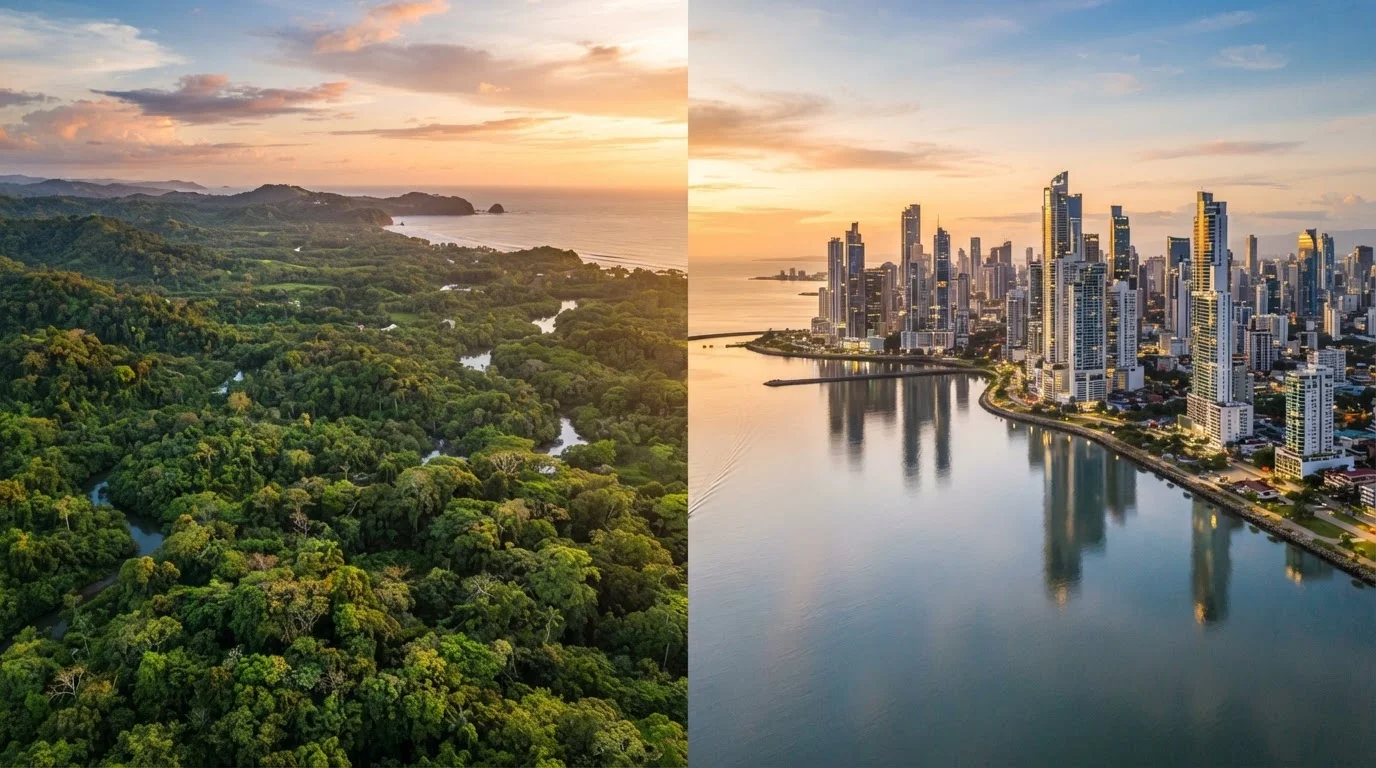
Photo: HorizonMetric.com | One Destination For Everyday Insights editorial
—— In This Article
Key Takeaways
- Costa Rica has a more developed eco-tourism infrastructure, making wildlife lodges and guided tours easier to arrange.
- Panama uses the US dollar, which simplifies budgeting for American travelers, while Costa Rica uses the colón.
- Panama City offers a cosmopolitan urban base that Costa Rica's capital, San José, doesn't quite match.
- Costa Rica generally draws higher visitor numbers, meaning more crowds at popular parks during peak season.
- Both countries are accessible via direct flights from major US cities, with relatively short travel times.
- Panama's Pearl Islands and Bocas del Toro offer quieter beach experiences compared to Costa Rica's busier Guanacaste coast.
Nature and Wildlife: Different Ecosystems, Shared Richness
Both Costa Rica and Panama sit within one of the most biodiverse corridors on Earth, but they deliver that biodiversity differently. Costa Rica has spent decades building an eco-tourism brand around its national parks — places like Manuel Antonio, Tortuguero, and Corcovado are globally recognized, and the infrastructure around them reflects that. Guided tours are plentiful, well-regulated, and range from budget to luxury.
Panama's wild spaces feel less packaged. The Darién Gap remains one of the Western Hemisphere's most remote wildernesses, while Soberanía National Park sits just outside Panama City — you can spot toucans and sloths within 45 minutes of a rooftop bar. For travelers who prefer discovering nature on their own terms rather than through a prearranged eco-lodge itinerary, Panama's lower tourist density can feel like a breath of fresh air.
| Criterion | Costa Rica | Panama |
|---|---|---|
| Currency | Costa Rican colón | US dollar |
| Eco-tourism infrastructure | Highly developed | Growing, less packaged |
| Urban appeal | San José — functional base | Panama City — major destination |
| Beach crowds | Busy at peak season | Quieter, more remote options |
| Getting around | 4WD often needed; shuttles popular | Buses, metro, domestic flights |
| General cost level | Higher for eco-lodges and tours | More budget flexibility outside hotspots |
| Wildlife diversity | Exceptional, well-documented | Exceptional, less visited |
| Direct flights from US | Yes, multiple cities | Yes, multiple cities |
Beaches, Islands, and Coastal Life
Costa Rica's Pacific coast — particularly the Guanacaste region — draws surfers, families, and sunset chasers in large numbers. The beaches are beautiful, the sunsets are legendary, and the restaurant scene has matured considerably. The Caribbean side, anchored by towns like Puerto Viejo, offers a reggae-inflected vibe and calmer waters. Peak season crowds at the most popular beaches are real, though, and accommodation prices reflect demand.
Panama's island destinations feel comparatively undiscovered. Bocas del Toro, an archipelago in the Caribbean, pairs colorful waterfront towns with snorkeling and jungle hikes in a way that recalls what Costa Rica's Caribbean coast looked like a generation ago. The Pearl Islands in the Pacific are accessible by ferry or short flight from Panama City and offer white-sand beaches with minimal development. If solitude matters to you, Panama's coasts deliver more of it.
~25%
Costa Rica territory protected as national parks or reserves
Costa Rica is globally recognized for dedicating roughly a quarter of its land to protected natural areas.
3–5 hrs
Typical US East Coast flight time to both capitals
Both San José and Panama City are served by direct flights from major US East Coast hubs, making them accessible weekend or week-long trip options.
900+
Bird species recorded in Panama
Panama's position as a land bridge between continents makes it one of the world's premier birdwatching destinations, with species counts that rival much larger countries.
Practicalities: Getting There, Getting Around, and Spending
American travelers will find both countries easy to reach. Direct flights from cities including Miami, New York, Houston, and Los Angeles serve both San José (Costa Rica) and Panama City's Tocumen International Airport. Flight times from the East Coast typically fall between 3 and 5 hours.
Once you land, the experience diverges. Costa Rica's road network outside major routes can be rough, and a four-wheel-drive rental is strongly advised for reaching many national parks and remote lodges. Shuttle services between tourist hubs are reliable and popular. In Panama, public buses and domestic flights cover most destinations efficiently, and Panama City itself has a modern metro system.
On cost, Panama's use of the US dollar removes any currency conversion concern for American visitors — prices are what they appear to be. Costa Rica's colón fluctuates, and the country's eco-tourism popularity means prices at many lodges and tour operators sit noticeably higher than Central American averages. Neither destination is budget-backpacker cheap by regional standards, but Panama generally offers more room to spend less without sacrificing comfort.
Entry Requirements Can Change
At the time of writing, US citizens generally do not require a visa for short tourist stays in either Costa Rica or Panama, but entry rules, passport validity requirements, and health documentation can change without notice. Always check the US Department of State's travel pages and the official embassy websites for both countries before finalizing your plans.
Culture, History, and Urban Appeal
San José serves adequately as a base for onward travel but is rarely the highlight of a Costa Rica trip. The city has museums, a lively arts scene, and excellent coffee culture, yet most visitors pass through quickly en route to the country's natural attractions.
Panama City is a destination in its own right. The Casco Viejo neighborhood — a UNESCO World Heritage Site — blends crumbling Spanish colonial architecture with restored boutique hotels and inventive restaurants. The Panama Canal remains one of the genuine engineering marvels of the modern world; the Miraflores Locks visitor center makes the experience surprisingly moving, not just educational. Panama's layered history — indigenous, Spanish colonial, French, American — gives it a cultural texture that rewards curious travelers who take time to explore beyond the beaches.
Travel conditions, entry requirements, and local health and safety advisories can change. Always verify visa requirements, vaccination recommendations, and travel advisories with official government sources such as the US Department of State before booking.

Travel Editorial Team
Travel Editorial Team is the collective byline for our editorial team and contributor network. Articles published under this byline or an editorial pen name are researched, written, and reviewed according to our editorial standards for clarity, consistency, and independence before publication.
View author profile