
Iceland's Key Facts at a Glance: Geography, Climate, Language, and Logistics
A concise reference covering Iceland's regions, seasonal daylight, currency, driving conditions, and entry requirements for American visitors.
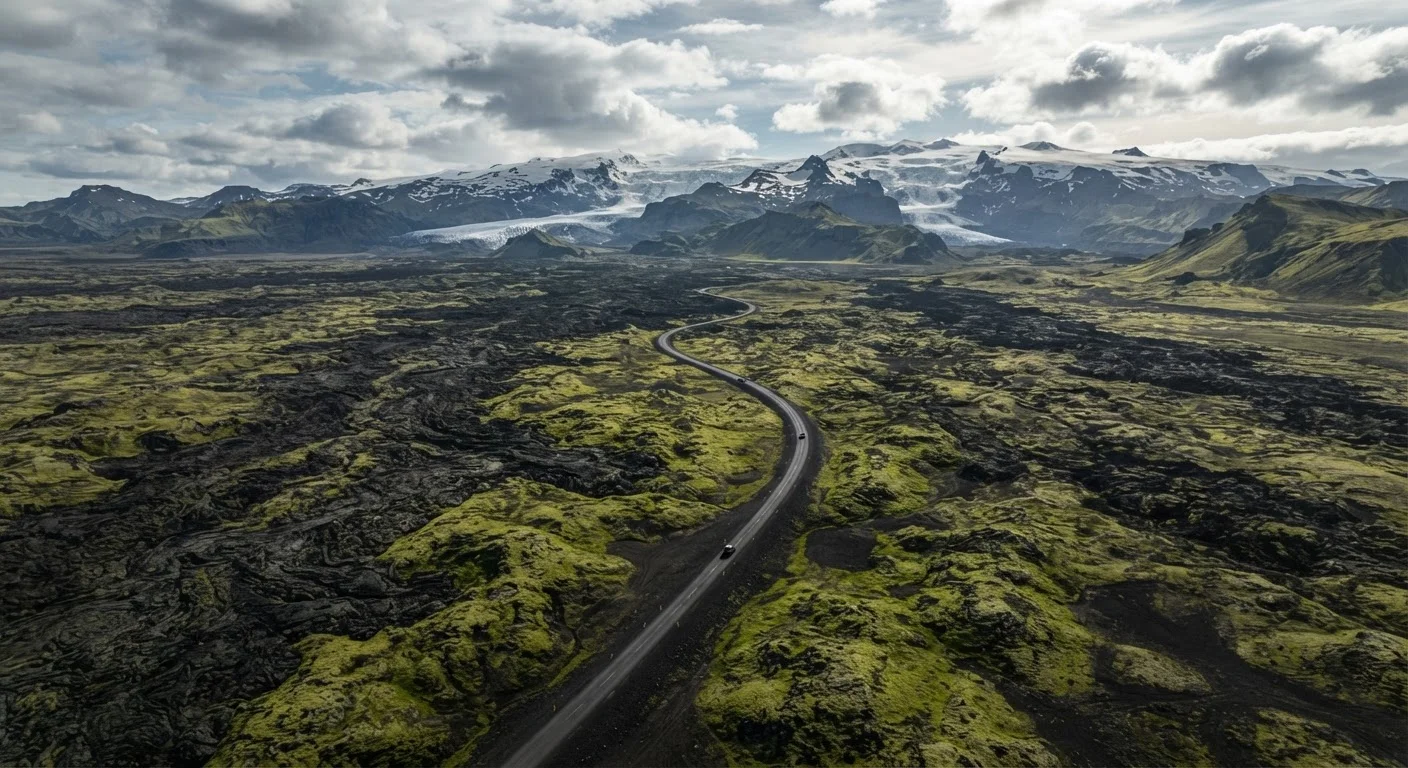
Photo: HorizonMetric.com | One Destination For Everyday Insights editorial
—— In This Article
Geography: Regions and How the Land Is Divided
Iceland is divided into eight administrative regions, though travelers most commonly orient themselves around four broad areas: the Capital Region (Reykjavík and surroundings), the South (waterfalls, glaciers, black-sand beaches), the West and Snæfellsnes Peninsula (dramatic fjords and a storied glacier volcano), and the North (centered on Akureyri, Iceland's second-largest city).
The East Fjords and the Westfjords are less visited but reward travelers willing to take smaller, winding coastal roads. The volcanic Interior Highlands — accessed only via F-Roads — are a world apart: stark, lunar, and accessible only in summer.
| Capital City | Reykjavík |
| Official Language | Icelandic (English widely spoken) |
| Currency | Icelandic Króna (ISK) |
| Country Size | Approx. 40,000 sq miles — similar to Kentucky |
| Population | Approx. 370,000 (Statistics Iceland) |
| Drives on the | Right side of the road |
| Time Zone | UTC+0 year-round (no daylight saving time) |
| Entry for US Citizens | Visa-free for stays up to 90 days (Schengen rules apply) (Verify with official sources before travel) |
| Electricity | 230V / 50Hz, Type F plugs |
| Driving Speed Limit (rural paved) | 90 km/h (56 mph) (Icelandic Transport Authority) |
Climate and Daylight: What to Expect Season by Season
Iceland's climate is subarctic maritime, meaning temperatures are milder than the country's name implies but weather is notoriously changeable — sometimes dramatically so within a single afternoon. Coastal summer temperatures typically hover between 50–60°F (10–15°C); winters average around 28–35°F (-2–2°C) near the coast.
24 hrs
Daylight during Midsummer
Near the June solstice, the sun barely dips below the horizon, producing the famed Midnight Sun phenomenon.
~4–5 hrs
Daylight in Midwinter
December and January offer very limited daylight, but long dark nights maximize Northern Lights viewing opportunities.
130+
Volcanic mountains on the island
Iceland sits atop the Mid-Atlantic Ridge, making it one of the most volcanically active places on Earth.
11%
Of the island covered by glaciers
Iceland's glaciers, including Vatnajökull — Europe's largest — are major landscape and weather drivers.
Summer (June–August) brings lush green landscapes, long daylight hours, and access to F-Roads and highland trails. Winter (November–March) offers the best Northern Lights viewing, ice cave tours on glaciers, and far fewer crowds — but requires careful planning around shorter driving days and unpredictable storms.
Spring and autumn are shoulder seasons: fewer visitors, variable conditions, and a mix of both worlds.
Language, Currency, and Day-to-Day Logistics
Icelandic is the official language, a North Germanic tongue largely unchanged since the medieval sagas. For American travelers, this is rarely a barrier — English is spoken fluently by the vast majority of Icelanders, including in rural areas and smaller guesthouses.
The Icelandic Króna (ISK) is the national currency, but Iceland is one of the most cashless societies in the world. Major credit and debit cards work reliably almost everywhere, including remote petrol stations along the Ring Road.
Ring Road (Route 1)
Iceland's main highway that circles the entire island, spanning roughly 828 miles. It is the most common framework for a self-drive tour and connects major towns and attractions.
F-Roads
Unpaved highland interior roads designated with an 'F' prefix. These require a four-wheel-drive vehicle and are typically only open from late June through early September.
Midnight Sun
A natural phenomenon occurring near the summer solstice when the sun remains visible at midnight. In Iceland it occurs roughly from late May through mid-July.
Aurora Borealis
Also called the Northern Lights, this atmospheric light display is most visible in Iceland from September through March, ideally away from city light pollution.
Króna (ISK)
Iceland's national currency. Credit and debit cards are accepted almost universally, even at small guesthouses and rural petrol stations.
Schengen Area
A group of 27 European countries that share a common border-free travel zone. Iceland is a member, meaning US citizens can stay visa-free for up to 90 days within any 180-day period across all member countries combined.
Iceland runs on UTC+0 year-round — it does not observe daylight saving time. That makes scheduling video calls home easier to predict, though travelers from the US East Coast will find a 4–5 hour difference in standard time and 5 hours during US daylight saving months.
Driving, Roads, and Entry Requirements
Most visitors explore Iceland by rental car, and it is genuinely one of the world's great self-drive destinations. The Ring Road (Route 1) provides a logical route around the entire island, taking roughly 7–10 days at a comfortable pace. Speed limits are strictly enforced: 50 km/h (31 mph) in towns, 80 km/h (50 mph) on unpaved roads, and 90 km/h (56 mph) on paved rural roads.
Always Verify Entry Requirements Before You Fly
Iceland participates in the European Travel Information and Authorization System (ETIAS), which may require US citizens to obtain pre-travel authorization for visa-free entry. Requirements can change. Always check the official Icelandic Directorate of Immigration and the US Department of State's travel page well before your departure date.
F-Road Driving Restrictions Are Enforced
Driving a standard 2WD rental vehicle on F-Roads is illegal under Icelandic law and voids most rental agreements. Confirm your vehicle classification with your rental provider and check road conditions at road.is — the official Icelandic Road and Coastal Administration site — before heading into the highlands.
For entry, US citizens currently enjoy visa-free access for up to 90 days within the Schengen Area. A valid US passport is required. Always confirm the latest requirements — including ETIAS pre-authorization rules — through official government sources before booking your flights.
Travel conditions, entry rules, and road regulations can change. Verify all logistics with official Icelandic and US government sources before departing.

Travel Editorial Team
Travel Editorial Team is the collective byline for our editorial team and contributor network. Articles published under this byline or an editorial pen name are researched, written, and reviewed according to our editorial standards for clarity, consistency, and independence before publication.
View author profile