
Paris vs. Rome: Two Classic European Capitals Through a Traveler's Lens
Pace, cuisine, transport, crowds, and culture — a grounded side-by-side look at what it's actually like to visit Paris versus Rome.
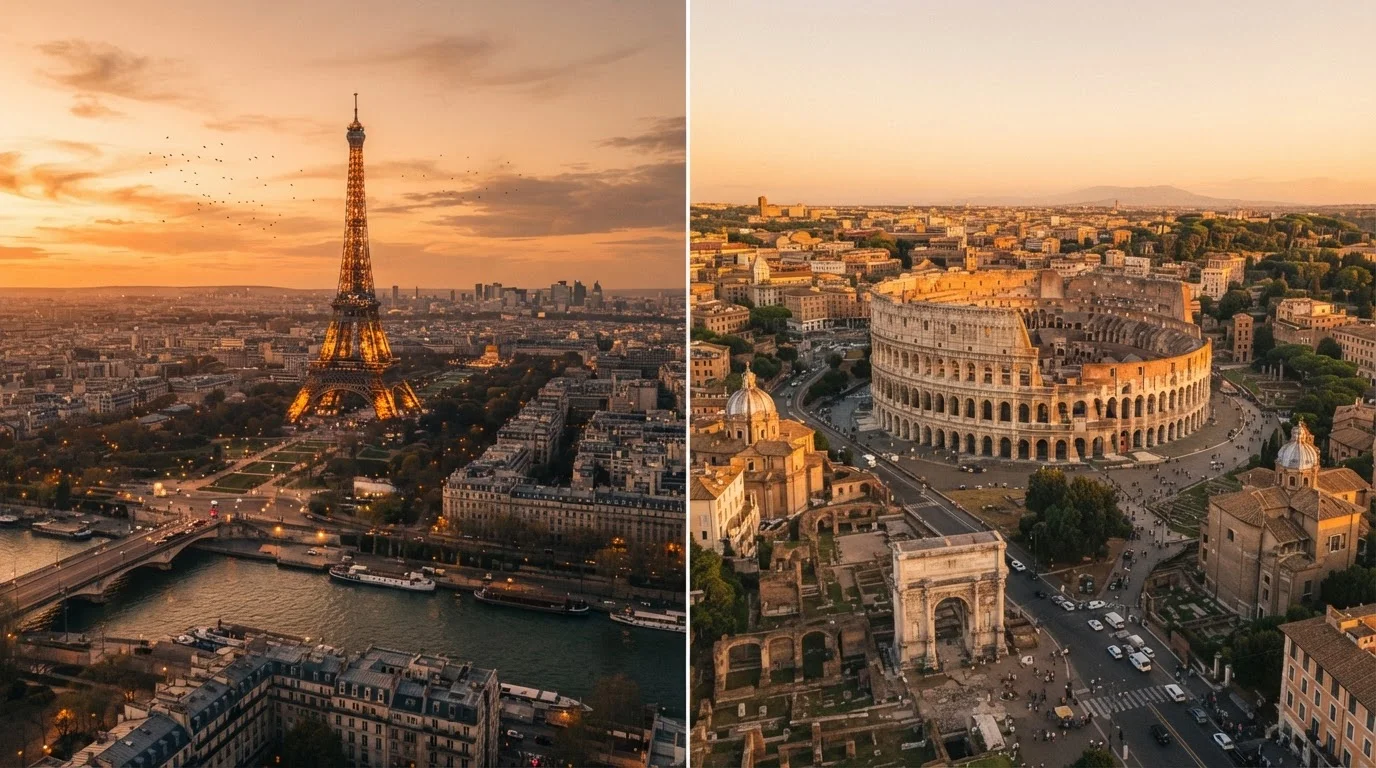
Photo: HorizonMetric.com | One Destination For Everyday Insights editorial
—— In This Article
Key Takeaways
- Paris tends to feel more organized and predictable; Rome's energy is more chaotic and exhilarating.
- Both cities are walkable at the neighborhood level, but Rome's public transit is more limited.
- Paris leans toward museum-driven culture; Rome offers ancient history as an immersive open-air experience.
- Rome generally has a lower cost of street food and casual dining than Paris.
- Crowds peak in both cities from June through August; shoulder seasons offer notably calmer visits.
- Your ideal city depends heavily on your travel pace, interests, and tolerance for sensory overload.
Pace and Feel: Organized Elegance vs. Glorious Chaos
Paris moves with intention. Its Haussmann-era boulevards were literally designed for flow, and that deliberate geometry gives the city a composed, legible quality that many first-time visitors find reassuring. You always have a sense of where you are. Neighborhoods — arrondissements — each carry a distinct personality, from the literary left bank to the hip Canal Saint-Martin corridor.
Rome is something else entirely. The city grew organically over three thousand years, and the street plan reflects that history — narrow, winding, occasionally baffling. Getting pleasantly lost is part of the experience. A wrong turn might deposit you at a baroque fountain or a crumbling ancient wall. That unpredictability thrills some travelers and exhausts others. If your ideal day has a firm agenda, know that Rome will test it regularly.
Overpacking your itinerary is the single most common European travel regret, and both cities are equally guilty of tempting visitors into that trap. Honest advice: plan fewer sites per day than you think you need.
Getting Around: Metro Mastery vs. Walking and Patience
Paris has one of Europe's most comprehensive metro systems — 16 lines, hundreds of stations, and trains that run with reassuring frequency. Taxis and ride-hailing services layer on top. Getting from the Marais to Montmartre takes minutes underground. For visitors unfamiliar with European transit, Paris is genuinely confidence-building.
Rome's public transit is more limited. The metro has just three lines, and coverage of the historic center is sparse. Buses fill the gap but can be slow and crowded. Many travelers end up walking far more than anticipated — which, frankly, is part of Rome's magic. The tradeoff is real, though: sore feet by day three are nearly universal.
| Criterion | Paris | Rome |
|---|---|---|
| Metro / Subway Coverage | Extensive, 16 lines | Limited, 3 lines |
| Walkability | High, flat terrain | High but hilly |
| Museum Experience | World-class indoor collections | Strong, plus open-air ruins |
| Street Food Cost | Moderate to high | Generally lower |
| City Layout | Logical, grid-adjacent | Organic, labyrinthine |
| Peak Crowd Season | June–August | June–August |
| English Accessibility | Widely available | Common in tourist zones |
| Ancient History Access | Primarily via museums | Immersive, open-air |
Rideshares and taxis are available in both cities, though drivers in Rome sometimes prefer cash. Verify current entry requirements, local transport conditions, and any zone-restriction policies with official sources before you travel.
Food Culture: Refined Bistros vs. Roman Simplicity
Parisian food culture carries enormous weight — and enormous expectation. The classic bistro experience (steak frites, a carafe of wine, indifferent service delivered with panache) lives up to its reputation when you find the right spot. Bakeries and markets are genuinely extraordinary. The flip side: tourist-facing restaurants near major landmarks can be mediocre and expensive.
Roman cuisine is bracingly direct. The city's traditional dishes — cacio e pepe, coda alla vaccinara, artichokes alla giudia — rely on a handful of quality ingredients rather than technique-forward complexity. Street food is cheap and excellent. A supplì (fried risotto ball) from a neighborhood counter is one of travel's small, perfect pleasures.
~35M
Annual international visitors to Paris
Paris consistently ranks among the world's most visited cities, according to Euromonitor International's annual destination data.
~10M
Annual visitors to the Colosseum alone
The Colosseum is one of Italy's single most-visited paid attractions, per Parco Colosseo's publicly reported figures.
3
Rome metro lines vs. Paris's 16
The contrast in transit infrastructure is one of the most practically significant differences for first-time visitors planning daily movement.
Both cities reward diners who wander away from major tourist corridors. A ten-minute walk from the Colosseum or the Eiffel Tower changes the restaurant landscape entirely.
Culture and History: Curated Collections vs. Living Ruins
Paris concentrates much of its culture inside exceptional institutions. The Louvre alone could consume days; the Musée d'Orsay's Impressionist collection is arguably the finest anywhere. Timed entry booking is widely available and strongly recommended for major sites. The city's cultural calendar — galleries, concerts, theater — is perpetually deep.
Rome's history isn't behind glass — it's the city itself. The Forum Romanum, Palatine Hill, the Pantheon, and the Baths of Caracalla are not reconstructions. They are the original structures, still standing. That existential weight — the actual stones that senators walked on — produces a particular kind of awe that no museum can fully replicate.
For travelers who've navigated the sensory density of other great cities, the comparison is instructive. If you've experienced what New York really looks like for first-time visitors, you'll recognize a similar gap between expectation and arrival-day reality in both Paris and Rome.
Entry requirements, site hours, and visa regulations change regularly. Always verify travel and entry information with official government and tourism sources before booking.

Travel Editorial Team
Travel Editorial Team is the collective byline for our editorial team and contributor network. Articles published under this byline or an editorial pen name are researched, written, and reviewed according to our editorial standards for clarity, consistency, and independence before publication.
View author profile