
What Happens to Your Body When You Sit All Day
From posture to circulation to mental focus — a clear look at how prolonged sitting affects wellbeing and what everyday movement can do.
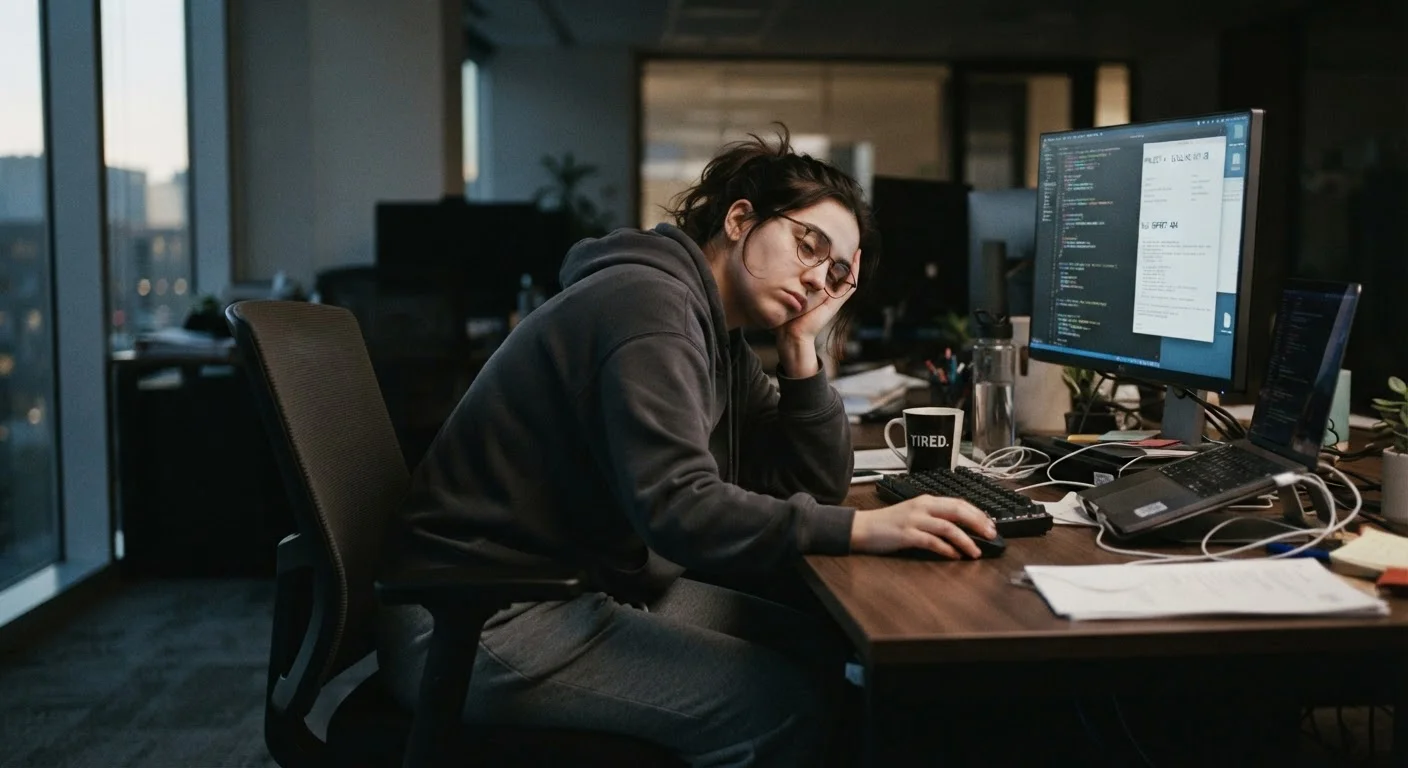
Photo: HorizonMetric.com | One Destination For Everyday Insights editorial
—— In This Article
Key Takeaways
- Sitting for long, unbroken stretches slows circulation and reduces muscle engagement throughout the body.
- Prolonged sitting is associated with increased risk of cardiovascular issues, blood sugar changes, and musculoskeletal discomfort.
- Mental focus and mood can also decline during extended periods without movement.
- Short, frequent movement breaks — not just one daily workout — are what researchers highlight as most protective.
- Simple habit changes like standing briefly each hour can meaningfully offset some sitting-related effects.
What Your Body Is Actually Doing When You Stay Still
When you sit for long periods, your body shifts into a kind of low-demand mode. Major muscle groups — especially in your legs, core, and glutes — largely disengage. This drop in muscular activity has a cascade of downstream effects that researchers have studied extensively over the past two decades.
Blood flow slows, particularly in the lower limbs. The leg muscles normally act as a pump that helps return blood to the heart; without that pumping action, circulation becomes sluggish. This is part of why legs feel heavy or stiff after a long meeting or a cross-country flight.
At the same time, the body's ability to regulate blood sugar is affected. Skeletal muscle is one of the primary sites where glucose is absorbed from the bloodstream after eating. When those muscles are inactive, that process becomes less efficient. Over time and in susceptible individuals, this pattern is associated with increased insulin resistance, though it is important to note that this is a long-term risk factor, not something that happens from a single day at a desk.
6–8 hrs
Average daily sitting time for U.S. adults
Research published in public health journals estimates most American adults spend between six and eight hours sitting each day, with desk workers often exceeding this.
~34%
Reduction in lower limb blood flow after 3 hours seated
A study from the University of Missouri found that sitting for three hours significantly reduced arterial blood flow in the legs, which was partially reversed by short walking breaks.
30 mins
Recommended maximum continuous sitting interval
Many exercise science researchers suggest breaking sitting every 30 minutes with at least one to two minutes of light movement as a practical harm-reduction target.
Posture, Pain, and the Spine Under Pressure
Sitting places more compressive load on the lumbar spine than standing does — particularly when posture slumps forward, as it naturally tends to over the course of a long workday. Hip flexor muscles, designed for movement, shorten and tighten when held in a bent position for hours. This can contribute to the lower back pain that is one of the most common complaints among desk workers in the United States.
Neck and shoulder tension often follow a similar pattern. When a screen draws the head forward — what some clinicians informally call "tech neck" — the effective weight the neck muscles must support increases significantly. Over time, this repetitive strain can lead to chronic discomfort.
A Simple Desk Posture Checkpoint
Every hour or so, do a quick scan: feet flat on the floor, knees at roughly a 90-degree angle, screen at eye level, shoulders relaxed rather than hunched. If anything is off, adjust before it becomes entrenched tension. This takes about ten seconds and costs nothing.
For those who spend most of their day seated due to disability, injury, or chronic conditions, there are still meaningful movement options available. See movement options for every ability level for approaches that accommodate a wide range of physical situations.
How Sitting Affects Focus, Mood, and Mental Energy
The effects of prolonged sitting are not limited to the physical. Research suggests that extended sedentary periods are also associated with lower mood, reduced mental energy, and difficulty sustaining concentration. One contributing factor is reduced cerebral blood flow — movement, even light walking, increases blood flow to the brain.
There is also a relationship between physical stillness and psychological fatigue. Many people notice that after a long stretch of desk work, they feel mentally drained in a way that a short walk seems to ease. This is not imagined; movement appears to play a role in regulating the neurotransmitters involved in mood and alertness.
Prolonged screen time alongside sitting can amplify these effects. Reducing screen time has its own documented benefits for sleep and focus, and is worth considering as a paired strategy.
“Sitting is not the new smoking — but prolonged, unbroken sitting is a genuine risk factor that accumulates quietly. The solution is not to stand all day but to move often and vary your posture throughout the day.”
— Dr. Jack Callaghan, Professor of Spine Biomechanics, University of Waterloo
Building More Movement Into Your Real Day
The most useful insight from the research on sedentary behavior is that frequency matters more than intensity. You do not need to run a mile — you need to not sit still for ninety-minute stretches. Short, scattered bursts of movement throughout the day are what researchers increasingly point to as protective. This approach, sometimes called movement snacking, has gained significant research attention.
Practical strategies include standing while on phone calls, walking to a colleague's desk rather than messaging them, or doing a few minutes of light stretching between tasks. None of these require special equipment or extra time — they slot into existing routines.
If you are thinking about how your overall daily structure supports or undermines your wellness habits, it is worth considering how your morning or evening routine anchors the rest of your day, including when and how you build in movement.
Prolonged sitting and chronic stress often go hand in hand for desk workers. The body's response to sustained psychological stress has its own physical dimension that is worth understanding separately — see what chronic stress does to your body over time for a fuller picture.
This article is for general informational and educational purposes only and is not a substitute for professional medical advice. If you have concerns about pain, circulation, or other health symptoms related to your daily habits, consult a qualified healthcare provider.
Frequently Asked Questions

Beauty Editorial Team
Beauty Editorial Team is the collective byline for our editorial team and contributor network. Articles published under this byline or an editorial pen name are researched, written, and reviewed according to our editorial standards for clarity, consistency, and independence before publication.
View author profile