
Seated, Standing, and Low-Impact: Movement Options for Every Ability Level
Physical activity looks different for everyone. This overview covers accessible movement approaches for people with limited mobility, injuries, or chronic conditions.
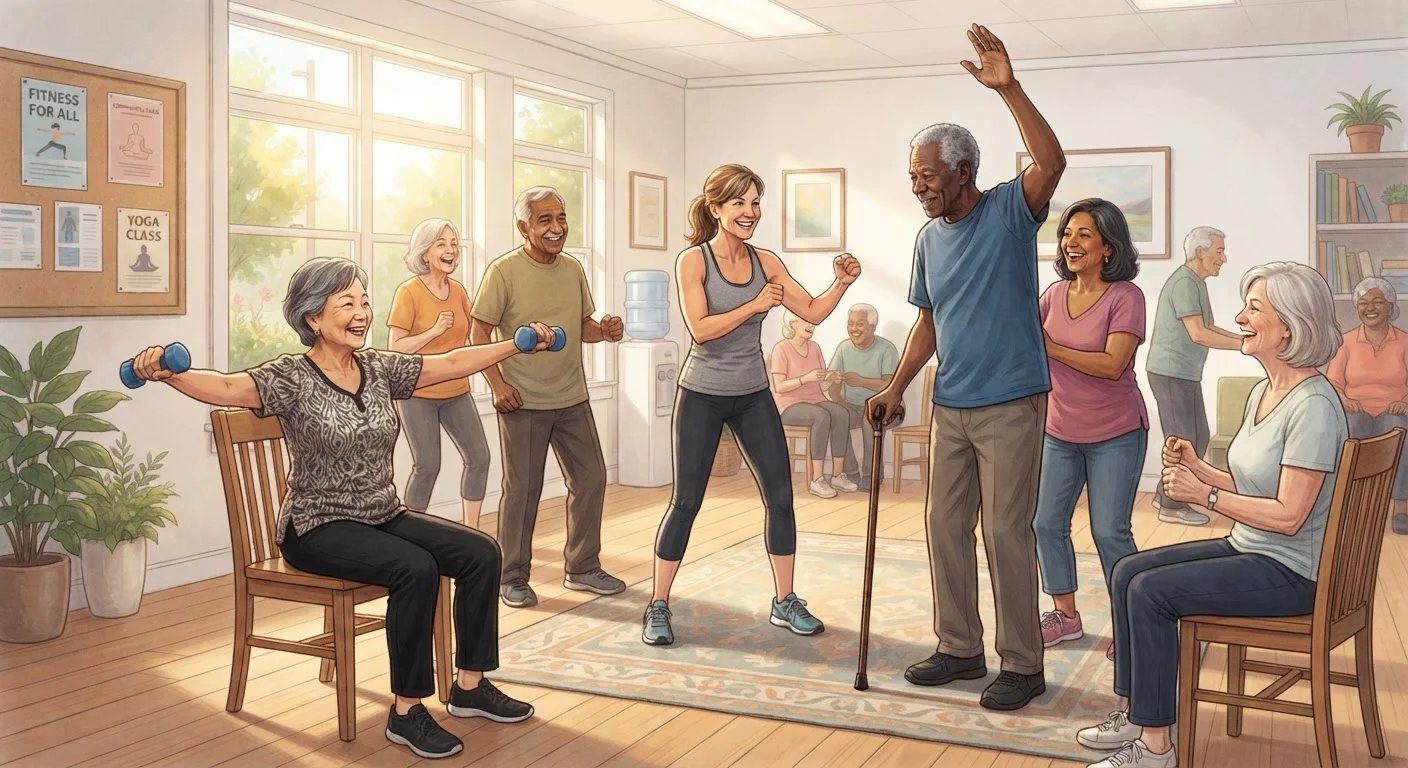
Photo: HorizonMetric.com | One Destination For Everyday Insights editorial
—— In This Article
Key Takeaways
- Physical activity can be adapted for virtually any ability level, injury status, or chronic condition.
- Seated, standing, and low-impact options each offer real cardiovascular and strength benefits.
- Consistency and gradual progression matter more than intensity or duration when starting out.
- People managing chronic conditions or recovering from injury should consult a healthcare provider before beginning a new exercise routine.
- Small, frequent bouts of movement can accumulate meaningful health benefits throughout the day.
Movement Belongs to Everyone
The image of exercise as something that requires a gym, high intensity, or a fully able body keeps many Americans from moving at all. In reality, physical activity exists on a wide spectrum — and research consistently shows that movement at any level, done consistently, supports cardiovascular health, mood, strength, and mobility.
Whether you're managing a chronic condition, recovering from an injury, navigating limited mobility, or simply looking for gentler options that fit into a busy life, there are evidence-supported approaches worth knowing about. The options below aren't ranked by effectiveness — each serves a different need and can be combined or layered as your abilities and goals evolve. See our home fitness primer for a broader foundation on building sustainable movement habits.
This article is general health information and education, not medical advice. If you have an existing health condition, injury, or concern, consult a qualified healthcare professional before starting any new physical activity program.
Seated Exercise
Seated movement is a legitimate, effective form of exercise — not a lesser alternative. Chair-based routines allow people with balance challenges, lower-body injuries, wheelchair users, and those with certain chronic conditions to build strength and improve circulation without standing.
Common seated exercises include arm circles, seated marching (lifting alternating knees), seated torso twists, and resistance band pulls. Chair yoga is a well-established practice that combines flexibility, breathwork, and gentle strengthening. Research published in peer-reviewed journals suggests seated exercise programs can improve upper-body strength, flexibility, and even cardiovascular markers in older adults and those with limited mobility.
Many community centers, senior centers, and physical therapy programs offer chair exercise classes. Video-based options are also widely available and require little to no equipment.
Chair-based routines offer real strength and cardiovascular benefits — no standing required.
Standing and Balance-Focused Movement
For people who can stand but need lower-impact options than running or jumping, standing movement routines emphasize stability, posture, and controlled strength. This category includes exercises like standing calf raises, side leg lifts, gentle wall push-ups, and countertop-supported squats.
Balance work — such as single-leg stands performed near a wall or sturdy surface — is particularly valuable for older adults, as it directly addresses fall prevention. The Centers for Disease Control and Prevention (CDC) identifies fall prevention as a major public health priority, and balance training is a recognized component of evidence-based prevention programs.
Standing movement also pairs naturally with functional fitness principles — exercises that mirror real daily tasks like reaching, lifting, and stepping.
Balance-focused standing exercises are a key, evidence-backed strategy for fall prevention.
Walking and Gentle Cardio
Walking remains one of the most accessible and broadly recommended forms of physical activity. It requires no equipment beyond supportive footwear, can be adjusted to any pace, and carries a low injury risk for most people.
Even short walks — five to ten minutes at a comfortable pace — contribute to daily activity totals. Public health guidelines generally recommend accumulating moderate-intensity aerobic activity over the course of a week, and walking counts. For those with joint sensitivities, walking on softer surfaces (grass, rubberized tracks) can reduce impact.
Aqua walking or pool walking is another option worth noting: the buoyancy of water significantly reduces joint loading while still providing resistance, making it popular among people with arthritis or post-surgical recovery needs.
Even five-to-ten minute walks accumulate into meaningful cardiovascular activity over a week.
Water-Based Exercise
Aquatic exercise — including water aerobics, lap swimming, and pool-based resistance work — is frequently recommended for people with arthritis, fibromyalgia, obesity-related joint stress, or those in post-injury rehabilitation. The Arthritis Foundation has long supported water exercise as a low-impact option that supports joint mobility and muscle strength.
Water provides natural resistance in all directions, meaning even gentle movement engages muscles more than comparable movements on land. Water temperature also plays a role: warm water pools (common in therapy settings) can help relax muscles and reduce stiffness before exercise.
Access to a pool can be a barrier, but many YMCAs, community recreation centers, and physical therapy facilities offer aquatic programs at varied price points.
Water's natural resistance makes aquatic exercise effective even at gentle movement intensities.
Stretching and Mobility Work
Flexibility and mobility work are often overlooked as components of fitness, but they support joint health, posture, and the ability to perform daily tasks comfortably. Gentle stretching, yoga adapted to various ability levels, and practices like tai chi all fall into this category.
Tai chi, in particular, has a strong evidence base for older adults. Multiple studies support its role in improving balance, reducing fall risk, and supporting mental well-being. It is low-impact, performed at a slow pace, and adaptable to seated or standing formats.
Stretching routines can be performed in minimal space and integrated throughout the day — movement snack-style — making them one of the most flexible tools available. For scheduling guidance, see building a movement routine with an unpredictable schedule.
Tai chi has strong evidence supporting improved balance and fall risk reduction in older adults.
Resistance Training With Modifications
Strength training is beneficial across virtually all age groups and ability levels, and it doesn't require heavy weights or gym equipment. Resistance bands, light dumbbells, and bodyweight exercises can all build muscle and support bone density when performed consistently.
Modifications make many exercises accessible: push-ups performed against a wall instead of the floor, squats done to a chair seat and back up, or bicep curls performed while seated. Physical therapists and certified adaptive fitness professionals can help tailor resistance programs to specific conditions or limitations.
For those working within a home environment, our small-space workout guide covers how to build effective sessions without dedicated equipment or large areas.
Resistance training with simple modifications supports strength and bone density at any ability level.
Finding Your Starting Point
No single movement approach works for everyone, and what works for you today may shift as your health, schedule, or energy changes. The most effective plan is one you can actually maintain — even if it looks modest compared to conventional fitness standards.
Track Progress by Feel, Not Just Numbers
When starting a new movement routine, perceived effort and how you feel day-to-day are often more useful signals than step counts or calories. Notice improvements in energy, ease of daily tasks, or mood — these are real indicators of progress. Celebrate consistency over performance milestones, especially in the early weeks.
If you're unsure where to begin, movement snacks — short bouts of activity woven into your existing routine — can serve as a low-barrier entry point. And for those working within limited space, our guide on exercising in small spaces shows how much is possible even without a dedicated workout area.
Above all, consistency over time produces results — not any single session. Start where you are, move in whatever way your body allows today, and build from there.

Health Editorial Team
Health Editorial Team is the collective byline for our editorial team and contributor network. Articles published under this byline or an editorial pen name are researched, written, and reviewed according to our editorial standards for clarity, consistency, and independence before publication.
View author profile