
Small Space, Full Workout: Exercising in an Apartment or Studio
Limited square footage doesn't have to limit your fitness. Learn how to move effectively in tight spaces without disturbing neighbors.
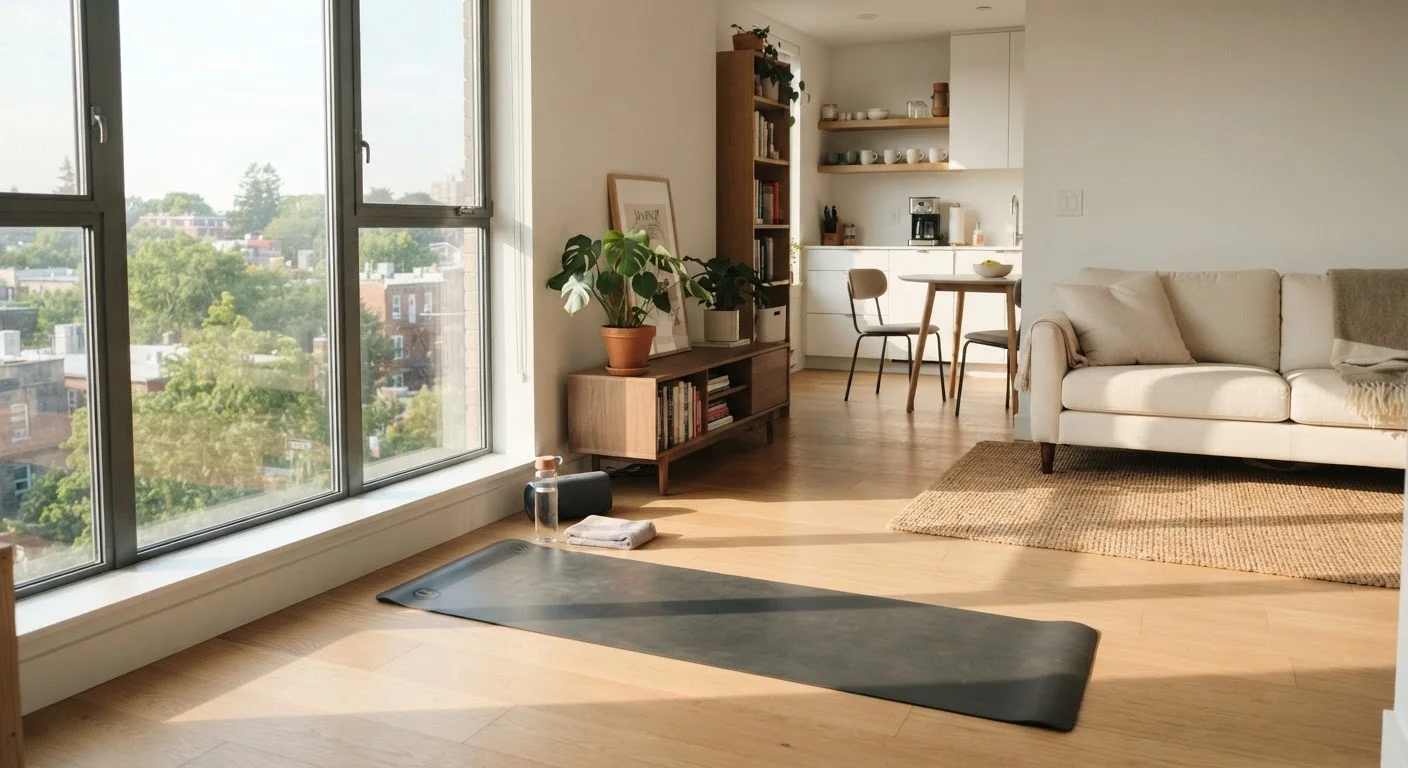
Photo: HorizonMetric.com | One Destination For Everyday Insights editorial
—— In This Article
Key Takeaways
- You need as little as a 6×4-foot floor area to complete a full-body workout.
- Low-impact movement modifications can significantly reduce noise and floor vibration for downstairs neighbors.
- Bodyweight exercises, resistance bands, and a single mat cover most fitness goals in a small space.
- Clearing and organizing your space before every session removes friction and builds consistency.
- Short, frequent workouts can be just as effective as long gym sessions for general fitness.
Why Apartment Workouts Require a Different Approach
Exercising in a studio or one-bedroom apartment isn't simply a scaled-down version of gym training — it calls for deliberate planning around space, sound, and equipment. The physical constraints are real: limited floor area, hard surfaces, shared walls, and neighbors directly below. Ignoring these realities leads to frustration, complaints, or routines that quietly fall apart.
The good news is that most fitness goals — building strength, improving cardiovascular health, maintaining flexibility — can be meaningfully addressed in a small space using bodyweight exercises and minimal gear. If you're entirely new to exercising at home, this beginner's guide to home workouts is a helpful starting point before diving into the steps below.
Check Your Building Rules First
Some apartment leases include quiet hours or restrictions on high-impact activity. Review your lease or check with your building manager before starting a regular workout routine. Being a considerate neighbor protects your tenancy and keeps your routine sustainable.
What follows is a practical system for making small-space exercise work consistently, without upsetting your neighbors or your lease.
This article is for general informational purposes only and is not medical advice. Consult a qualified healthcare professional before beginning any new exercise routine.
What You'll Need Before You Start
One of the biggest advantages of apartment workouts is how little equipment is actually required. The list below covers what genuinely moves the needle — and what's optional.
What you will need
Exercise mat (non-slip)
Provides cushioning and defines your workout zone on any floor surface.
Resistance bands (light to medium)
Adds progressive resistance to strength moves without requiring weights or extra storage space.
Interlocking foam floor tiles
Creates extra padding and reduces impact noise transmitted to floors below.
Compact Bluetooth speaker or earbuds
Keeps audio personal and at a considerate volume during sessions.
Interval timer app (phone)
Structures work and rest periods so you stay on track without checking a clock.
Use Furniture as a Workout Aid
A sturdy chair back works well for balance support during standing leg exercises. A couch or low ottoman can substitute for a bench during incline push-ups or tricep dips. You don't need dedicated equipment to get a well-rounded session in.
Step-by-Step: Setting Up and Running Your Session
Follow these steps each time you work out to keep your sessions safe, effective, and neighbor-friendly. Once the habits are in place, the setup takes under five minutes.
Map and clear your workout zone
Walk your space and identify the largest continuous floor area available — this is often the living room, a cleared bedroom corner, or the space in front of the couch. You're looking for a zone roughly 6 feet long by 4 feet wide. Move any furniture, bags, or obstacles to the edges. If your layout makes this difficult, check out a room-by-room breakdown of home workout spaces for ideas on what works in different configurations.
Lay down your mat and noise-reduction layer
Roll out your exercise mat at the center of your cleared zone. If you live above another unit or have sensitive downstairs neighbors, place interlocking foam tiles underneath the mat before rolling it out. This two-layer setup meaningfully absorbs impact and vibration. Even a folded blanket under the mat can help when foam tiles aren't available.
Choose low-impact movement substitutes
Standard jumping jacks, burpees, and jump squats generate significant floor impact and noise. Replace them with low-impact equivalents that still elevate your heart rate:
- Step-out jacks instead of jumping jacks
- Step-back lunges instead of jump lunges
- Slow mountain climbers instead of plyo burpees
- Standing bicycle crunches instead of jump twists
For more no-machine cardio ideas, see cardio at home without a treadmill.
Build your session structure
Use your interval timer app to organize a simple session format: warm-up (3–5 minutes), main set (15–20 minutes), and cool-down (3–5 minutes). A practical small-space circuit might look like this:
- March in place — 60 seconds
- Push-ups (standard or on knees) — 45 seconds
- Glute bridges — 45 seconds
- Standing side crunches — 45 seconds
- Resistance band rows (anchor under feet) — 45 seconds
- Rest — 30 seconds, then repeat
Research suggests shorter, consistent sessions can deliver meaningful fitness benefits. See what the research says about short workouts versus longer sessions.
Respect quiet hours and communicate with neighbors
Schedule higher-energy sessions during daytime hours when impact noise is most socially acceptable — typically mid-morning or early afternoon. If you must work out in early morning or evening, stick exclusively to mat-based floor exercises like stretching, core work, and resistance band training. A brief, friendly introduction to your neighbor along with awareness of their schedule goes a long way in maintaining goodwill.
Store your gear compactly after each session
A rolled mat, a set of resistance bands, and a phone stand take up very little room. Use a small basket, an over-door organizer, or under-bed storage to keep equipment out of your living space between sessions. For storage ideas that work in small apartments, vertical and underbed storage strategies can help you make the most of every inch.
Protect Your Joints on Hard Floors
Bare hardwood or tile floors offer very little cushioning. Always use a quality exercise mat or interlocking foam tiles to reduce joint stress during floor exercises and landings. This is especially important for knees and wrists during planks, push-ups, and any plyometric moves.
For a broader look at how to structure your home fitness routine over weeks and months, Home Fitness From the Ground Up covers equipment choices, habit-building, and progression in detail.

Beauty Editorial Team
Beauty Editorial Team is the collective byline for our editorial team and contributor network. Articles published under this byline or an editorial pen name are researched, written, and reviewed according to our editorial standards for clarity, consistency, and independence before publication.
View author profile