
Building Your First Monthly Budget in Seven Steps
A practical, step-by-step walkthrough for creating a monthly budget — from calculating take-home pay to setting spending limits by category.
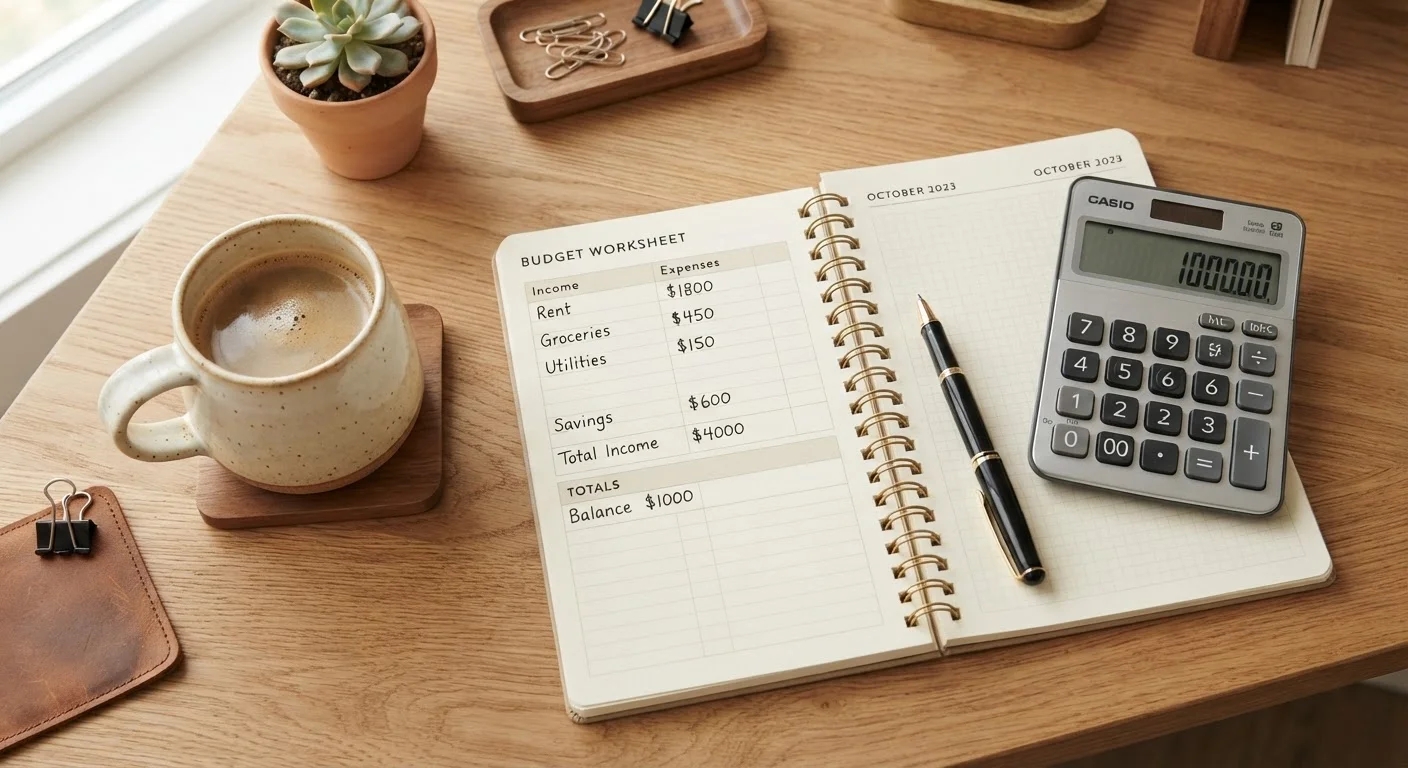
Photo: HorizonMetric.com | One Destination For Everyday Insights editorial
—— In This Article
Key Takeaways
- Start with your actual take-home pay, not your gross salary, to avoid overestimating available funds.
- Separating fixed expenses from variable ones reveals where you have real spending flexibility.
- Assigning every dollar a category prevents vague 'miscellaneous' spending from eroding your plan.
- A budget only works if you track it monthly and adjust for what actually happened.
- No single budgeting method fits everyone — pick a structure that matches your lifestyle.
Why a Written Budget Changes Financial Behaviour
A budget is simply a written plan for how you'll use your money before the month begins. Without one, spending decisions happen reactively — and most people consistently underestimate what they spend in categories like dining, subscriptions, and impulse purchases. Writing amounts down creates a concrete reference point that shifts spending from unconscious habit to deliberate choice.
If you're brand new to this concept, Personal Budgeting From the Ground Up covers the foundational ideas worth knowing before you dive in. For variable-income earners — freelancers, gig workers, or anyone with an irregular paycheck — standard budget rules need some adaptation; strategies for irregular income addresses those differences specifically.
This Is General Financial Education
The steps below provide general budgeting guidance for educational purposes and do not constitute personalised financial, tax, or legal advice. Your situation is unique. For decisions involving significant debt, investments, or tax matters, consult a licensed financial professional.
Before you start, gather the tools below and make sure the prerequisites are in place. The steps that follow work best when you have real numbers to work with, not estimates from memory.
Recent pay stubs or bank statements (2–3 months)
Used to calculate a reliable average monthly take-home income.
Spreadsheet software or budgeting app
Organises income, expense categories, and monthly totals in one place.
Credit card and bank statements
Reveals actual spending patterns across categories over prior months.
List of recurring bills and subscriptions
Ensures no fixed monthly obligation is accidentally left out of the plan.
Pen and paper
An analog alternative for drafting your budget if you prefer a tactile approach.
What you will need
The Seven Steps to Your First Monthly Budget
Work through the steps in order. Each one builds on the last, so skipping ahead tends to produce a budget with gaps that surface later as unexplained shortfalls.
Don't Budget on Gross Income
A common first-time mistake is building a budget around your pre-tax salary. Always use the net amount deposited into your account after taxes, benefits deductions, and retirement contributions. Budgeting on gross income leads to a plan that consistently falls short in practice.
Calculate your true monthly take-home income
List every reliable source of income you receive in a typical month — wages, freelance payments, side income, and any regular transfers. Use the net amount that actually lands in your bank account, not your gross salary. If your income varies, average the last three months of deposits to arrive at a working figure.
List all fixed monthly expenses
Fixed expenses are costs that stay the same every month regardless of your choices — rent or mortgage, car payment, insurance premiums, minimum debt payments, and set subscriptions. Write down each item and its exact monthly amount. These obligations must be covered before any other spending is planned.
Identify variable and discretionary expenses
Variable expenses change in amount month to month — groceries, utilities, gas, and dining out. Discretionary expenses are wants rather than needs: entertainment, clothing, and hobbies. Review two to three months of statements to find realistic average amounts for each category. This is where understanding fixed versus variable expenses pays off — you'll spot categories you didn't know were draining your account.
Set a savings target before spending
Treat savings as a non-negotiable line item, not whatever is left over at the end of the month. Decide on a specific monthly savings amount — even a small one — and write it into your budget alongside your bills. If you're unsure where to start, building a savings habit from zero outlines realistic first steps for beginners.
Choose a budgeting structure
Two common approaches are zero-based budgeting — where every dollar is assigned a job until income minus expenses equals zero — and percentage-based methods, like the 50/30/20 rule that splits income into needs, wants, and savings. Neither is universally superior. Compare zero-based and percentage-based budgeting to see which fits your habits. The 50/30/20 rule is often the easiest starting point for first-timers.
Assign spending limits to each category
Using your income total, fixed expenses, savings target, and average variable spending, set a dollar limit for every category. Add all categories together. If the sum exceeds your income, reduce discretionary limits until the budget balances. If income exceeds the total, direct the surplus to savings or debt repayment rather than leaving it unassigned.
Track actual spending throughout the month
A written budget is a plan — reality only matches it if you monitor spending in real time. Record transactions daily or check your bank balance every few days. When a category approaches its limit, pause spending there. At month's end, compare actuals to your plan, note where you were over or under, and use those findings to refine next month's numbers.
Make It a Habit, Not a One-Time Event
A budget written once and never reviewed quickly becomes fiction. Set a recurring 20-minute appointment at month's end to compare what you planned versus what you spent. Use the Monthly Budget Audit Checklist to guide that review and keep your plan accurate over time.
This article is for general informational and educational purposes only. It does not constitute personalised financial, investment, tax, or legal advice. Consult a qualified financial professional for guidance specific to your circumstances.

Finance Editorial Team
Finance Editorial Team is the collective byline for our editorial team and contributor network. Articles published under this byline or an editorial pen name are researched, written, and reviewed according to our editorial standards for clarity, consistency, and independence before publication.
View author profile