
Personal Budgeting From the Ground Up
New to budgeting? Learn what a personal budget is, why it matters, and the core concepts every beginner needs to get started.
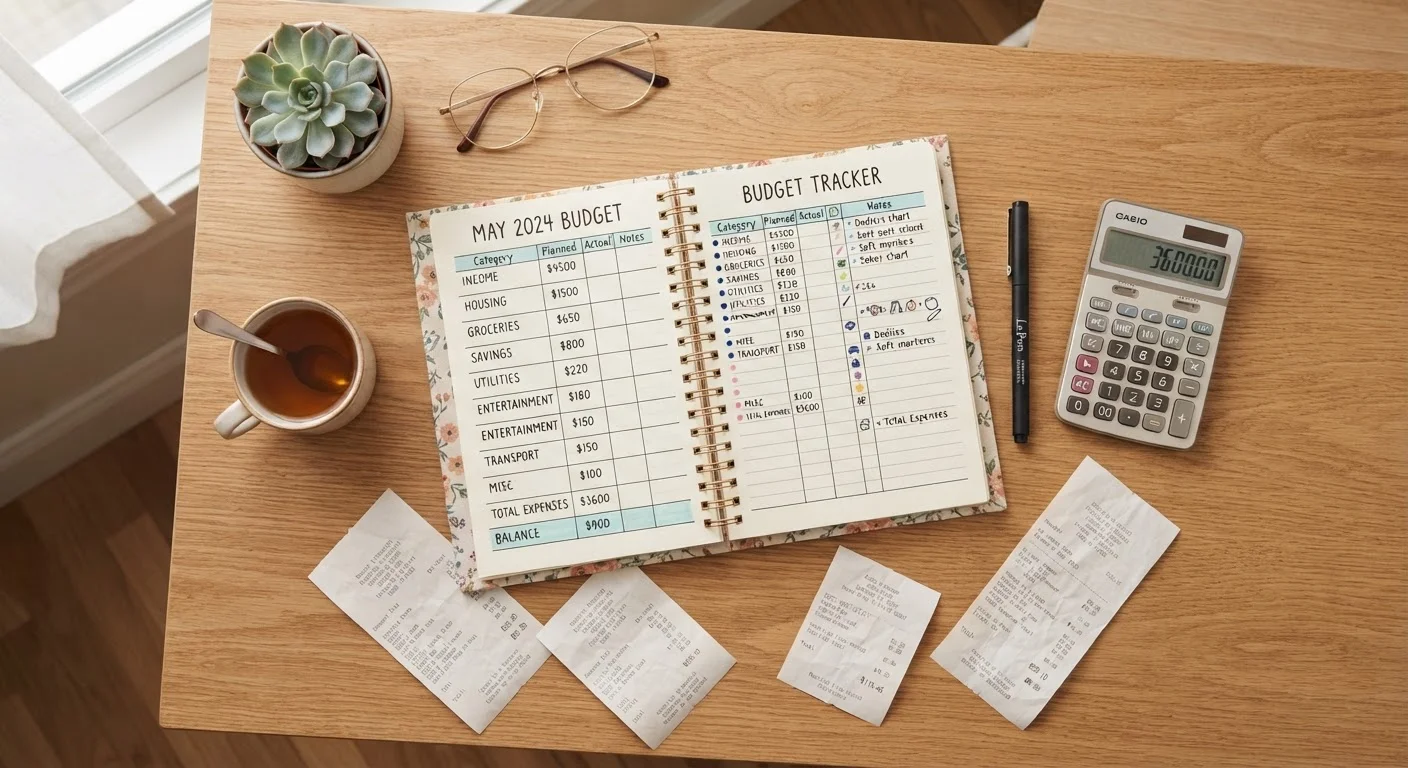
Photo: HorizonMetric.com | One Destination For Everyday Insights editorial
—— In This Article
Key Takeaways
- A budget is simply a plan for how you'll use your money each month — it doesn't have to be complicated.
- Knowing where your money goes is the foundation of every other financial goal.
- Fixed expenses stay the same each month; variable expenses fluctuate and are where most adjustments happen.
- The 50/30/20 rule is a popular starting framework, but any consistent method beats having none at all.
- Small, realistic budgets are more sustainable than overly strict ones that leave no room for real life.
What a Personal Budget Actually Is
A personal budget is a written plan that matches your income to your expenses over a set period — almost always a month. That's it. It doesn't require accounting knowledge, a spreadsheet, or a finance degree. It's simply a deliberate answer to the question: where does my money go?
Think of it as a blueprint. Before a contractor builds a house, they draw a plan so every dollar of materials ends up where it's supposed to. A budget does the same thing for your paycheck — it tells each dollar where to go before it slips away unnoticed.
Many people assume budgets are about restriction, but that's a misconception worth clearing up early. A budget can include eating out, entertainment, and personal treats. What it does is make those choices conscious rather than accidental. For a deeper look at misleading ideas that hold people back, see our piece on common budgeting myths.
Take-home pay
The amount of your paycheck after taxes and deductions are removed — the actual dollars available to spend or save.
Fixed expense
A recurring cost that stays the same each month, like rent or a loan payment, making it easy to predict in a budget.
Variable expense
A cost that changes from month to month, such as groceries or gas, depending on your choices and circumstances.
Surplus
The amount left over after subtracting all expenses from income — a positive sign that you have money available to save or redirect.
Discretionary spending
Money spent on non-essential wants — dining out, entertainment, hobbies — that you can adjust without affecting basic needs.
Irregular expense
A real but infrequent cost, like an annual insurance premium or car registration fee, that doesn't show up every month but should still be planned for.
Why Budgeting Matters for Everyday Americans
Without a budget, most households operate on a feeling — a vague sense of whether there's money left or not. That feeling is often wrong, and the gap between perception and reality is where financial stress lives.
A budget creates visibility. When you can see that $340 went to dining out last month, you can decide whether that aligns with your priorities. When you notice your grocery bill crept up $80, you can act on it. Without that data, you're navigating in the dark.
Budgeting is also the foundation for every other financial goal. Saving consistently, paying down debt, and eventually investing all become more achievable once you know your monthly cash flow. If building a savings habit is your near-term goal, our guide on starting a savings habit from scratch is a natural next step alongside this one.
Start With What You Already Know
You don't need to build a perfect budget on day one. Pull up your last month of bank statements, highlight your top five spending categories, and total them up. That one exercise — done in 20 minutes — gives you more financial clarity than most people have. Build from there.
The Core Building Blocks of Any Budget
Every budget, regardless of format, rests on three components:
- Income: All money coming in — wages, freelance pay, benefits, side work. Use your take-home (after-tax) amount, not your gross salary.
- Fixed expenses: Costs that stay the same each month, such as rent, a car payment, or a subscription with a set fee. These are predictable and easy to plan around.
- Variable expenses: Costs that change month to month — groceries, gas, utilities, dining out, clothing. These are where most budget adjustments happen.
Beyond these three, it helps to account for irregular expenses — things like annual insurance premiums, car registration, or holiday gifts. These aren't monthly, but they're predictable if you plan ahead. Dividing the annual total by 12 and setting that amount aside each month prevents these costs from blindsiding you.
For a full glossary of budgeting vocabulary, the essential budgeting terms guide covers concepts like discretionary spending, sinking funds, and net income in plain language.
Variable Expenses Need More Attention
Fixed expenses are easy to plan for because they don't change. Most budget overruns happen in variable categories — particularly food, transportation, and entertainment. When reviewing your spending, spend the most time analyzing these flexible categories, since they offer the most room to adjust.
A Simple Framework to Get Started
One of the most widely referenced starting points is the 50/30/20 rule: allocate roughly 50% of take-home pay to needs (housing, food, utilities, transportation), 30% to wants (dining, entertainment, hobbies), and 20% to savings and debt repayment beyond minimums.
These percentages are a guideline, not a law. In high-cost cities, housing alone may exceed 50% of income — and that's a reality many households face. The value of the framework isn't the exact numbers; it's the habit of thinking in categories and proportions.
Here's a practical starting sequence:
- Gather one to two months of bank and credit card statements.
- List your take-home income.
- Categorize and total your expenses.
- Subtract total expenses from income. A positive number is a surplus; a negative number means expenses exceed income.
- Adjust categories until the math balances — ideally with intentional savings built in.
Once you're comfortable with the basics, you may want to explore structured methods like envelope budgeting, which assigns cash or digital limits to specific spending categories.
This article provides general financial education and is not personalized financial advice. For guidance specific to your situation, consider consulting a qualified financial professional.
Common Pitfalls and How to Avoid Them
Even well-intentioned budgets break down. Knowing where they typically go wrong can save you weeks of frustration.
- Underestimating variable expenses: Most people guess their grocery or gas spending lower than it actually is. Pull real numbers from statements rather than estimates.
- Forgetting irregular expenses: A budget that doesn't account for car repairs or annual fees will feel accurate until it suddenly doesn't. Build a buffer category for these.
- Making the budget too strict: A plan with no room for any enjoyment is hard to sustain. Include a modest discretionary category so the budget accommodates real life.
- Treating the first draft as final: Your first budget will be wrong in some categories — that's normal. Plan to revisit and adjust after the first month of tracking.
Avoid the 'Fresh Start' Trap
Many people budget intensely after a financial scare, then abandon it once things feel stable. A budget isn't a crisis tool — it works best as a steady habit. Even a rough monthly check-in keeps you more informed than skipping it entirely. Consistency matters more than perfection.
As your budget stabilizes, you'll find yourself with clearer answers about how much you can save and invest each month. When you're ready to explore that next step, our beginner's guide to investing builds directly on these foundations.
Frequently Asked Questions

Finance Editorial Team
Finance Editorial Team is the collective byline for our editorial team and contributor network. Articles published under this byline or an editorial pen name are researched, written, and reviewed according to our editorial standards for clarity, consistency, and independence before publication.
View author profile