
Envelope Budgeting: What It Is and How It Works
Envelope budgeting is one of the oldest spending-control methods around. Learn the mechanics, the logic behind it, and its modern adaptations.
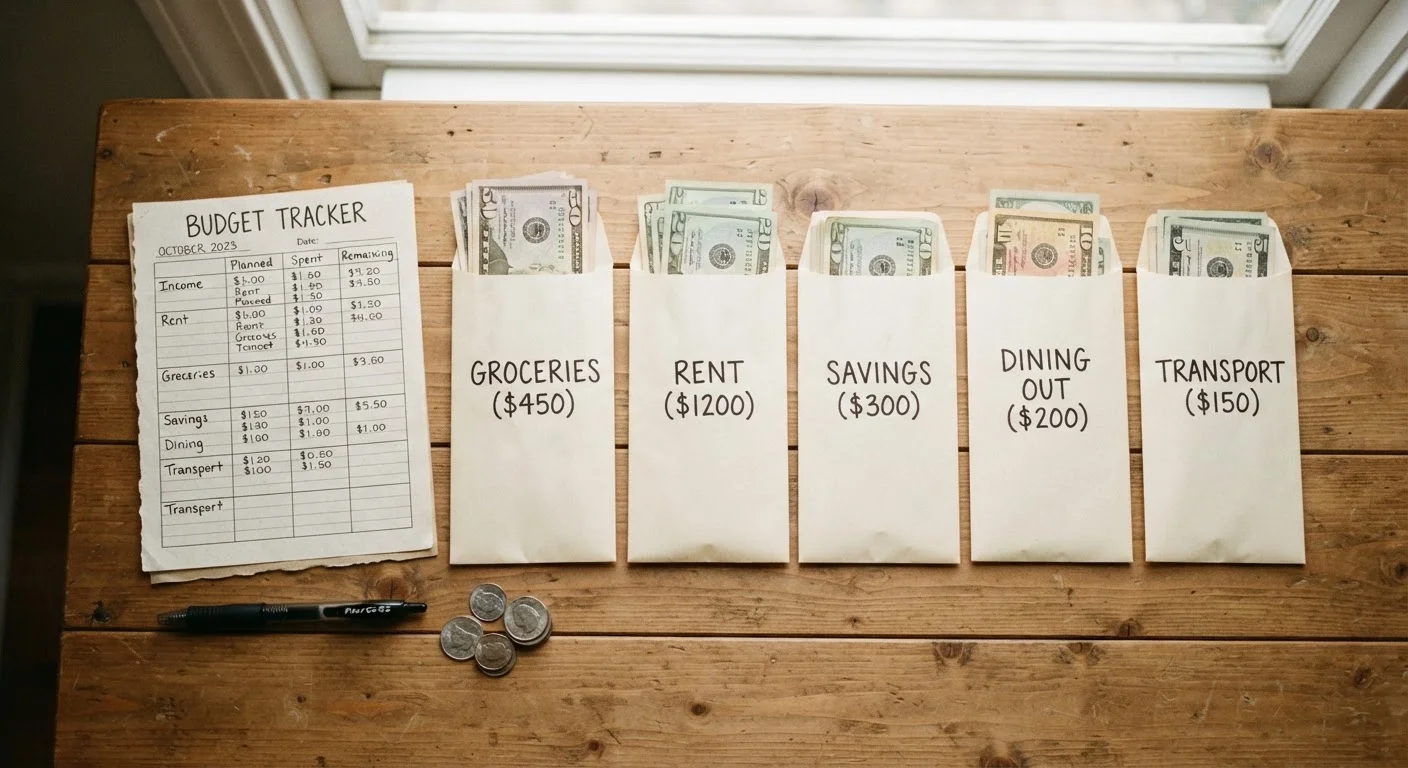
Photo: HorizonMetric.com | One Destination For Everyday Insights editorial
—— In This Article
Key Takeaways
- Envelope budgeting assigns a fixed cash amount to each spending category at the start of the month.
- When an envelope is empty, you stop spending in that category — no exceptions unless you consciously reallocate.
- The system is most effective for variable, discretionary expenses like groceries, dining, and entertainment.
- Digital versions of envelope budgeting mimic the same logic without requiring physical cash.
- The method works best when paired with a monthly review to adjust category amounts over time.
The Basic Mechanics
The envelope system is straightforward by design. At the start of each pay period, you withdraw your discretionary spending money as cash and physically sort it into labeled envelopes — one for groceries, one for gas, one for entertainment, and so on. Each envelope holds only what you've decided to spend in that category. Once it's empty, the category is closed until your next pay period.
The power isn't in the envelopes themselves — it's in the pre-commitment. You make spending decisions once, at the beginning of the month, when you're thinking clearly about priorities. That single decision governs dozens of smaller choices throughout the month. You don't ask "can I afford this?" at the checkout line — the envelope already answered that question.
Start With Just Three or Four Envelopes
New budgeters often try to track too many categories at once and burn out quickly. Begin with your three or four biggest variable spending areas — usually groceries, dining out, gas, and entertainment. Add more categories only after the habit feels natural.
Fixed expenses like rent, utilities, and minimum loan payments don't go in envelopes. Apply envelope budgeting only to the variable spending you can actually control month to month.
Why It Works: The Psychology of Cash
Research in behavioral economics has consistently found that people spend differently when they use cash versus cards. Paying with physical bills creates a more immediate sense of loss, which tends to make people more deliberate about purchases. Credit and debit cards abstract that experience — swiping feels less costly in the moment, even when it isn't.
Envelope budgeting exploits that psychological reality intentionally. The physical act of handing over cash — and watching an envelope thin out — keeps you connected to the real-time cost of your choices. When the grocery envelope is down to its last $20, you naturally start making different decisions in the store.
“Budgeting is not about limiting yourself — it's about making the things that excite you possible.”
— Unknown, Common personal finance principle
This is also why the method is often recommended for people who've struggled with card overspending. It removes the buffer between the decision to spend and the feeling of spending.
36%
Americans with no written or tracked budget
A survey by the National Foundation for Credit Counseling found that a significant share of U.S. adults do not follow a formal budget of any kind.
~18%
More spent per transaction with cards vs. cash
Research published in the Journal of Consumer Research found that payment form significantly affects how much people spend, with card users typically spending more per transaction than cash users.
Digital Envelope Budgeting
Physical cash isn't practical for everyone. Many households use direct deposit, pay bills online, or rarely carry cash. Digital envelope budgeting preserves the same category-based logic without requiring paper and bills. You assign a spending limit to each virtual "envelope" — a category in a spreadsheet or app — and track each purchase against that limit manually or automatically.
The trade-off is that digital versions require more self-discipline. There's no empty envelope to stop you — only a number turning negative. That said, for people who already manage money digitally, the system can be easier to maintain consistently. If you're weighing formats, consider how different tracking methods compare for your habits and lifestyle.
Strict Budgeting Has Real Trade-Offs
The envelope system can feel restrictive, especially in the early months. That friction is part of how it works — but it also comes with psychological costs worth understanding. See the honest trade-offs of strict budgeting for a balanced look at both the benefits and the challenges.
Setting Up Your Envelopes
Getting started takes one focused session. Pull three months of bank and card statements and calculate your average monthly spending in each variable category. Those averages become your starting envelope amounts. Don't aim for perfection on the first try — the amounts will need adjustment after your first month.
Common envelope categories include: groceries, dining out, gas, personal care, clothing, household supplies, and entertainment. Some people add a small "miscellaneous" envelope for unplanned minor expenses rather than raiding other envelopes.
After your first month, do a honest review. Were certain envelopes consistently emptied too early? Were others never touched? Refine from there. A structured monthly spending audit can help you reallocate funds toward savings or debt payoff as your system matures.
Envelope budgeting isn't the only method available. If you want to compare it against other frameworks, see how it stacks up in zero-based versus percentage-based budgeting, or consider whether the 50/30/20 rule might suit your situation better.
This article is for general informational and educational purposes only and does not constitute personalized financial advice. Consult a qualified financial professional for guidance tailored to your specific circumstances.
Frequently Asked Questions

Finance Editorial Team
Finance Editorial Team is the collective byline for our editorial team and contributor network. Articles published under this byline or an editorial pen name are researched, written, and reviewed according to our editorial standards for clarity, consistency, and independence before publication.
View author profile