
The 50/30/20 Rule: A Simple Framework for Everyday Spending
Learn how the 50/30/20 budgeting rule divides income into needs, wants, and savings — and whether this framework fits your situation.
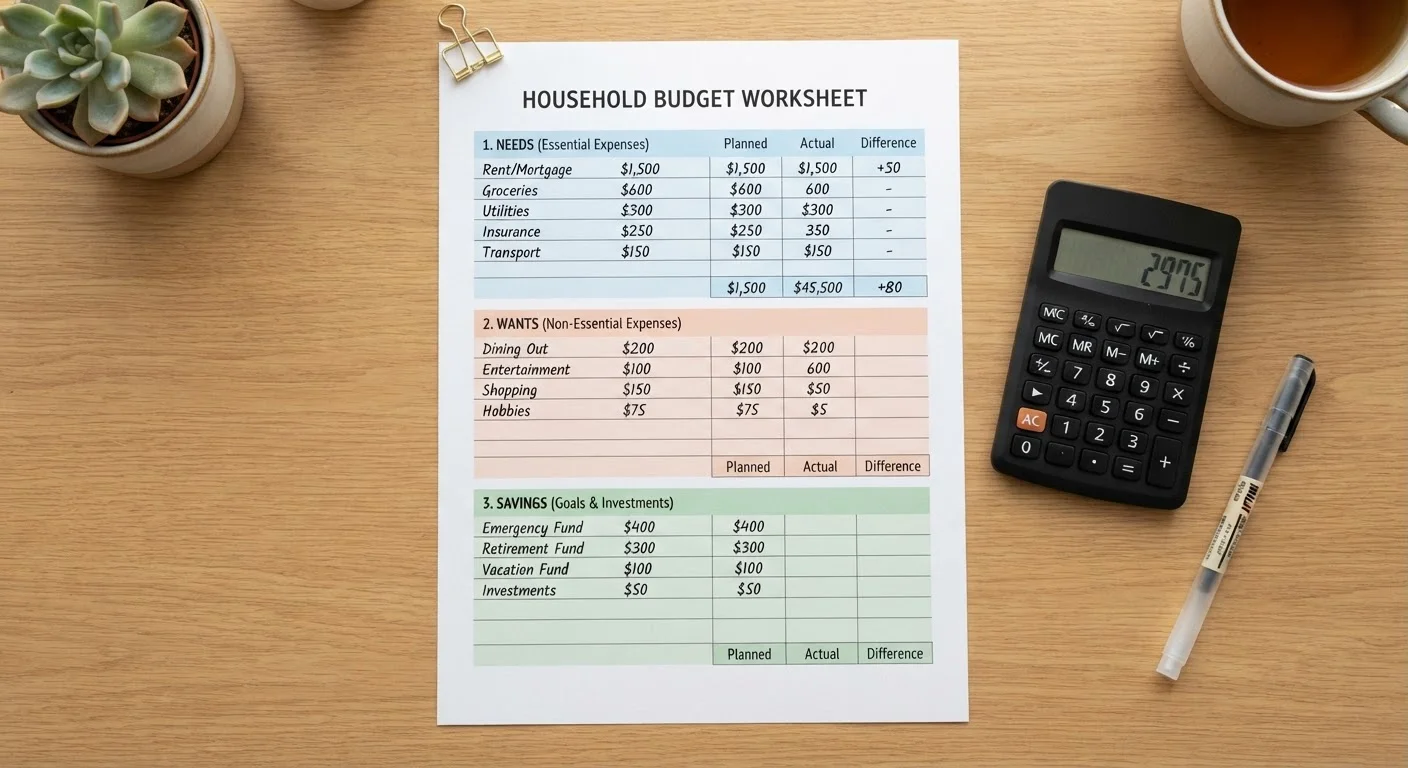
Photo: HorizonMetric.com | One Destination For Everyday Insights editorial
—— In This Article
Key Takeaways
- The 50/30/20 rule splits take-home pay into needs, wants, and savings using percentage targets.
- Needs include essentials like rent, groceries, utilities, and minimum debt payments.
- Wants cover discretionary spending — dining out, subscriptions, entertainment, and hobbies.
- The 20% savings category includes emergency funds, retirement contributions, and extra debt payments.
- The rule is a starting framework, not a rigid prescription — adjusting percentages for your situation is appropriate.
- Consulting a licensed financial professional is advisable for personalized budgeting decisions.
How the Three Categories Break Down
If your monthly take-home pay is $4,000, the 50/30/20 rule translates to $2,000 for needs, $1,200 for wants, and $800 for savings and debt repayment. Understanding what belongs in each bucket is the first practical step.
50% — Needs
Needs are non-negotiable expenses: housing costs (rent or mortgage), basic groceries, utilities, health insurance premiums, transportation required for work, and minimum monthly debt payments. These are bills you must pay to maintain basic stability. If your needs consistently exceed 50%, that signals a structural budget challenge worth addressing — possibly by reducing a fixed cost or increasing income over time.
30% — Wants
Wants are everything discretionary: dining out, streaming subscriptions, gym memberships, clothing beyond basics, vacations, and hobbies. These improve quality of life but aren't survival essentials. The wants category often surprises people — a daily coffee or a premium phone plan sits here, not under needs.
20% — Savings and Debt Repayment
This bucket covers emergency fund contributions, retirement account deposits (such as a 401(k) or IRA), and any debt payments above the required minimum. If you're carrying high-interest debt, many financial educators suggest prioritizing it heavily within this 20% before building long-term investments. For broader strategies on allocating across competing goals, see managing multiple savings priorities.
~33%
Average share of income Americans spend on housing
According to U.S. Bureau of Labor Statistics Consumer Expenditure Survey data, housing typically represents the largest single expense category for American households.
57%
Americans living paycheck to paycheck
A 2023 LendingClub report found that more than half of U.S. consumers describe their financial situation as paycheck to paycheck, underscoring the need for accessible budgeting frameworks.
$1,000
Emergency savings goal most financial educators recommend as a starting target
Many personal finance educators suggest building a starter emergency fund before aggressively paying down non-urgent debt, as a buffer against unplanned expenses.
Why Simplicity Is the Framework's Biggest Strength
Many budgeting approaches require categorizing dozens of line items, which can feel like a part-time job. The 50/30/20 rule trades granularity for consistency. Because you're working with three buckets rather than twenty, it's far easier to check in monthly and course-correct quickly.
This is particularly useful for people just beginning to budget. If you're new to the process, starting with foundational concepts before applying any framework will make the numbers more meaningful — building a foundation for personal budgeting is a practical place to start.
Use Your After-Tax Pay as the Starting Point
Always calculate your three budget percentages using take-home pay — not your gross salary. If your employer automatically deducts contributions to a retirement plan or health insurance before your paycheck hits your account, those amounts are already handled before you apply the 50/30/20 split. This keeps your math grounded in the money you actually control.
The framework also adapts naturally to life changes. A pay raise, a new rent increase, or a paid-off car loan shifts the math, and recalibrating percentages takes minutes rather than rebuilding an entire spreadsheet. That flexibility is one reason it remains popular across income levels and life stages.
When the 50/30/20 Rule Needs Adjusting
The rule was designed for median-income households with moderate fixed costs. In practice, several situations call for intentional modifications.
High cost-of-living areas: In cities where rent alone can consume 40% of take-home pay, forcing the full framework is counterproductive. A 60/20/20 or 65/15/20 split may better reflect the reality of your expenses while still maintaining the savings discipline the 20% represents.
Aggressive debt payoff goals: If eliminating high-interest credit card debt is your priority, redirecting from the wants category toward the 20% bucket accelerates payoff without touching essentials. This is a common and financially sound adjustment.
Shared households: Couples or roommates splitting expenses may find that pooled income changes how the percentages apply. Budgeting in a shared household introduces specific structures for managing combined finances fairly.
If you want a more granular, step-by-step method for applying any spending framework to your actual numbers, building your first monthly budget walks through that process in detail.
The 50/30/20 Rule Is a Starting Framework
No budgeting method is one-size-fits-all. The 50/30/20 rule is most useful as a diagnostic and starting framework — a way to see where your money is going and whether it broadly aligns with your goals. If another approach, such as envelope budgeting, fits your habits better, that's a legitimate choice. Consistency with any system matters more than which system you choose. Once you're applying a framework, running a monthly budget audit helps you stay on track.
This article provides general financial education and is not personalized financial advice. For guidance specific to your circumstances, consider consulting a licensed financial professional.
Frequently Asked Questions

Finance Editorial Team
Finance Editorial Team is the collective byline for our editorial team and contributor network. Articles published under this byline or an editorial pen name are researched, written, and reviewed according to our editorial standards for clarity, consistency, and independence before publication.
View author profile