
Saving for Multiple Goals at Once: Retirement, Emergency Fund, and Debt Repayment
Splitting limited income across competing priorities is one of the hardest parts of personal finance. Here's how to think through the tradeoffs.
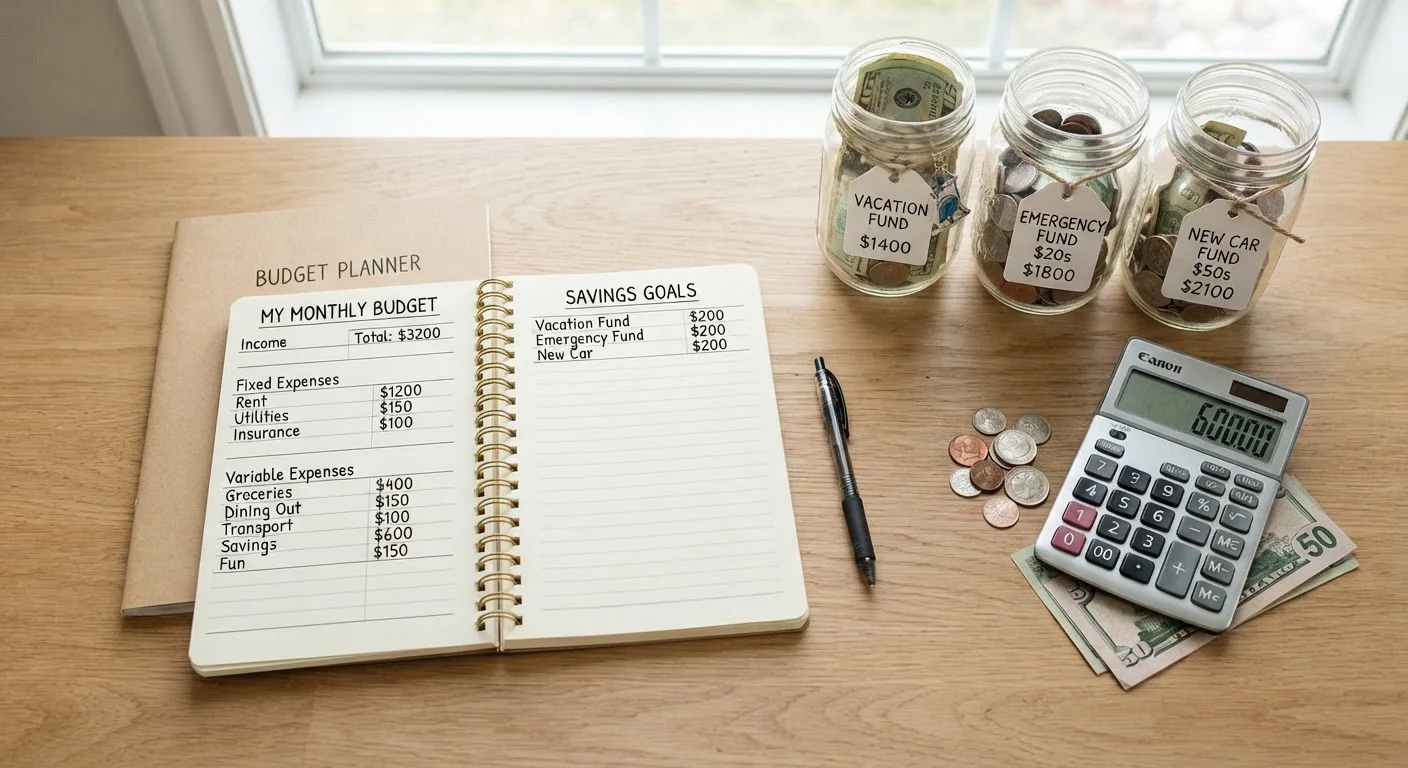
Photo: HorizonMetric.com | One Destination For Everyday Insights editorial
—— In This Article
Key Takeaways
- A small emergency fund should come before aggressive debt payoff or retirement saving.
- High-interest debt often costs more than investments can earn — prioritize it accordingly.
- Employer retirement match is effectively free money and generally worth capturing first.
- Automation reduces decision fatigue and makes multi-goal saving more consistent.
- Your allocation should shift as debt shrinks, income grows, or goals change.
Why Multiple Goals Feel Impossible at Once
Most personal finance advice treats goals in isolation: save for retirement, build an emergency fund, pay down debt. In practice, most Americans are trying to do all three simultaneously with the same limited paycheck. That tension is real, and there is no single formula that resolves it perfectly for every household.
What you can do is build a logical framework — one grounded in math, risk management, and your own situation — so that every dollar you allocate has a deliberate reason behind it. This guide walks through that framework step by step. For a broader budgeting structure to layer these goals into, the 50/30/20 rule is a widely used starting point worth understanding.
Establish a Priority Order Before You Allocate
Trying to split money equally across all goals at once can dilute your progress everywhere. A sequenced priority list — not a rigid one, but a working one — helps you make faster decisions when money is tight.
A commonly recommended order, based on general financial planning principles, looks like this:
- Starter emergency fund — a small buffer (often cited as $1,000) to prevent small crises from becoming new debt.
- Employer retirement match — if your employer matches 401(k) contributions, contribute at least enough to capture the full match before directing money elsewhere.
- High-interest debt — balances with interest rates significantly above likely investment returns (often above 7–8%) typically cost more to carry than you could reasonably earn investing.
- Full emergency fund — building toward three to six months of essential expenses.
- Additional retirement and other goals — once high-cost debt is addressed and your safety net is in place.
This is general guidance, not a universal prescription. Your specific interest rates, income stability, and personal risk tolerance all matter. Consider consulting a licensed financial adviser to tailor this to your circumstances.
Treat Your Priority Order as a Living Document
Write your priority list down and revisit it every six months. As debt shrinks or income rises, your best allocation changes. A list that served you well at $45,000 a year may need adjustment at $60,000.
The Emergency Fund: Your Financial Circuit Breaker
An emergency fund is not a luxury — it is a risk management tool. Without one, an unexpected car repair or medical bill often ends up on a credit card, adding high-interest debt and undermining every other goal you are working toward.
Building a full fund while carrying debt and saving for retirement simultaneously can feel overwhelming. A common practical approach is to pause at a smaller starter amount — enough to handle most everyday emergencies — while you tackle high-interest balances. Once high-rate debt is cleared, redirect that payment toward completing your fund.
For a detailed breakdown of how much is typically recommended and why experts treat this as foundational, see our article on emergency funds as a financial priority.
Where to Keep Your Emergency Fund
Emergency funds should be liquid and stable — meaning accessible quickly without risk of losing value. A high-yield savings account is a commonly recommended vehicle. For a comparison of account types, see our overview of high-yield vs. traditional savings accounts. Keep this money separate from your checking account to reduce the temptation to spend it.
Debt Repayment: Know Your Interest Rate Math
Not all debt is equally urgent. A federal student loan at 4% interest is a very different problem from a credit card charging 22% APR. The math is straightforward: if debt costs you more in interest than you could reasonably expect to earn by investing, paying down that debt first delivers a guaranteed, risk-free return equal to the interest rate.
Two common repayment strategies:
- Avalanche method: Pay minimums on all debts, then direct extra money to the highest-interest balance first. Minimizes total interest paid.
- Snowball method: Pay minimums on all debts, then target the smallest balance first regardless of rate. Builds momentum through quick wins.
Neither is universally superior. The best method is the one you will stick with. The nuances of carrying debt while simultaneously saving are explored in depth in our piece on when saving while in debt makes sense.
High-Interest Debt Can Silently Derail All Other Goals
Carrying a $5,000 credit card balance at 22% APR costs roughly $1,100 in interest annually — money that cannot go toward savings or retirement. Before directing extra income to any other goal, understand exactly what your high-rate balances are costing you each month. That number may shift your priorities significantly.
Retirement Saving: Why Starting Early Still Matters
Compound growth — where earnings generate their own earnings over time — makes early retirement contributions disproportionately valuable. Even modest contributions in your 20s or 30s can outpace larger contributions made later, given enough time in the market.
This is why capturing an employer match is almost always recommended before aggressively paying down lower-rate debt: a 50% or 100% employer match is an immediate, guaranteed return on that contribution that is difficult to beat. Beyond the match, how much to contribute depends on your debt load, income, and time horizon.
57%
Americans unable to cover a $1,000 emergency
According to a Bankrate survey, more than half of U.S. adults could not cover a $1,000 unexpected expense from savings alone.
~$6,000
Average U.S. household credit card debt
Federal Reserve data indicates that households carrying credit card balances average several thousand dollars in revolving debt, often at double-digit interest rates.
33%
Workers not contributing enough to get full employer match
Research from Vanguard's How America Saves report has consistently found that a significant share of eligible employees leave some portion of their employer match on the table.
As your investment strategy evolves, understanding how to think about asset allocation across life stages becomes increasingly relevant.
When you get a raise, commit half of the after-tax increase to your next savings priority before it gets absorbed into spending. Automate this reallocation on your first paycheck at the new rate.
Lifestyle inflation is one of the biggest barriers to long-term savings progress. Redirecting a portion of new income immediately — before you adjust your spending baseline — makes the sacrifice nearly painless.
If you cannot decide between avalanche and snowball debt repayment, use the avalanche method on paper but make your first extra payment toward a balance you can eliminate within three months. The quick win builds momentum without costing much in extra interest.
Behavioral finance research consistently shows that visible progress improves savings persistence. A hybrid start can deliver both the emotional boost of the snowball and the long-term savings of the avalanche.
Building a Workable Allocation System
Once you have a priority order, you need a system that runs without requiring constant willpower. Automation is the most effective tool available. Scheduling transfers to a savings account and automatic retirement contributions on payday means the money moves before spending decisions occur.
Consider using separate labeled accounts — sometimes called sinking funds — for distinct goals. Visibility into each bucket's progress reinforces the habit. Our guide on automating your finances explains both the mechanics and the psychology behind why scheduled transfers work.
Review your allocation every six months, or whenever your income or debt load changes significantly. As high-interest debt disappears, that freed-up cash flow should be deliberately redirected — ideally to the next priority on your list rather than absorbed by lifestyle creep.
If you are starting from scratch with no savings habit yet, see our practical guide to building a savings habit from zero.
This article is for general informational and educational purposes only and does not constitute personalized financial, investment, tax, or legal advice. Consult a qualified, licensed financial professional before making decisions based on your individual circumstances.

Finance Editorial Team
Finance Editorial Team is the collective byline for our editorial team and contributor network. Articles published under this byline or an editorial pen name are researched, written, and reviewed according to our editorial standards for clarity, consistency, and independence before publication.
View author profile