
Sinking Funds Explained: Saving in Buckets for Known Future Expenses
Sinking funds are a simple but underused savings tool. Learn what they are, how they work, and which expenses they're best suited for.
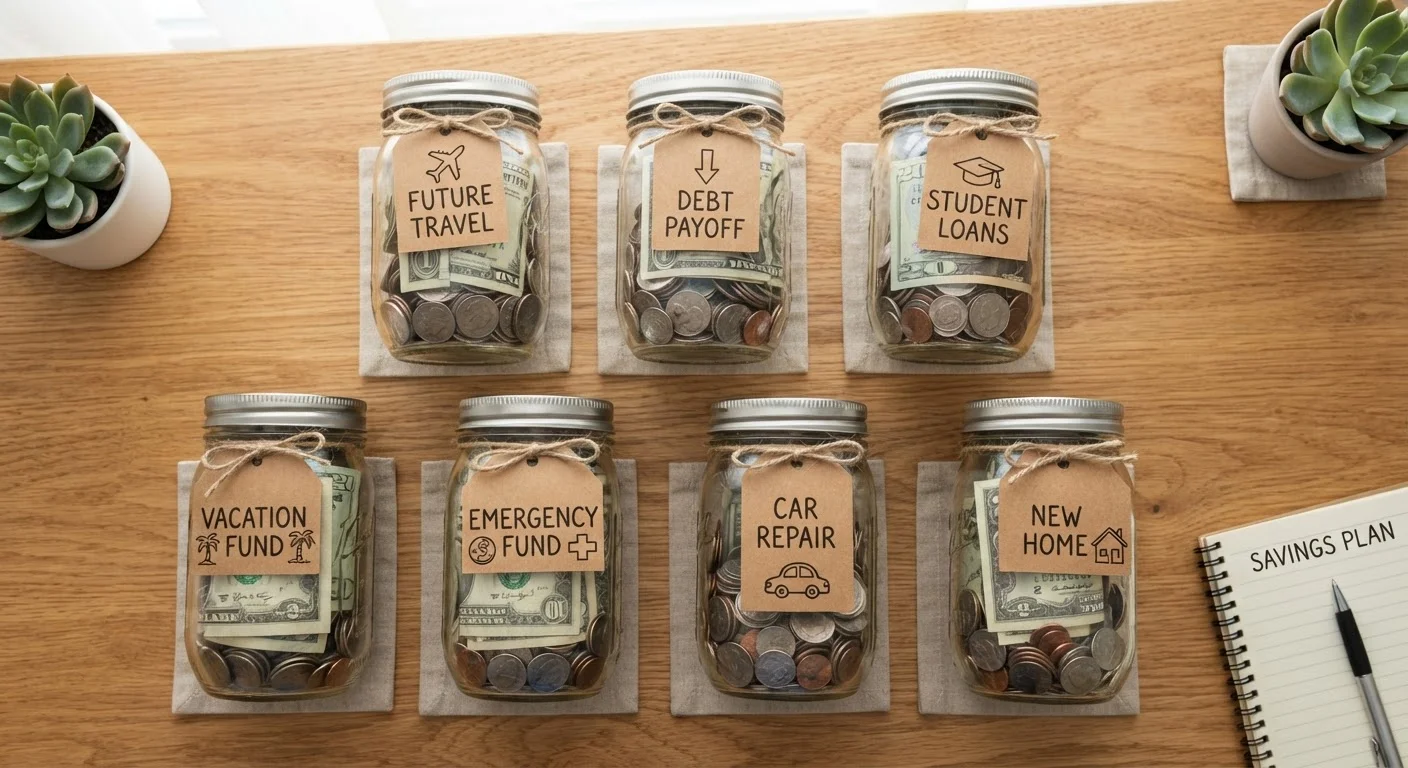
Photo: HorizonMetric.com | One Destination For Everyday Insights editorial
—— In This Article
Key Takeaways
- Sinking funds help you save gradually for expenses you know are coming, like car repairs or annual insurance premiums.
- Unlike emergency funds, sinking funds are for planned costs — not financial surprises.
- You can maintain multiple sinking funds simultaneously, each for a different goal.
- Setting aside small, regular amounts reduces the budget shock of large periodic expenses.
- Sinking funds are most effective when tied to a specific target amount and timeline.
What Is a Sinking Fund?
A sinking fund is a savings bucket you fill gradually so that when a known expense arrives, the money is already there. You identify a future cost, estimate how much you'll need and when, and then divide that total into equal monthly deposits.
The term comes from accounting and bond markets, where organizations set aside funds over time to retire a debt. In everyday personal finance, the concept is the same — just applied to household expenses rather than corporate bonds.
Think of it as reverse budgeting for predictable costs. Instead of scrambling to cover a $1,200 vet bill or a $900 car insurance renewal, you've been quietly setting aside $100 or $75 a month all year.
Sinking Funds Are Not Emergency Funds
It's tempting to treat any dedicated savings as an emergency fund, but keeping these pools separate matters. Your emergency fund handles the unexpected; sinking funds handle the predictable. Mixing them can leave you without a true safety net when you need one most.
Sinking Funds vs. Emergency Funds: An Important Distinction
People sometimes confuse sinking funds with emergency funds, but they serve very different roles. An emergency fund exists to absorb genuine financial shocks — a job loss, an unplanned hospital visit, a broken furnace in January. You don't know when these events will happen or how much they'll cost.
A sinking fund, by contrast, targets costs you can see coming. You know your car registration comes due every year. You know the kids need new school supplies each fall. These aren't emergencies — they're predictable expenses that many households handle reactively instead of proactively.
Both types of savings accounts matter, but they shouldn't be conflated or raided for each other's purposes. Using your emergency fund for a planned vacation, for example, leaves you exposed when a real crisis hits.
~40%
Americans who couldn't cover a $400 emergency expense
Federal Reserve surveys have consistently found that a substantial share of U.S. adults would struggle to cover an unexpected $400 expense without borrowing or selling something.
12+
Distinct expense categories suited to sinking funds
Financial planning resources commonly identify more than a dozen recurring, predictable household expense categories where sinking funds provide measurable budgeting relief.
How to Set Up and Use Sinking Funds
Getting started is straightforward. Follow these steps:
- List your known future expenses. Think annually: insurance renewals, holiday gifts, vacations, vehicle maintenance, medical deductibles, and home repairs are common examples.
- Estimate the cost of each. Use last year's bills or a reasonable estimate if the cost varies.
- Set a savings timeline. Determine how many months you have before each expense is due.
- Divide and automate. Divide the target amount by the number of months and set up an automatic transfer on payday. If you need $480 for holiday gifts by December and it's June, that's $80 per month.
- Keep it separate. Whether you use labeled savings sub-accounts, a budgeting app, or a spreadsheet, the goal is to prevent sinking fund money from being spent on everyday expenses.
If you're building a savings habit from scratch, starting with just one or two sinking funds is perfectly reasonable. Scale up as the habit becomes routine.
Automate Your Sinking Fund Transfers
Set up automatic transfers on the day you get paid so sinking fund money moves before you have a chance to spend it. Even $25 a month into a car repair fund adds up to $300 over a year — often enough to cover a modest repair without touching your emergency savings or reaching for a credit card.
Common Sinking Fund Categories
There's no universal list — your sinking funds should reflect your life. That said, these categories apply to many U.S. households:
- Vehicle expenses: Registration, oil changes, tires, and periodic repairs
- Home maintenance: HVAC servicing, roof inspections, appliance replacement
- Medical and dental costs: Annual deductibles, vision exams, dental work not fully covered by insurance
- Holiday and gift spending: Birthdays, anniversaries, winter holidays
- Travel: A planned vacation or family visit
- Annual subscriptions and memberships: Software renewals, gym memberships, professional dues
- Education costs: School supplies, extracurricular fees, tutoring
If you're managing multiple savings goals simultaneously, sinking funds help you carve out room for irregular expenses without derailing your broader financial priorities.
Sinking Funds in a Broader Budget
Sinking funds fit naturally into most budgeting approaches. Whether you follow a zero-based budget, the 50/30/20 rule, or a looser spending plan, sinking fund contributions can be treated as fixed monthly expenses — because in practice, that's exactly what they are.
The psychological benefit is just as real as the mathematical one. When the car insurance bill arrives, it no longer feels like a crisis. You're not putting it on a credit card or pulling from savings earmarked for something else. The money is there, designated, and ready. That predictability reduces financial stress and helps you stay on track with the rest of your budgeting plan.
For those carrying debt, sinking funds still have a place. A small fund for car maintenance, for instance, can prevent a $400 repair from becoming $400 of new credit card debt — potentially costing more in interest over time. See our piece on when saving while in debt makes sense for a fuller discussion.
This article is for general informational purposes only and does not constitute personalized financial advice. Consult a licensed financial professional for guidance specific to your situation.
Frequently Asked Questions

Finance Editorial Team
Finance Editorial Team is the collective byline for our editorial team and contributor network. Articles published under this byline or an editorial pen name are researched, written, and reviewed according to our editorial standards for clarity, consistency, and independence before publication.
View author profile