
The Role of Fees in Investing: What Expense Ratios and Commissions Actually Cost You
Investment fees can quietly erode long-term gains. Learn what expense ratios, trading commissions, and management fees mean in real dollar terms.
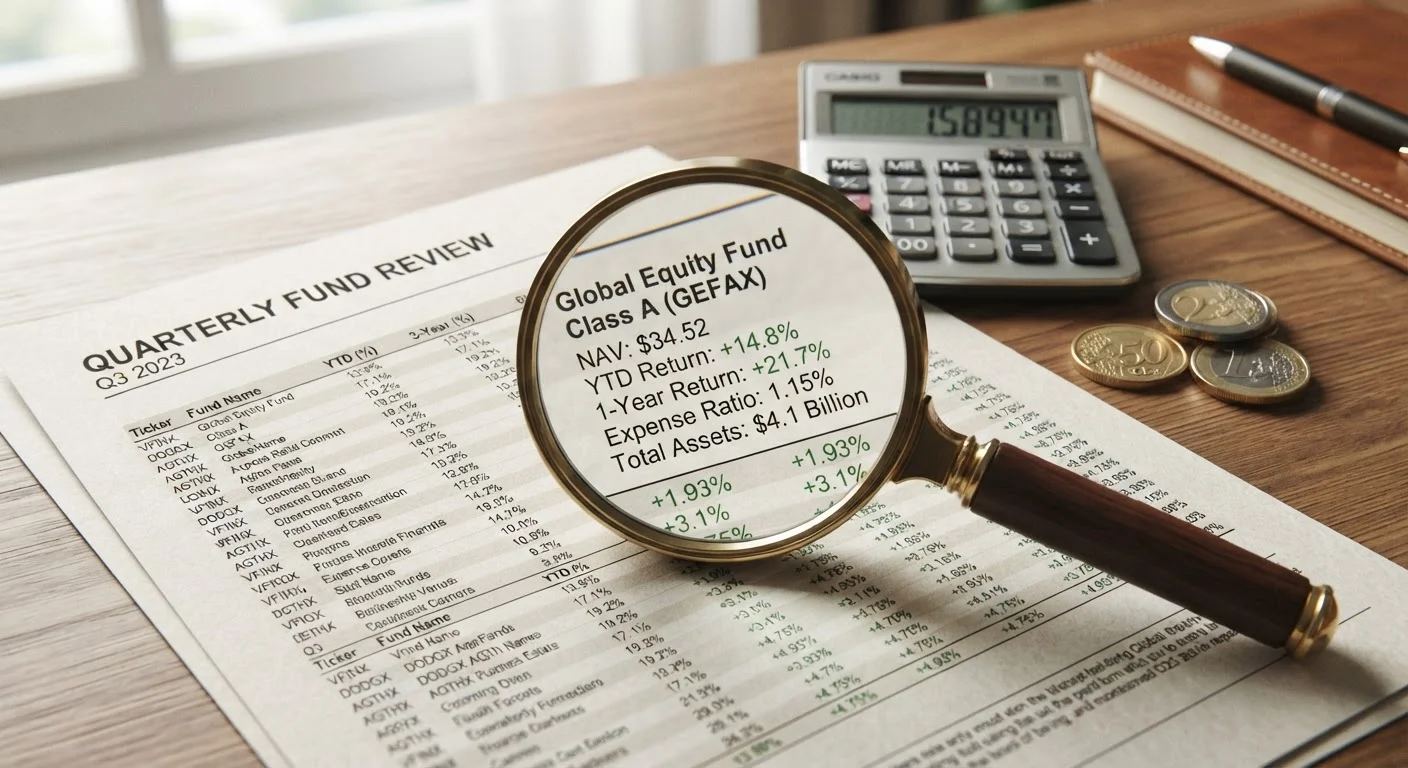
Photo: HorizonMetric.com | One Destination For Everyday Insights editorial
—— In This Article
Key Takeaways
- An expense ratio of 1% versus 0.05% can cost tens of thousands of dollars over 30 years.
- Many brokerage platforms now offer $0 commission trades, but other fees may still apply.
- Fund management fees, account maintenance fees, and sales loads all chip away at returns.
- Lower fees do not automatically mean lower quality — index funds often outperform high-fee funds.
- Always check the fee disclosure in a fund's prospectus before investing.
Why Fees Matter More Than Most Investors Realize
When you start investing, it's tempting to focus entirely on which stocks or funds might grow the most. But one of the most reliable ways to improve your long-term outcome is to pay close attention to what you're paying — not just what you're earning. Investment fees quietly reduce your returns every single year, and because of how compounding works, even small differences in fees can mean enormous differences in outcomes over decades.
If you're new to investing, see our introduction to what investing actually means before diving into fees. Understanding the foundation helps make the fee conversation much more concrete.
$17,000+
Lost to fees over 30 years on a $10,000 investment
Illustrative comparison between a 0.05% and 1.00% expense ratio, assuming 7% average annual growth — demonstrates compounding fee drag.
0.03%
Expense ratio of some broad market index funds
Several widely available index funds charge as little as 0.03% annually, down from industry averages of 1%+ in prior decades, according to fund industry data.
5.75%
Maximum front-end sales load allowed on mutual funds
FINRA regulations cap front-end sales loads at 8.5%, though most fund companies impose their own caps around 5.75% of the purchase amount.
Expense Ratios: The Cost of Owning a Fund
The expense ratio is the most common fee investors encounter. It's an annual charge expressed as a percentage of your investment, automatically deducted from the fund's value rather than billed to you directly. A fund with a 0.05% expense ratio (common in index funds) costs $5 per year on a $10,000 investment. A fund charging 1.00% costs $100 on that same amount.
That difference might sound trivial, but consider a 30-year horizon. Assuming 7% average annual growth on a $10,000 initial investment, a 0.05% expense ratio leaves you with roughly $74,500. A 1.00% expense ratio reduces that to approximately $57,400 — a gap of more than $17,000 on a single initial investment, purely from fees. Scale that across years of contributions and the drag becomes substantial.
Where to Find a Fund's Expense Ratio
Every mutual fund and ETF is required to disclose its expense ratio in its prospectus and on its summary fact sheet. You can find this information on the fund company's website, through your brokerage platform's fund screener, or by searching the SEC's EDGAR system at sec.gov. Compare the expense ratio against similar funds tracking the same index or asset class before committing.
Actively managed funds — where a team of analysts picks investments — typically carry higher expense ratios, often between 0.50% and 1.50%. Passively managed index funds, which simply track a market index like the S&P 500, generally charge far less. Research has consistently shown that most actively managed funds do not outperform their benchmark index over long periods, making the higher fee difficult to justify for many investors.
Trading Commissions and Other Transaction Costs
A trading commission is a flat fee charged each time you buy or sell a security. For many years, investors paid $5 to $10 per stock trade. The widespread adoption of commission-free trading at major brokerages has largely eliminated this cost for stocks and exchange-traded funds (ETFs).
However, commissions haven't disappeared entirely. Options trades often carry a per-contract fee (commonly $0.50–$0.65 per contract). Some brokerages charge for purchasing mutual funds outside their own fund family. Bond transactions may include markups built into the price rather than a stated commission.
Beyond commissions, watch for sales loads on mutual funds — one-time charges of 3% to 5.75% when you buy (front-end) or sell (back-end). A 5% front-end load on a $5,000 investment means $250 leaves your account before a single dollar is invested. No-load funds eliminate this cost entirely and are widely accessible. Chasing funds with high sales loads is one of the common missteps covered in our article on portfolio decisions new investors often regret.
Advisory and Account Fees Worth Knowing
If you work with a human financial adviser or use a robo-adviser platform, you may pay a separate management fee or advisory fee, typically 0.25% to 1.00% of your managed assets annually. This is on top of the expense ratios of any underlying funds in your portfolio — so the total cost can stack higher than either number suggests alone.
Some accounts also charge account maintenance fees (often $25–$75 per year) if your balance falls below a minimum threshold, and inactivity fees if you don't place trades within a certain period. These are straightforward to avoid by understanding the terms of your brokerage account before opening it.
Fees also intersect with risk decisions. Risk and return involve a fundamental trade-off — and paying more in fees is a guaranteed cost, while higher returns from an expensive active fund are never certain.
Total Cost Requires Adding All Layers
When evaluating an investment, add the fund's expense ratio to any advisory or platform fee to find your true annual cost. A 0.50% advisory fee plus a 0.80% expense ratio results in a 1.30% total drag — higher than either figure implies on its own. Many brokerage platforms display an 'all-in' cost estimate; if yours doesn't, calculate it manually before deciding.
This article is for general informational and educational purposes only and does not constitute personalized financial or investment advice. Consult a licensed financial professional before making decisions about your own investments.
Frequently Asked Questions

Finance Editorial Team
Finance Editorial Team is the collective byline for our editorial team and contributor network. Articles published under this byline or an editorial pen name are researched, written, and reviewed according to our editorial standards for clarity, consistency, and independence before publication.
View author profile