
Risk and Return: Why Every Investment Involves a Trade-Off
Higher potential returns typically come with higher risk. Explore how this trade-off works and what it means when building an investment approach.
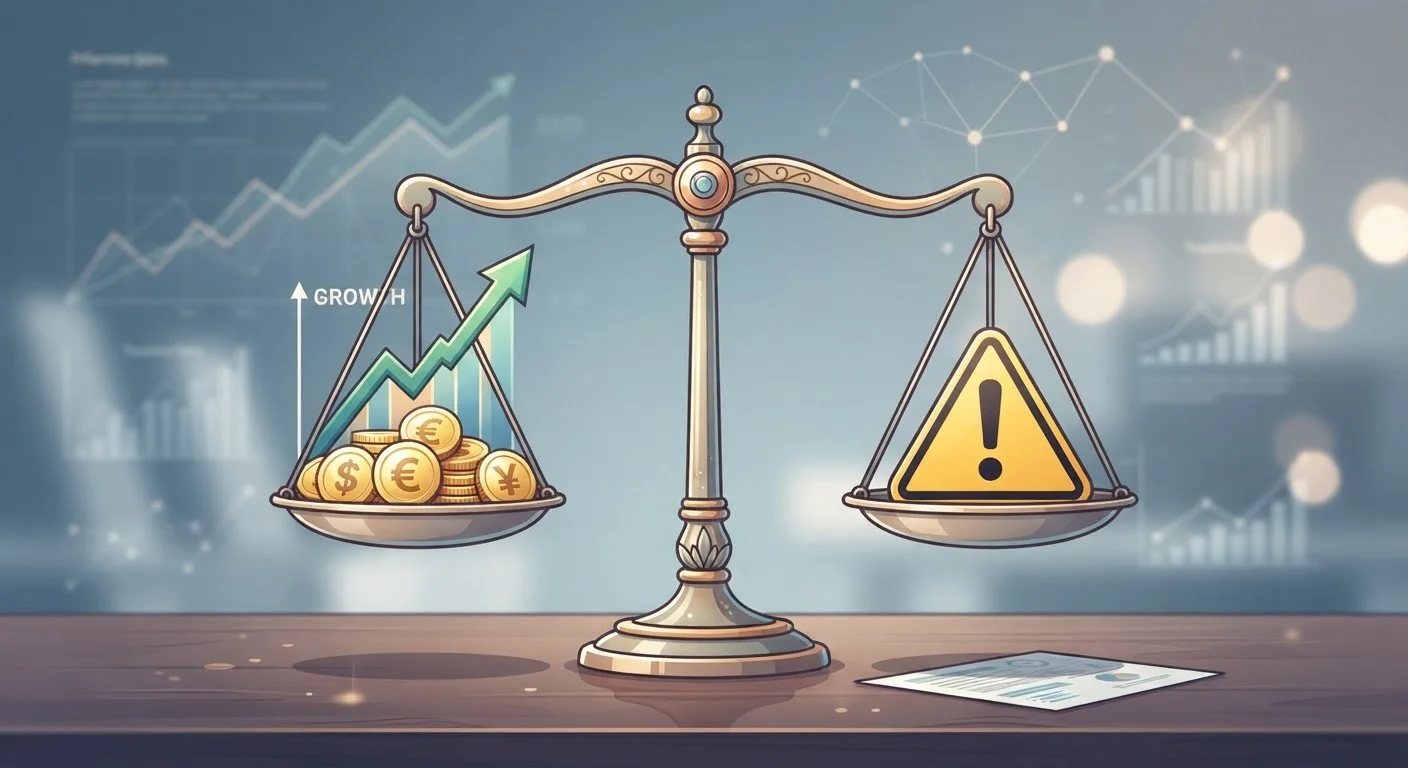
Photo: HorizonMetric.com | One Destination For Everyday Insights editorial
—— In This Article
Key Takeaways
- Higher potential returns almost always come with higher potential for loss — this relationship is fundamental to investing.
- Risk tolerance depends on your timeline, financial goals, and personal comfort with uncertainty.
- Diversification can help manage risk without eliminating it entirely.
- Your age and investment horizon should influence how much risk you take on.
- Understanding risk types — market, inflation, and liquidity — helps you make more informed choices.
What the Risk-Return Trade-Off Really Means
If you've ever wondered why some investments seem exciting while others feel boring, the risk-return trade-off is usually the explanation. This principle — one of the most fundamental in personal finance — states that the potential for higher returns is inseparable from accepting higher risk.
Think of it this way: a federally insured savings account is highly predictable. You won't lose your principal, but you'll also earn a modest interest rate. A stock, by contrast, can grow substantially over time — but it can also lose significant value. Neither outcome is guaranteed. That uncertainty is precisely what defines risk in investing.
Understanding what investing actually means is the first step — and recognizing this trade-off is the second. Once you understand it, you can make more deliberate choices rather than chasing returns without knowing what you're accepting in exchange.
~10%
Average annual U.S. stock market return (historical)
The S&P 500 has historically averaged roughly 10% annual returns before inflation — but with significant year-to-year variation, including periods of major loss.
~0–2%
Typical yield on federally insured savings accounts
While rates fluctuate with monetary policy, insured deposit accounts typically offer far lower yields than equities, reflecting their lower risk profile.
Types of Risk Every Investor Should Know
Risk isn't a single thing. It comes in several forms, and identifying which types apply to your situation helps you plan more clearly.
- Market risk: The possibility that the overall market declines, pulling your investments down with it. This affects broadly diversified portfolios too.
- Inflation risk: The danger that your investment returns don't keep pace with rising prices, effectively reducing your purchasing power over time.
- Liquidity risk: Some investments can't be quickly converted to cash without a loss. Real estate, for instance, takes time to sell.
- Concentration risk: Holding too much of one asset — one company's stock, one sector, one type of investment — amplifies the impact if that asset underperforms.
Most investors face a mix of these risks simultaneously. Recognizing them doesn't eliminate them, but it does help you make trade-offs consciously rather than accidentally.
Risk and Return Are Not the Same Thing
Higher risk does not guarantee higher returns — it means higher potential for both gains and losses. An investment can be high-risk and still perform poorly. The trade-off is about probability and range of outcomes, not a promise. This distinction matters when evaluating any investment opportunity.
How Risk Tolerance Shapes Your Investment Approach
Risk tolerance refers to how much volatility and potential loss you can handle — both financially and emotionally — without abandoning your investment plan. It's influenced by three key factors:
- Time horizon: How long until you need the money? Investors with decades ahead of them can generally afford to weather short-term market drops. Those approaching retirement typically reduce exposure to volatile assets. Our article on asset allocation across life stages explores how this balance typically evolves.
- Financial capacity: Can you afford to lose some or all of this investment without derailing your financial stability? Emergency funds and core living expenses should never be put at risk.
- Emotional comfort: If a 20% portfolio drop would cause you to panic-sell, a high-risk portfolio may not be suitable — regardless of the theoretical return potential.
There's no shame in being a conservative investor. What matters is that your risk level aligns with your actual circumstances and goals, not with what sounds impressive.
“Risk comes from not knowing what you're doing. The goal of the investor is not to eliminate risk, but to understand it well enough to take the right kind.”
— Warren Buffett, Investor and Chairman of Berkshire Hathaway
Managing Risk Without Avoiding It Entirely
Avoiding all risk in investing is itself a risk. An overly cautious approach — keeping everything in low-yield accounts — can mean your money fails to grow enough to meet long-term goals like retirement. The aim isn't zero risk; it's appropriate risk.
Diversification is the most widely cited tool for managing risk. By spreading investments across different asset types, sectors, or geographies, you reduce the impact of any single investment performing poorly. However, as noted earlier, diversification manages risk — it doesn't eliminate it.
It's also worth understanding that fees quietly affect your effective returns. A higher-risk investment with high fees may ultimately perform no better than a lower-risk, lower-cost option. Our piece on what expense ratios and commissions actually cost explains how costs factor into real outcomes.
Finally, investing consistently over time — rather than trying to time the market — is a practical strategy many financial professionals suggest for managing risk across market cycles. This article is for general educational purposes and is not personalized investment advice. Consult a licensed financial adviser before making decisions specific to your situation.
This article is for informational purposes only and does not constitute personalized financial or investment advice. Past investment performance does not guarantee future results. Please consult a qualified financial professional for guidance tailored to your individual circumstances.
Frequently Asked Questions

Finance Editorial Team
Finance Editorial Team is the collective byline for our editorial team and contributor network. Articles published under this byline or an editorial pen name are researched, written, and reviewed according to our editorial standards for clarity, consistency, and independence before publication.
View author profile