
Cooking Oils: Smoke Points, Flavor Profiles, and When to Use Each
Olive, avocado, sesame, canola — each oil behaves differently under heat. Learn what drives those differences and how to match oil to method.
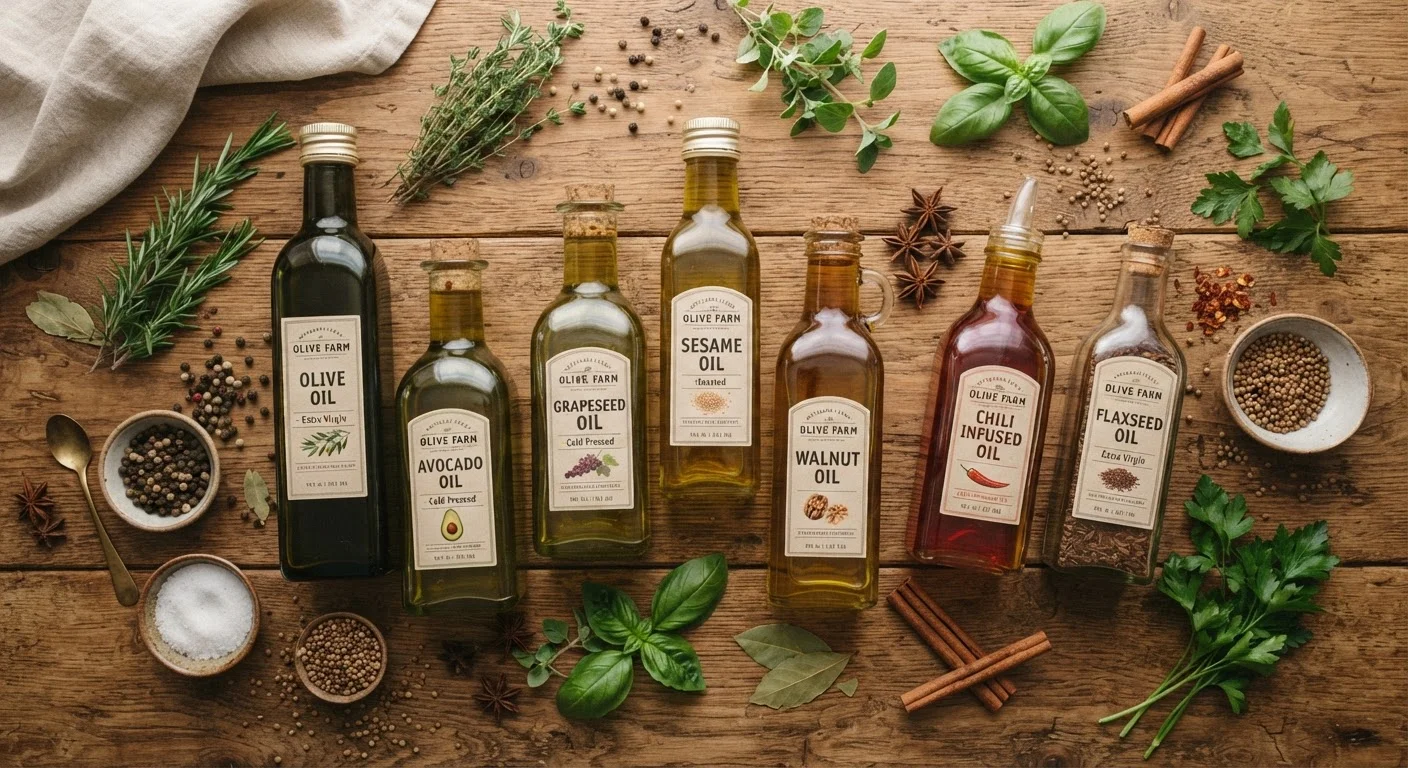
Photo: HorizonMetric.com | One Destination For Everyday Insights editorial
—— In This Article
Why Smoke Point Matters
Every cooking oil has a smoke point — the temperature at which it stops shimmering and starts to smoke. Once an oil crosses that threshold, it breaks down chemically, producing acrolein and other compounds that can taste bitter and, with repeated exposure, may affect air quality in your kitchen.
Smoke point isn't the only thing that matters when choosing an oil, but it's the most practical starting point. Match a high-heat method — searing a steak, stir-frying vegetables — to an oil that can handle it, and you'll get cleaner flavor and better browning. Use a delicate, unrefined oil for high-heat cooking and the results will taste acrid before you've finished cooking.
For a deeper look at how different heat levels play out on the stovetop, see how sauté, pan-fry, and stir-fry differ.
A Practical Guide to Common Oils
Understanding a handful of widely available oils covers the vast majority of everyday cooking situations.
Smoke point
The temperature at which an oil begins to visibly smoke and break down. Exceeding it can produce off-flavors and undesirable compounds.
Refined oil
Oil that has been processed to remove impurities, color, and flavor. Refining raises the smoke point, making the oil more stable at high heat.
Unrefined (cold-pressed) oil
Oil extracted without high heat or chemical solvents, preserving more of the source ingredient's natural flavor and nutrients — but also resulting in a lower smoke point.
Finishing oil
An oil used after cooking is complete, drizzled over a finished dish to add flavor and aroma rather than to cook with.
High-Heat Oils (above 400°F)
- Avocado oil (refined): One of the highest smoke points available, around 500°F. Nearly flavorless, making it versatile for searing, roasting, and deep-frying without competing with other ingredients.
- Refined peanut oil: A mainstay in deep-frying, particularly in Southern American cooking. Smoke point around 450°F, with a clean, subtly nutty undertone that doesn't overwhelm.
- Canola oil: A workhorse in American kitchens — neutral flavor, smoke point around 400°F, widely available. Reliable for sautéing, roasting, and baking.
Medium-Heat Oils (350–400°F)
- Extra-virgin olive oil (EVOO): Smoke point roughly 375°F, though quality varies. Best for sautéing vegetables, finishing pasta, or pan sauces. Its grassy, peppery flavor is a feature, not a flaw.
- Coconut oil (refined): Around 400°F. Refined versions are nearly odorless; unrefined has a distinctive coconut flavor suited to specific baked goods or tropical-inspired dishes.
Finishing and Flavoring Oils (low or no heat)
- Toasted sesame oil: Smoke point around 350°F, but its intense, roasted flavor is best preserved when drizzled over finished dishes — noodles, stir-fries, dipping sauces.
- Walnut and flaxseed oils: Rich in omega-3 fatty acids and best kept entirely off the heat. Use as salad dressings or drizzled cold; heat degrades their flavor quickly.
~500°F
Refined avocado oil smoke point
Among the highest of commonly available culinary oils, making it suitable for searing and high-heat roasting.
375°F
Typical EVOO smoke point
Quality and processing method affect this figure; lower-quality oils may smoke at even lower temperatures.
Flavor Profiles and When to Lean Into Them
Beyond heat tolerance, an oil's flavor profile is a genuine ingredient decision. A finishing drizzle of good EVOO over a bowl of white beans changes the dish; the same oil used as a neutral frying medium would be wasted. Toasted sesame oil is so aromatic that a teaspoon does meaningful work — using it by the tablespoon would overwhelm most recipes.
A useful framework: refined oils are processed to remove flavor and increase stability, while unrefined or cold-pressed oils retain the character of their source — and generally have lower smoke points as a result. Neither is universally better. Match the oil's personality to the role it needs to play.
It's worth noting that oils marketed for the skin — such as rosehip or jojoba — are formulated very differently from culinary oils. Face oils and cooking oils serve entirely separate purposes, even when they share a name.
Storage Affects Performance
All cooking oils degrade over time when exposed to light, heat, and air — a process called oxidation. Store oils in a cool, dark cabinet and check for a rancid or crayony smell before use. Nut and seed oils (walnut, flaxseed) are especially perishable and are often best kept in the refrigerator after opening.

Food Editorial Team
Food Editorial Team is the collective byline for our editorial team and contributor network. Articles published under this byline or an editorial pen name are researched, written, and reviewed according to our editorial standards for clarity, consistency, and independence before publication.
View author profile