
Natural Wine: What the Label Actually Means and What It Doesn't
"Natural wine" has no legal definition. Here's what producers actually mean by it, how it differs from conventional wine, and what to expect.
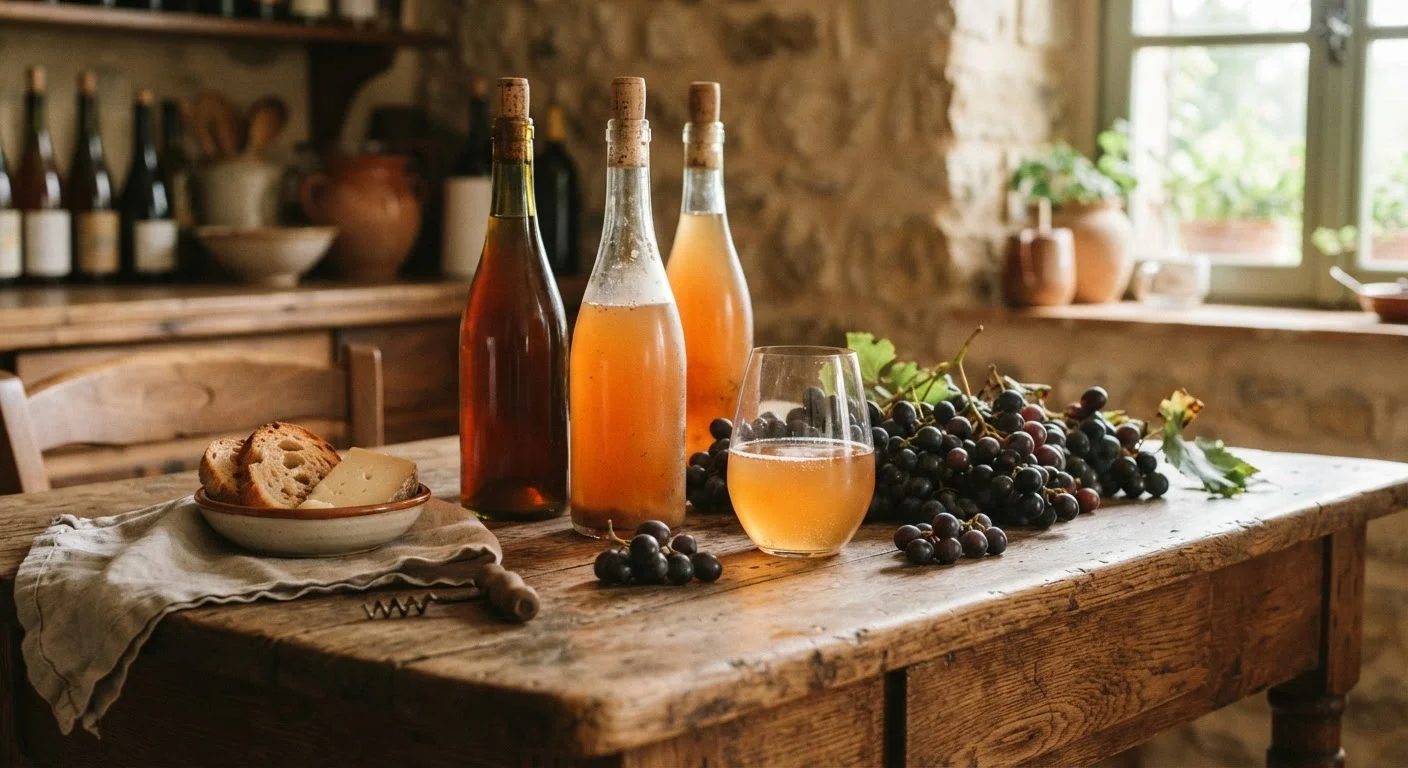
Photo: HorizonMetric.com | One Destination For Everyday Insights editorial
—— In This Article
Key Takeaways
- "Natural wine" has no legal definition in the U.S. — producers use the term loosely and inconsistently.
- Most natural wines use minimal intervention in the vineyard and cellar, but standards vary widely.
- Natural wine is not automatically organic, biodynamic, vegan, or sulfite-free.
- Cloudiness, funkiness, or slight fizz in natural wine are features of the process, not signs of spoilage.
- Taste and quality vary enormously — approach natural wine with curiosity rather than fixed expectations.
Why "Natural Wine" Is a Marketing Term, Not a Legal One
Walk into any wine shop today and you'll spot bottles proudly labeled "natural." It sounds reassuring — closer to the earth, freer of chemicals, more honest somehow. But unlike "USDA Organic" or "sulfite-free," the phrase natural wine carries no regulated legal definition in the United States or most other countries.
No governing body certifies a wine as natural. No checklist exists that a producer must complete before using the word. What you're getting is each producer's personal interpretation of a philosophy — one that generally values low intervention in both the vineyard and the winery, but whose specifics can differ dramatically from bottle to bottle.
That's not necessarily a bad thing. The natural wine movement has pushed the broader industry toward greater transparency about farming practices and additives. But it does mean you can't take the label at face value without knowing a little more about what producers actually mean by it. Just as decoding a skincare label requires some background knowledge, understanding a natural wine label rewards a little curiosity.
Myth
Natural wine is certified and regulated, so any bottle with that label meets a consistent standard.
Fact
There is no legal or government-regulated definition of "natural wine" in the U.S. or most wine-producing countries.
The term is self-applied by producers and has no enforceable meaning. Two bottles both calling themselves "natural" may be made with entirely different approaches. Some producers follow strict no-addition philosophies; others simply avoid one or two common additives. Without certification from a recognized body, the label is a statement of intent, not a guarantee.
Myth
If a wine is natural, it must be organic.
Fact
Natural wine and organic wine are related ideas but are not the same thing — a wine can be one without being the other.
Organic certification in the U.S. (via the USDA) refers specifically to farming practices and prohibits certain synthetic pesticides and fertilizers in the vineyard. A natural wine producer may farm organically without pursuing formal certification, which is costly and time-consuming. Conversely, a winery can hold organic certification while still using commercial yeasts or fining agents in the cellar — practices many natural wine advocates avoid. The concepts overlap but neither contains the other.
Myth
Natural wine contains no sulfites.
Fact
Most natural wines contain some sulfites — fermentation produces them naturally, and many producers add small amounts at bottling.
Sulfur dioxide (SO₂) occurs as a byproduct of yeast fermentation, meaning virtually all wine contains trace sulfites regardless of winemaking philosophy. Many natural wine producers do avoid added sulfites, or use far less than conventional winemakers, but "zero-zero" wines (no added sulfites, no other additions) are a subset of the natural category — not the norm. Bottles claiming to be sulfite-free typically mean no added sulfites; they still contain naturally occurring levels.
Myth
Cloudy, fizzy, or funky-smelling natural wine has gone bad.
Fact
These qualities are often intentional features of minimal-intervention winemaking, not signs of spoilage.
Unfiltered wines retain yeast particles and proteins that create haze — this is harmless and sometimes considered desirable. Slight spritz (petillance) can result from residual fermentation activity in the bottle. Earthy, barnyard, or sour aromas may come from wild yeast strains or naturally occurring bacteria, particularly Brettanomyces. Whether you enjoy these characteristics is a matter of taste, but they don't indicate a flawed or unsafe wine. A wine that smells of vinegar or shows obvious off-flavors is a different matter — that may genuinely be past its best.
Myth
Natural wine is always healthier or lower in sulfites than conventional wine.
Fact
There is no established evidence that natural wine is healthier, and sulfite levels vary widely across both categories.
The idea that natural wine causes fewer headaches or hangovers is widespread but not well supported by research. Headaches and other reactions to wine are more likely caused by alcohol, histamines, or tannins than by sulfite levels, which in wine are generally low compared to many common foods. Natural wines with lower added sulfites may be less stable and spoil faster, which introduces its own quality considerations. As with all alcohol, moderation matters most for health — wine type is a secondary variable at best.
What to Actually Expect When You Open a Natural Wine
Natural winemaking tends to involve organically or biodynamically farmed grapes, fermentation with wild (ambient) yeasts rather than commercial strains, and minimal or no additions — including little to no added sulfur dioxide, which conventional winemakers use as a preservative and stabilizer.
The results can be thrilling: wines with vivid personality, unusual textures, and flavors you won't find in a conventional bottling. They can also be unpredictable. A wine made with little sulfur and no filtration is a living product — more sensitive to heat, more variable from bottle to bottle, and more prone to evolving (or deteriorating) quickly once opened.
70+
Permitted additives in conventional U.S. winemaking
The TTB (Alcohol and Tobacco Tax and Trade Bureau) authorizes over 70 processing aids and additives for use in American wine production.
~10 ppm
Typical sulfite level in natural wines
Natural wines often contain 10–40 ppm of sulfites, compared to up to 350 ppm permitted in conventional U.S. wine, according to TTB regulations.
Expect cloudiness, slight effervescence, or earthy, funky aromas in some natural wines. These are natural byproducts of unfiltered fermentation, not defects. Think of it the way you'd think about natural versus added ingredients in food: "natural" describes a process, not a guaranteed quality outcome.
Natural Wine Is More Fragile — Store and Serve With Care
Because natural wines often contain little or no added sulfites and are frequently unfiltered, they are more sensitive to heat, light, and time than conventional wines. Store them in a cool, dark place and drink them relatively soon after purchase unless the producer specifically recommends aging. Once opened, consume within a day or two for best results.
If you're new to natural wine, start with producers who clearly communicate their practices — look for certifications like USDA Organic or Demeter (biodynamic) on the label as a supporting signal, even if neither equals "natural" on its own.

Food Editorial Team
Food Editorial Team is the collective byline for our editorial team and contributor network. Articles published under this byline or an editorial pen name are researched, written, and reviewed according to our editorial standards for clarity, consistency, and independence before publication.
View author profile