
The Pantry Staples That Define Mexican-American Home Cooking
A practical look at the dried chiles, masa, and canned ingredients that form the backbone of Mexican-American kitchens across the country.
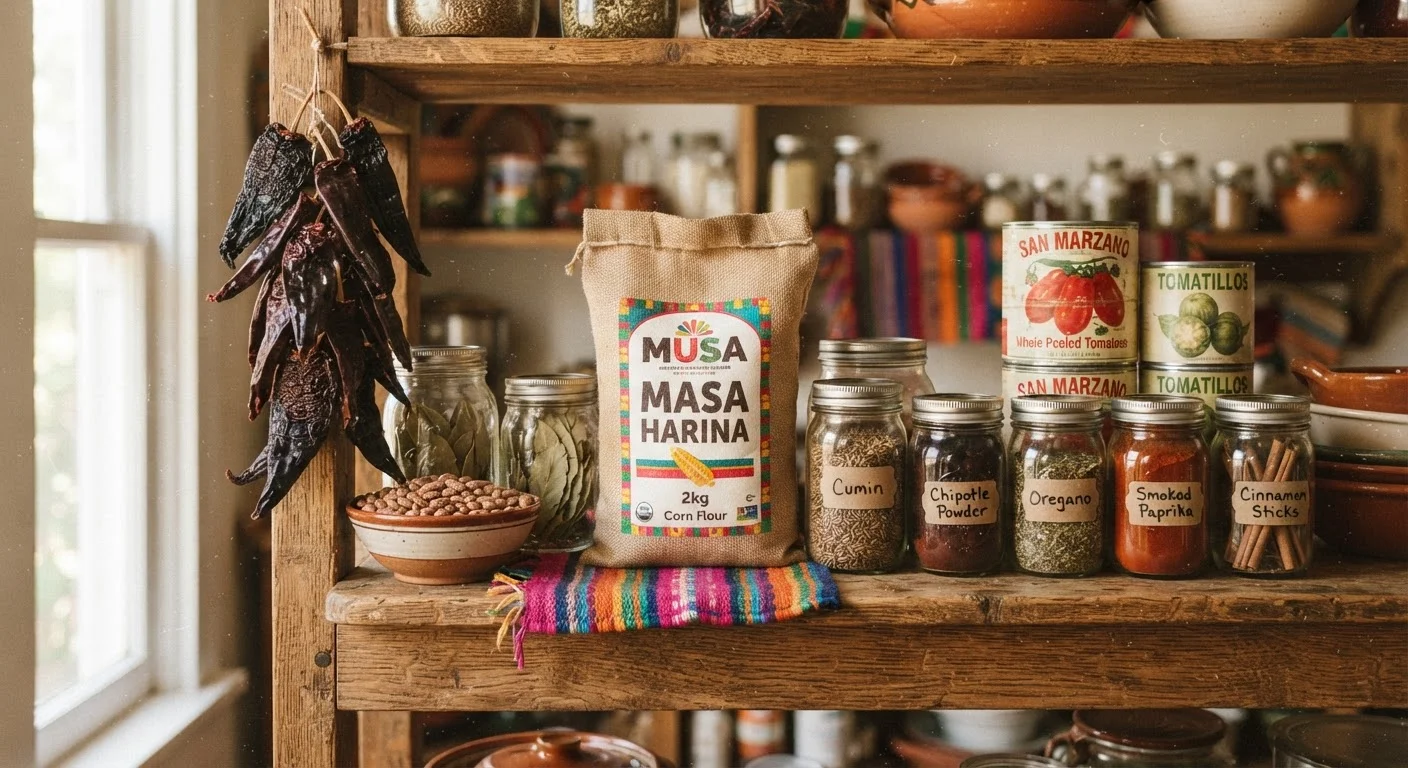
Photo: HorizonMetric.com | One Destination For Everyday Insights editorial
—— In This Article
Why the Pantry Comes First
Mexican-American home cooking is one of the most deeply layered food traditions in the United States — shaped by Indigenous foodways, Spanish colonial influence, regional Mexican cuisines, and the everyday creativity of immigrant and multigenerational households. What holds it together, kitchen to kitchen, is a shared pantry: a core set of shelf-stable ingredients that make it possible to build complex, satisfying meals without a special trip to the store.
Understanding these staples is the first step to understanding the cuisine itself. Whether you grew up eating this food or are exploring it for the first time, knowing what these ingredients are — and what they do — gives you real footing in the kitchen.
| Key flavor base | Dried chiles (ancho, guajillo, pasilla, árbol) |
| Primary starch | Masa harina (nixtamalized corn flour) |
| Essential protein staple | Pinto and black beans (dried or canned) |
| Most versatile canned item | Chipotle chiles in adobo sauce |
| Traditional cooking fat | Lard or vegetable shortening |
| Distinctive spice pairing | Ground cumin + Mexican oregano |
Dried Chiles: The Flavor Foundation
Dried chiles are arguably the most important category in a Mexican-American pantry. Unlike fresh chiles, dried varieties develop concentrated, complex flavors — earthy, smoky, fruity, or subtly sweet — that form the base of countless sauces, stews, and marinades.
Nixtamalization
A traditional process of soaking and cooking dried corn in an alkaline solution, typically lime water. It softens the corn, improves its nutritional profile, and gives masa its characteristic flavor and pliability.
Masa harina
Dried, ground corn dough flour made from nixtamalized corn. It is the primary ingredient in tortillas, tamales, and other corn-based preparations in Mexican and Mexican-American cooking.
Adobo sauce
A tangy, smoky red sauce made from chiles, vinegar, and spices. Canned chipotle chiles are typically packed in adobo and are used in small amounts to add heat and smokiness to dishes.
Piloncillo
Unrefined Mexican cane sugar formed into cone or puck shapes. It has a deeper, more molasses-like flavor than refined brown sugar and is used in traditional beverages, moles, and desserts.
Escabeche
A preparation of vegetables — often jalapeños, carrots, and onions — quickly pickled in vinegar, oil, and herbs. Served as a condiment alongside tacos, tortas, and other dishes.
Hominy
Whole dried corn kernels that have been nixtamalized. Used whole in pozole and other soups, hominy has a tender, chewy texture and a mild corn flavor distinct from fresh or frozen corn.
- Ancho: The dried form of the poblano pepper. Mild heat, with a deep, raisin-like sweetness. Essential in mole and red enchilada sauce.
- Guajillo: Bright red, medium heat, and tangy. Frequently used in birria, pozole rojo, and marinades for grilled meat.
- Pasilla: Long and dark, with an earthy, chocolate-adjacent flavor. Often paired with ancho and mulato in complex mole blends.
- Árbol: Small and fiery. Used whole or ground for table salsas and to add direct heat to finished dishes.
To use dried chiles, cooks typically toast them briefly in a dry skillet, then soak them in hot water before blending. This process unlocks oils and softens the flesh. Pozole — a celebration soup with roots in both Mexican and Mexican-American culture — is a perfect example of dried chiles at work. See how regional soups like pozole carry cultural history in our guide to regional American soups.
Masa, Beans, and the Canned Goods Shelf
Masa harina — finely ground dried corn treated with an alkaline solution (a process called nixtamalization) — is the foundation of tortillas, tamales, and sopes. It is nutritionally distinct from regular cornmeal because the nixtamalization process makes niacin more bioavailable and adds calcium. Dried masa mixed with warm water and fat becomes masa dough in minutes, making it a genuinely practical pantry item for home cooks.
Dried and canned beans are equally central. Pinto and black beans appear across the cuisine in whole, refried, and broth-simmered forms. Dried beans require soaking and longer cooking but reward with richer flavor; canned beans offer speed without sacrificing much nutrition.
The canned goods shelf in a Mexican-American kitchen typically includes:
- Whole or crushed tomatoes (for salsas and braises)
- Chipotle chiles in adobo sauce (smoked jalapeños in a tangy red sauce — used in small quantities for deep, smoky heat)
- Hominy — dried corn kernels processed like masa — used whole in pozole
- Evaporated milk (for desserts like tres leches and some savory custards)
Chipotle in Adobo: A Little Goes a Long Way
A single can of chipotle chiles in adobo contains more smoky heat than most recipes require at once. Leftover chiles freeze well: spoon individual chiles with a bit of sauce onto a sheet of parchment, freeze until solid, then transfer to a zip-close bag. This way you can add just one chile at a time without waste.
Spices, Aromatics, and a Few Key Additions
Ground cumin, Mexican oregano, and garlic — fresh, powdered, or both — appear in nearly every savory preparation. Mexican oregano is worth seeking out separately from Mediterranean oregano: it has a more floral, slightly citrusy character that pairs naturally with chiles and tomatoes.
Other pantry regulars include:
- Lard or vegetable shortening: Traditional fat for refried beans and tamale masa. Lard contributes a savory depth that vegetable oils don't fully replicate, though vegetable shortening is a common substitute.
- Apple cider or white vinegar: Used in marinades and quick-pickled vegetables (escabeche) that balance rich, fatty dishes.
- Piloncillo: Unrefined Mexican cane sugar sold in dense cones. Darker and more molasses-forward than brown sugar, used in hot drinks and some mole variations.
Together, these ingredients do not represent any single regional Mexican cuisine — they reflect how Mexican-American cooking has evolved as a distinct, living tradition, adapting to available ingredients while preserving techniques passed through generations.

Food Editorial Team
Food Editorial Team is the collective byline for our editorial team and contributor network. Articles published under this byline or an editorial pen name are researched, written, and reviewed according to our editorial standards for clarity, consistency, and independence before publication.
View author profile