
Whole Grains vs. Refined Grains: What Changes When You Process a Kernel
Discover what's lost when grains are refined, what whole grains offer nutritionally, and how to tell them apart on a label.
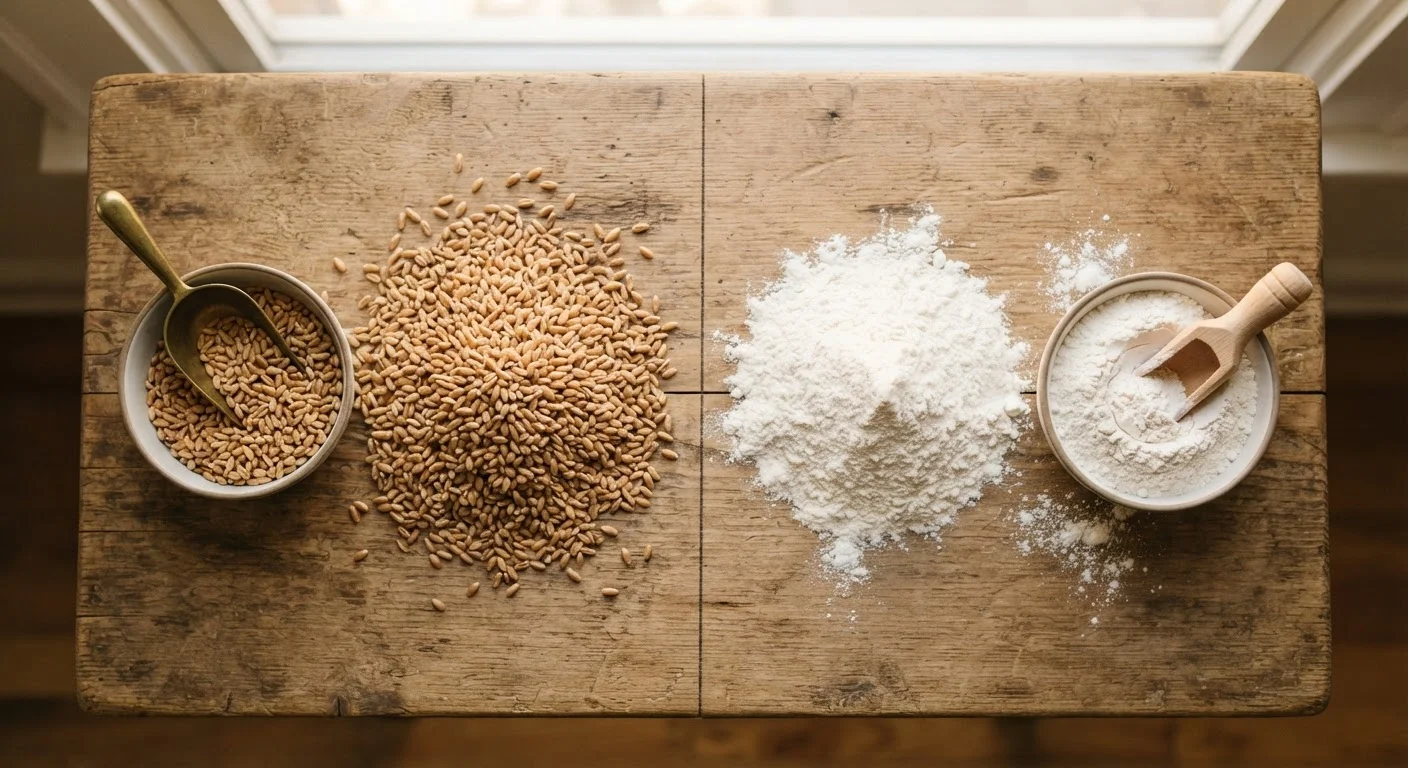
Photo: HorizonMetric.com | One Destination For Everyday Insights editorial
—— In This Article
Key Takeaways
- Whole grains retain all three parts of the kernel: bran, germ, and endosperm.
- Refining removes the bran and germ, stripping out most fiber, B vitamins, and healthy fats.
- Enriched refined grains add back some B vitamins and iron, but not fiber or all lost nutrients.
- Food labels can be misleading — look for '100% whole grain' or a whole grain listed first in ingredients.
- Swapping even half your refined grains for whole grains can meaningfully support long-term health.
The Anatomy of a Grain Kernel
Every grain — whether wheat, oats, rye, or barley — starts as a kernel made up of three layers, each with a distinct nutritional role.
- Bran (outer layer): Rich in dietary fiber, B vitamins, and trace minerals like magnesium and zinc.
- Germ (inner core): The embryo of the plant, packed with healthy fats, vitamin E, and additional B vitamins.
- Endosperm (middle layer): The starchy bulk of the kernel, providing carbohydrates and some protein, but relatively little fiber or micronutrients.
A whole grain keeps all three layers intact. When you eat 100% whole wheat bread or rolled oats, you're consuming the kernel in roughly its complete form. A refined grain has been milled to remove the bran and germ, leaving only the endosperm — which is why refined white flour looks and behaves so differently from stone-ground whole wheat flour.
| Criterion | Whole Grains | Refined Grains |
|---|---|---|
| Kernel layers retained | Bran, germ, and endosperm | Endosperm only |
| Dietary fiber (per serving) | Higher — 2–4g typical | Lower — under 1g typical |
| B vitamins | Naturally present | Partially added back (enriched) |
| Vitamin E | Present in germ | Largely removed |
| Magnesium & zinc | Present in bran and germ | Significantly reduced |
| Shelf life / texture | Shorter shelf life, denser | Longer shelf life, lighter texture |
| Enrichment required by law (US) | Not applicable | Yes, for most commercial products |
What's Actually Lost — and What's Added Back
Milling isn't a minor trim. When the bran and germ are removed, so is the majority of the kernel's nutritional complexity. Refined grains lose roughly 25% of their protein and anywhere from 17 to over 80% of key vitamins and minerals depending on the nutrient, according to research summarized by the Whole Grains Council.
To offset these losses, U.S. regulations require that most refined grain products sold commercially be enriched — meaning manufacturers add back iron and four B vitamins: thiamin, riboflavin, niacin, and folic acid. Enrichment partially closes the gap, but it doesn't restore fiber, vitamin E, magnesium, zinc, or the dozens of other phytonutrients found in the bran and germ.
~25%
Protein lost in milling
Research compiled by the Whole Grains Council estimates protein losses of roughly 25% when wheat is refined to white flour.
95%
Fiber removed in refining
The milling process removes an estimated 79–95% of dietary fiber found in the original whole grain kernel, depending on the grain.
3–4×
More fiber in whole wheat bread
A slice of 100% whole wheat bread typically contains three to four times the fiber of a comparable slice of enriched white bread.
Dietary fiber is the nutrient most visibly affected. A slice of 100% whole wheat bread typically contains around 2–3 grams of fiber; a slice of white bread made from refined flour contains less than 1 gram. Over time, that difference compounds — fiber supports digestive health, helps regulate blood sugar, and contributes to satiety.
For more on how the body processes different types of food components, see our piece on added sugar vs. natural sugar, which explores a similar question about processing and nutrition.
Reading Labels Without Getting Fooled
Food packaging frequently uses grain-related language that sounds nutritious but doesn't guarantee whole grain content. Here's how to decode what you see:
- "Made with whole grains" — could mean very little whole grain is present alongside mostly refined flour.
- "Multigrain" — means multiple types of grain were used, not that any of them are whole grains.
- "Stone-ground" or "100% wheat" — these do not confirm whole grain content.
What to look for instead:
- The phrase "100% whole grain" or "100% whole wheat" on the front of the package.
- A whole grain listed as the first ingredient in the ingredients list (e.g., "whole wheat flour," "whole oats," "brown rice").
- The Whole Grain Stamp, a voluntary industry label — while not mandatory, products bearing it are required to meet minimum whole grain content thresholds.
Color Isn't a Reliable Indicator
Brown bread is not automatically whole grain — some manufacturers add molasses or caramel coloring to white bread to give it a darker appearance. Always check the ingredients list rather than relying on the color of the bread or packaging. The word "whole" before the grain name in the first ingredient is the clearest signal.
Making the swap doesn't have to be dramatic. Replacing half your refined grain choices with whole grain versions — whole grain pasta instead of white pasta, brown rice alongside white — is a practical starting point for busy households. You can also explore how milling changes the grain's structure for a deeper look at the physical transformation behind these nutritional differences.

Food Editorial Team
Food Editorial Team is the collective byline for our editorial team and contributor network. Articles published under this byline or an editorial pen name are researched, written, and reviewed according to our editorial standards for clarity, consistency, and independence before publication.
View author profile