
Whole Grains vs. Refined Grains: What Changes in the Milling Process
Why the difference between whole and refined grains matters nutritionally, and what's actually lost when wheat is processed.
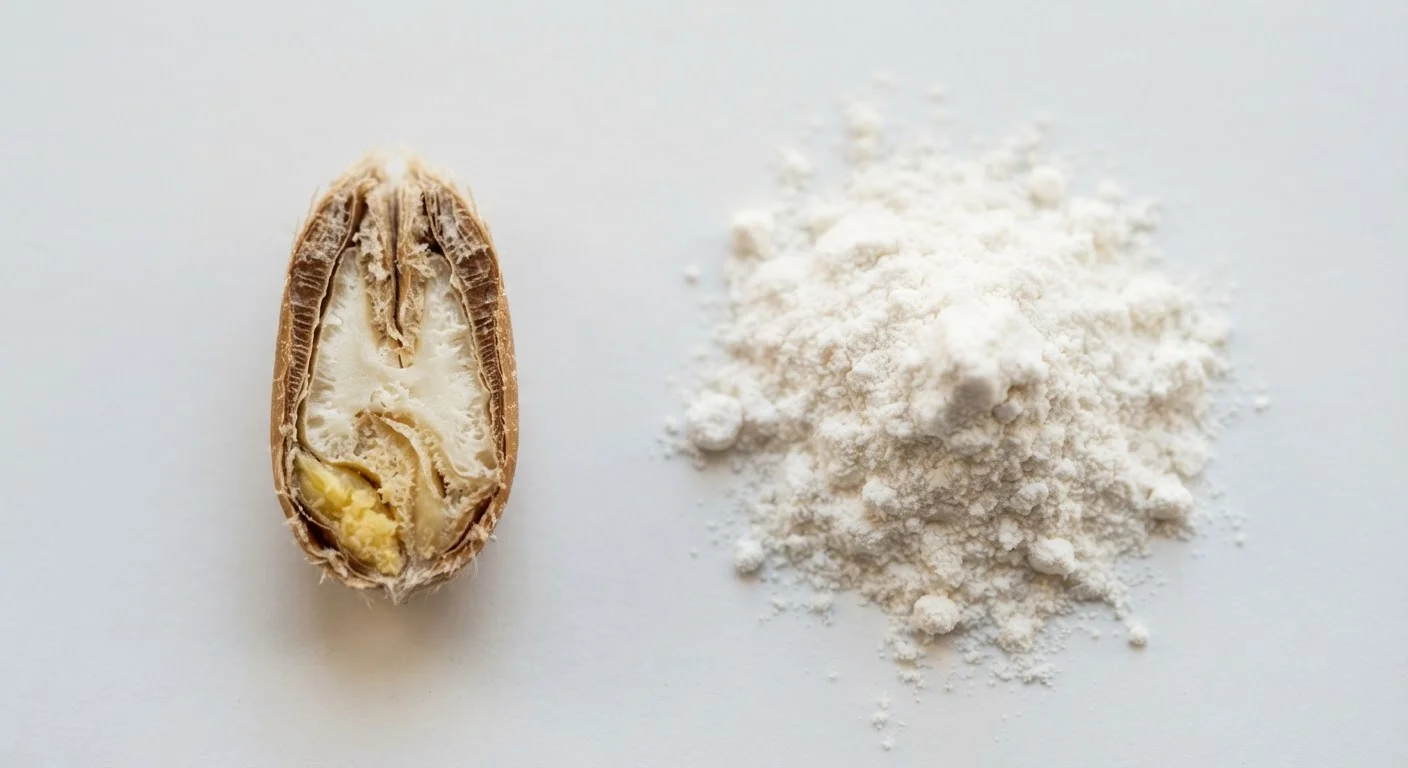
Photo: HorizonMetric.com | One Destination For Everyday Insights editorial
—— In This Article
Key Takeaways
- Milling removes the bran and germ, stripping away most fiber, B vitamins, and minerals.
- Whole grains retain all three kernel parts: the bran, germ, and starchy endosperm.
- Enrichment restores some B vitamins and iron to refined grains but does not replace fiber or phytonutrients.
- Dietary guidelines recommend that at least half of daily grain servings come from whole grains.
- Reading ingredient labels carefully is the most reliable way to identify genuine whole grain products.
Inside a Grain Kernel: The Three-Part Structure
Every grain — whether wheat, oats, barley, or brown rice — shares the same fundamental anatomy. The bran is the tough outer layer, rich in fiber, B vitamins, and trace minerals. The germ is the small embryo at the kernel's core, packed with healthy fats, vitamin E, and additional B vitamins. The endosperm makes up the bulk of the kernel and consists mostly of starchy carbohydrates and some protein.
A grain is classified as whole when all three components are present in their natural proportions — either intact or reconstituted after milling. When a product lists "whole wheat" or "whole oat" first on the ingredient panel, that signals the complete kernel was used.
What the Milling Process Actually Removes
Refining strips away the bran and germ, leaving only the starchy endosperm. This dramatically changes the grain's nutritional profile. Fiber content drops by roughly 75–80% compared to whole grain equivalents. The milling process also removes a significant portion of naturally occurring magnesium, zinc, potassium, and B vitamins including thiamin, riboflavin, niacin, and folate.
Manufacturers in the United States are required to enrich most refined flour products — meaning certain B vitamins and iron are added back after milling. However, enrichment does not restore fiber, vitamin E, or the full spectrum of phytonutrients and antioxidants found in the bran and germ. Think of enrichment as partial restoration, not full nutritional equivalence.
| Criterion | Whole Grains | Refined Grains |
|---|---|---|
| Kernel parts present | Bran, germ, endosperm | Endosperm only |
| Dietary fiber | High | Very low |
| B vitamins (natural) | Naturally abundant | Mostly removed; some added back |
| Vitamin E | Present (from germ) | Largely absent |
| Glycemic index (typical) | Lower | Higher |
| Shelf life | Shorter (oils in germ can go rancid) | Longer |
| Enrichment required by law | No | Yes (in most U.S. products) |
For a deeper look at the specific nutrients lost during processing, see our guide to what changes when you process a kernel.
Why Fiber Loss Matters Most
Of everything stripped away during refining, dietary fiber has the broadest impact on everyday health. Fiber slows digestion, which moderates how quickly glucose enters the bloodstream after a meal. It also supports gut microbiome diversity and contributes to a feeling of fullness. The average American consumes well below the recommended 25–38 grams of fiber per day, and swapping refined grains for whole grain alternatives is one of the most straightforward ways to close that gap.
~5%
Americans meeting fiber recommendations
Research published in the American Journal of Lifestyle Medicine estimates that only about 5% of Americans meet the daily recommended fiber intake.
75–80%
Fiber lost during grain refining
Milling the bran and germ from a wheat kernel removes the vast majority of its original fiber content, according to nutrition composition analyses.
Refined grains also have a higher glycemic index — a measure of how rapidly a food raises blood sugar — than their whole grain counterparts. This doesn't make refined grains inherently harmful for most people, but it is a relevant factor in overall dietary pattern quality. Context always matters: a small amount of white rice alongside a fiber-rich meal behaves differently than a diet dominated by refined products.
Understanding grain quality connects to broader carbohydrate choices. Our article on added sugar versus natural sugar explores a related question about how food processing affects carbohydrate quality.
Reading Labels to Spot the Difference
Marketing language can be misleading. Terms like "multigrain," "made with whole grain," or "wheat bread" do not guarantee that whole grains are the primary ingredient. The most reliable approach is to look at the first ingredient on the label. If it says "whole wheat flour," "whole oat flour," or another whole grain, that product leads with whole grain content. If "enriched flour" or "bleached flour" appears first, the product is refined-grain dominant regardless of labeling claims on the front of the package.
Color is not a reliable indicator either — some brown breads are colored with molasses or caramel and are still primarily refined flour. When in doubt, the ingredient list tells the full story.
This article is for general informational and educational purposes only and does not constitute medical or dietary advice. Consult a qualified healthcare professional or registered dietitian for guidance tailored to your individual health needs.

Health Editorial Team
Health Editorial Team is the collective byline for our editorial team and contributor network. Articles published under this byline or an editorial pen name are researched, written, and reviewed according to our editorial standards for clarity, consistency, and independence before publication.
View author profile