
Calorie Counting vs. Food Quality: Two Approaches to Everyday Eating
A balanced look at tracking calories versus focusing on nutrient density — what each approach gets right and where each falls short.
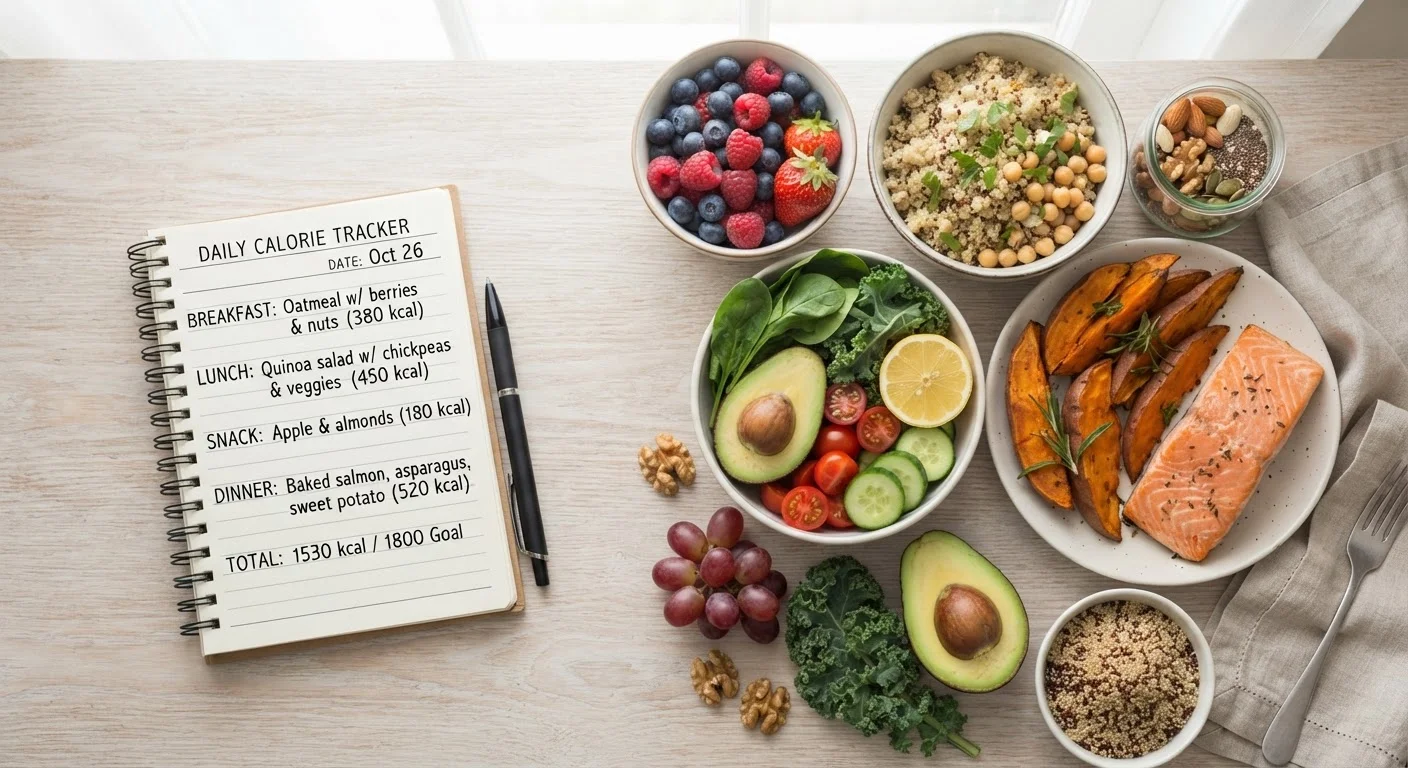
Photo: HorizonMetric.com | One Destination For Everyday Insights editorial
—— In This Article
Key Takeaways
- Calorie counting can support weight management but doesn't distinguish between nutritious and nutrient-poor foods.
- Focusing on food quality emphasizes nutrient density and may naturally regulate appetite without strict tracking.
- Research suggests neither approach alone is universally superior — consistency and sustainability matter most.
- Combining awareness of both calories and food quality often produces the most balanced long-term outcomes.
- Individual factors like health goals, lifestyle, and relationship with food influence which approach works best.
What Each Approach Actually Involves
Calorie counting is straightforward in theory: track the energy you consume and aim to stay within a target range. Apps and food labels make this more accessible than ever. The underlying principle — that energy balance influences body weight — is well-established in nutritional science.
Food quality–focused eating takes a different angle. Instead of measuring energy units, this approach prioritizes the composition of what you eat: favoring whole foods, vegetables, legumes, lean proteins, and minimally processed options over calorie-dense, nutrient-light alternatives. Proponents argue that when you eat mostly high-quality foods, energy intake tends to self-regulate through natural satiety signals.
Both frameworks reflect real science. The disagreement is mostly about which lever is most practical — and most sustainable — for everyday people. For a broader look at how these ideas fit into daily meals, see what nutritional balance looks like on a real plate.
Where Calorie Counting Gets It Right — and Where It Falls Short
Tracking calories provides concrete feedback, which can be valuable for people who are unaware of how much they're consuming. Research consistently shows that people tend to underestimate portion sizes and food energy content, sometimes significantly. Having a number to reference can close that gap.
However, calorie counting has meaningful blind spots. A 300-calorie candy bar and a 300-calorie bowl of lentils are not nutritionally equivalent. The lentils deliver fiber, protein, iron, and folate; the candy bar delivers primarily sugar and fat. Treating them as equal ignores the downstream effects on hunger, blood sugar, and long-term health.
Tracking can also become burdensome. Studies on dietary adherence suggest that overly rigid systems often lead to abandonment — or worse, an anxious, all-or-nothing relationship with food. This is particularly worth considering for people with a history of disordered eating. Always consult a healthcare professional before starting any structured diet approach.
Calorie Tracking and Disordered Eating Risk
Rigid calorie tracking is not appropriate for everyone. For individuals with a history of disordered eating, obsessive food monitoring can reinforce harmful patterns. If tracking food intake increases anxiety, guilt, or preoccupation with eating, speak with a registered dietitian or mental health professional before continuing.
Where Food Quality Focus Gets It Right — and Where It Falls Short
A diet anchored in nutrient-dense, minimally processed foods tends to support satiety, stable energy, and better intake of vitamins and minerals that many Americans fall short on. Nutritional gaps show up even in otherwise healthy-seeming diets, and a food-quality mindset naturally addresses many of them.
The limitation is that "eating well" doesn't automatically mean eating the right amount for your body's energy needs. Calorie-dense whole foods — nuts, avocado, whole grains, olive oil — are genuinely nutritious but can contribute to an energy surplus when portions aren't considered at all. Food quality is necessary but not always sufficient on its own.
A Simple Quality-First Rule of Thumb
Many nutrition researchers suggest filling at least half your plate with vegetables and fruits, a quarter with whole grains, and a quarter with lean protein at most meals. This structure naturally shifts your diet toward higher nutrient density without requiring calorie math. It's a starting framework — not a prescription — and individual needs vary.
Cost is another real consideration. Though research suggests healthy eating is more affordable than commonly assumed — see why eating healthy feels expensive and what the research shows — access and budget constraints still shape what's realistic for many households.
How to Choose — or Combine — the Two
The evidence doesn't crown a single winner. What research does support is dietary pattern — consistent, broadly healthy eating over time — as the strongest predictor of positive health outcomes. The best approach is the one you can maintain without significant distress.
| Calorie Counting | Food Quality Focus | |
|---|---|---|
| Core principle | Track energy intake vs. expenditure | Prioritize nutrient-dense whole foods |
| Scientific backing | Strong for energy balance | Strong for long-term health outcomes |
| Ease of use | Requires logging; app-dependent | Intuitive once habits are established |
| Addresses nutrient quality | Not inherently | Yes — central to the approach |
| Sustainability | Variable; can become burdensome | Generally higher long-term adherence |
| Risk of over-restriction | Higher with rigid targets | Lower, but portions still matter |
A practical middle path: build meals around whole, nutrient-dense foods as a default, while keeping a general awareness of portions for higher-calorie items. This sidesteps the tedium of logging every gram while still respecting energy balance. Behavioral science suggests that environment and routine — not willpower — drive most of our eating decisions, so shaping your food environment often matters more than which counting system you use.
For those wanting a more structured framework, balanced eating principles offer a flexible starting point that incorporates both quality and quantity without demanding strict tracking.
This article is for general informational and educational purposes only and is not a substitute for professional medical or nutritional advice. Consult a qualified healthcare provider before making significant changes to your diet, especially if you have a health condition.

Health Editorial Team
Health Editorial Team is the collective byline for our editorial team and contributor network. Articles published under this byline or an editorial pen name are researched, written, and reviewed according to our editorial standards for clarity, consistency, and independence before publication.
View author profile