
Why Eating Healthy Feels Expensive (And What the Research Actually Shows)
Unpacking the real relationship between food costs and nutrition, and the strategies that stretch a grocery budget without sacrificing quality.
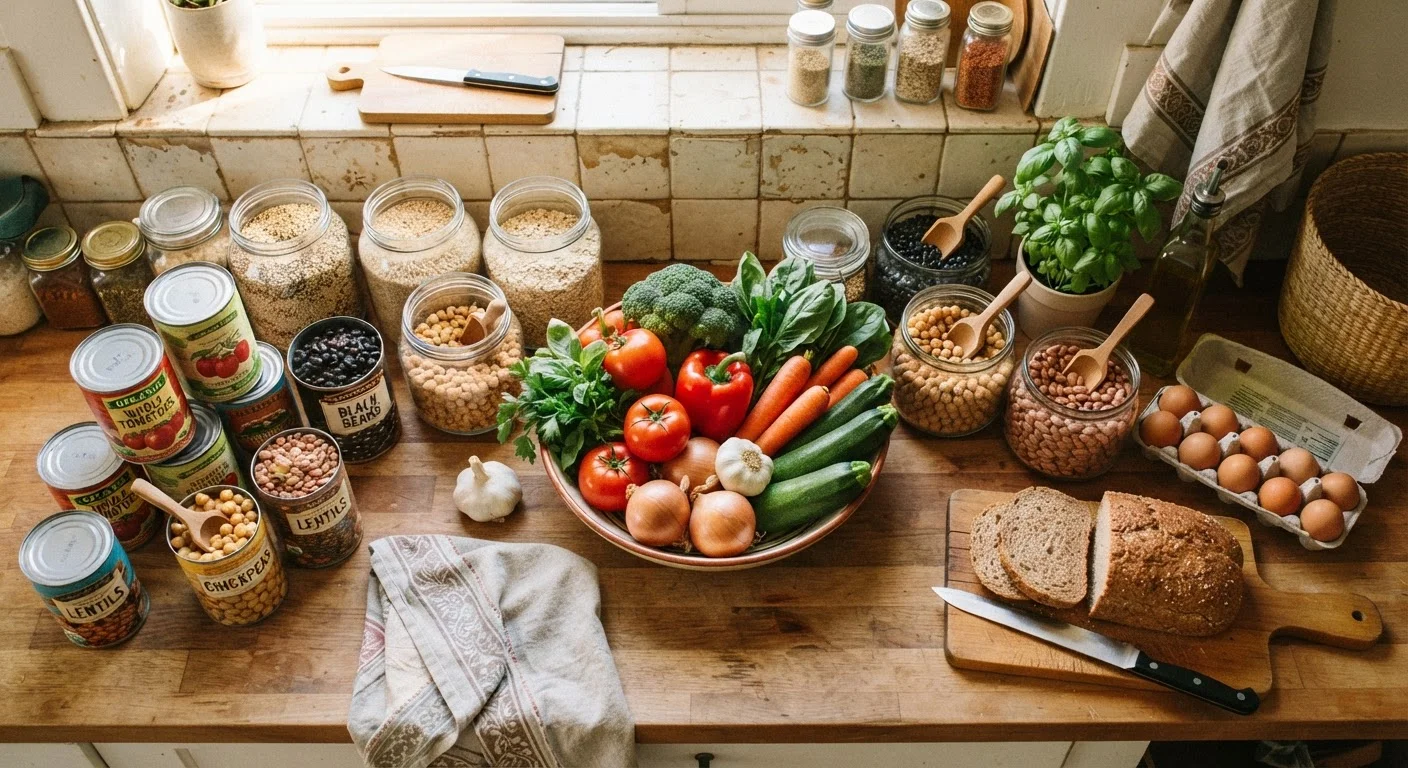
Photo: HorizonMetric.com | One Destination For Everyday Insights editorial
Key Takeaways
- Healthy eating costs more per calorie, but not necessarily more per serving of actual nutrition.
- Staples like dried beans, oats, eggs, and frozen vegetables are among the most affordable nutrient-dense foods available.
- Planning meals around seasonal and store-brand items can significantly close the cost gap.
- Convenience and ultra-processed foods often appear cheap upfront but carry hidden long-term costs.
- Cooking at home — even simply — is one of the most reliable ways to eat better on a tighter budget.
The Perception Problem with Healthy Food Prices
Walk past a display of organic kale and a bag of chips, and the price difference is hard to ignore. That moment — repeated across thousands of grocery trips — shapes a deeply held belief: eating well costs significantly more. And it's not entirely wrong. Some nutritious foods, particularly fresh organic produce, lean proteins, and specialty health items, do carry higher price tags than their processed counterparts.
But the relationship between food cost and nutritional quality is far more complicated than a sticker-price comparison suggests. Research consistently shows that when food is evaluated by nutritional value per dollar rather than cost per pound or per package, the gap between healthy and unhealthy eating narrows considerably — and sometimes reverses entirely.
Understanding what's actually driving the perception of high costs is the first step toward making smarter choices without feeling financially squeezed. For a deeper look at how food quality translates to nutrition on your plate, see our plain-language guide to balanced meals.
Myth
Eating healthy is simply too expensive for most households to afford consistently.
Fact
Nutritious staples like beans, lentils, oats, eggs, and frozen vegetables are among the most affordable foods in the grocery store.
This myth conflates a specific category of premium health foods — organic produce, specialty superfoods, cold-pressed juices — with nutritious eating as a whole. Studies, including research published in journals like PLOS ONE, have found that when food is measured by nutritional value rather than raw price, healthy diets are not inherently more expensive than diets dominated by processed foods. A bag of dried lentils, a carton of eggs, or a bunch of bananas represents exceptional nutritional value at low cost.
Myth
Fresh produce is always the healthiest and therefore the most important thing to buy.
Fact
Frozen and canned vegetables often match or exceed the nutritional value of fresh, at significantly lower cost.
Freezing vegetables shortly after harvest locks in vitamins and minerals effectively, meaning a bag of frozen spinach or broccoli can be nutritionally comparable — or in some cases superior — to fresh produce that has spent days in transit and refrigeration. Canned tomatoes, beans, and fish are similarly nutrient-rich. Choosing frozen and canned options strategically can stretch a grocery budget without meaningfully reducing diet quality. The key for canned goods is checking sodium content and opting for no-salt-added or low-sodium varieties where possible.
Myth
Processed and fast food is the cheapest way to feed a family.
Fact
Home-cooked meals using whole ingredients are generally less expensive per serving than regular fast food or heavily processed convenience items.
A 2019 analysis by the USDA's Economic Research Service found that food prepared at home costs significantly less per meal than restaurant or fast food options. While a drive-through meal may feel like a quick, cheap fix, the cumulative cost of regular fast food purchases adds up rapidly for a family. A simple home-cooked meal of rice, beans, and roasted vegetables costs a fraction of the equivalent drive-through order — and typically delivers more fiber, protein, and micronutrients per dollar spent.
Myth
You need expensive supplements and superfoods to fill nutrition gaps in a budget diet.
Fact
Most nutritional needs can be met through affordable everyday foods without specialty products.
Marketing for supplements and superfoods is highly effective — and highly profitable. But registered dietitians broadly agree that for most healthy adults, a varied diet built around whole grains, legumes, vegetables, fruit, and protein sources provides the essential nutrients the body needs. Foods like eggs, canned salmon, sweet potatoes, and plain yogurt deliver impressive nutrient profiles at everyday prices. Supplements may be appropriate for specific deficiencies, but that determination should come from a healthcare provider, not a grocery store shelf arrangement.
Myth
Meal planning only saves time, not money.
Fact
Structured meal planning consistently reduces food waste and total grocery spend for households that practice it.
Food waste is a significant — and often invisible — household expense. In the United States, households discard an estimated 30–40% of the food they purchase, representing real dollar losses every week. Meal planning reduces impulse buying, ensures perishables are actually used, and allows shoppers to build meals around what's on sale or in season. Even a loose plan for the week — knowing Monday's dinner will use Sunday's leftover roasted chicken — meaningfully reduces the items that end up uneaten and thrown out.
Where the Real Costs Are Hidden
Ultra-processed foods — chips, frozen dinners, sweetened beverages — dominate the affordable end of the grocery aisle, and their low per-serving cost feels compelling. But that comparison often ignores satiety (how long a food keeps you full), nutrient density (how much nutritional value you get per bite), and the downstream effects on overall food intake throughout the day.
Whole foods like oats, dried lentils, canned beans, eggs, and frozen vegetables consistently rank among the most affordable sources of protein, fiber, vitamins, and minerals in the American food supply. A pound of dried black beans, for instance, yields roughly 25–27 servings of fiber- and protein-rich food at a fraction of the cost of most packaged snacks.
~$1.50
Avg. daily cost increase for a healthy diet
A 2013 meta-analysis in BMJ Open estimated that a healthy diet costs approximately $1.50 more per day than an unhealthy one — less than many assume.
30–40%
Share of purchased food that US households waste
USDA estimates suggest American households discard between 30 and 40 percent of the food supply, representing a major hidden drain on grocery budgets.
3–4x
Cost difference: home cooking vs. restaurant meal
Research from the USDA Economic Research Service has found that home-cooked meals typically cost three to four times less per serving than equivalent restaurant meals.
The hidden costs in processed eating also include what researchers sometimes call dietary displacement — highly palatable, low-nutrient foods tend to crowd out more nourishing options, often leading to higher total food spend over a week. Cooking at home with whole ingredients, even basic ones, remains one of the most evidence-supported strategies for improving diet quality without inflating grocery bills.
For households wondering whether fresh or frozen produce fits better into a budget, our article on frozen vs. fresh produce nutrition breaks down what the research shows on nutrient retention and value.
Watch Out for 'Health' Product Markups
Products marketed as 'wellness,' 'clean,' or 'functional' often carry significant price premiums that reflect branding more than nutritional superiority. Before spending extra on a specialty product, compare its nutrition label to a basic, store-brand equivalent. In many cases, plain rolled oats, standard canned beans, or generic frozen vegetables deliver the same nutritional value at a fraction of the price.
It's also worth separating food cost from diet cost. Prioritizing nutrient-dense staples over specialty health products — think plain Greek yogurt over protein-enhanced pouches, or a bag of walnuts over branded wellness bars — keeps spending grounded without sacrificing nutritional goals. Thinking about whether to count calories or focus on food quality? Our guide to calorie counting vs. food quality explores both approaches honestly.
This article is for general informational purposes only and does not constitute medical or dietary advice. For personalized guidance, consult a registered dietitian or qualified healthcare professional.

Food Editorial Team
Food Editorial Team is the collective byline for our editorial team and contributor network. Articles published under this byline or an editorial pen name are researched, written, and reviewed according to our editorial standards for clarity, consistency, and independence before publication.
View author profile