
Frozen vs. Fresh Produce: Which One Actually Delivers More Nutrition
A side-by-side look at how freezing affects vitamins and minerals, and when each option makes sense for your household.
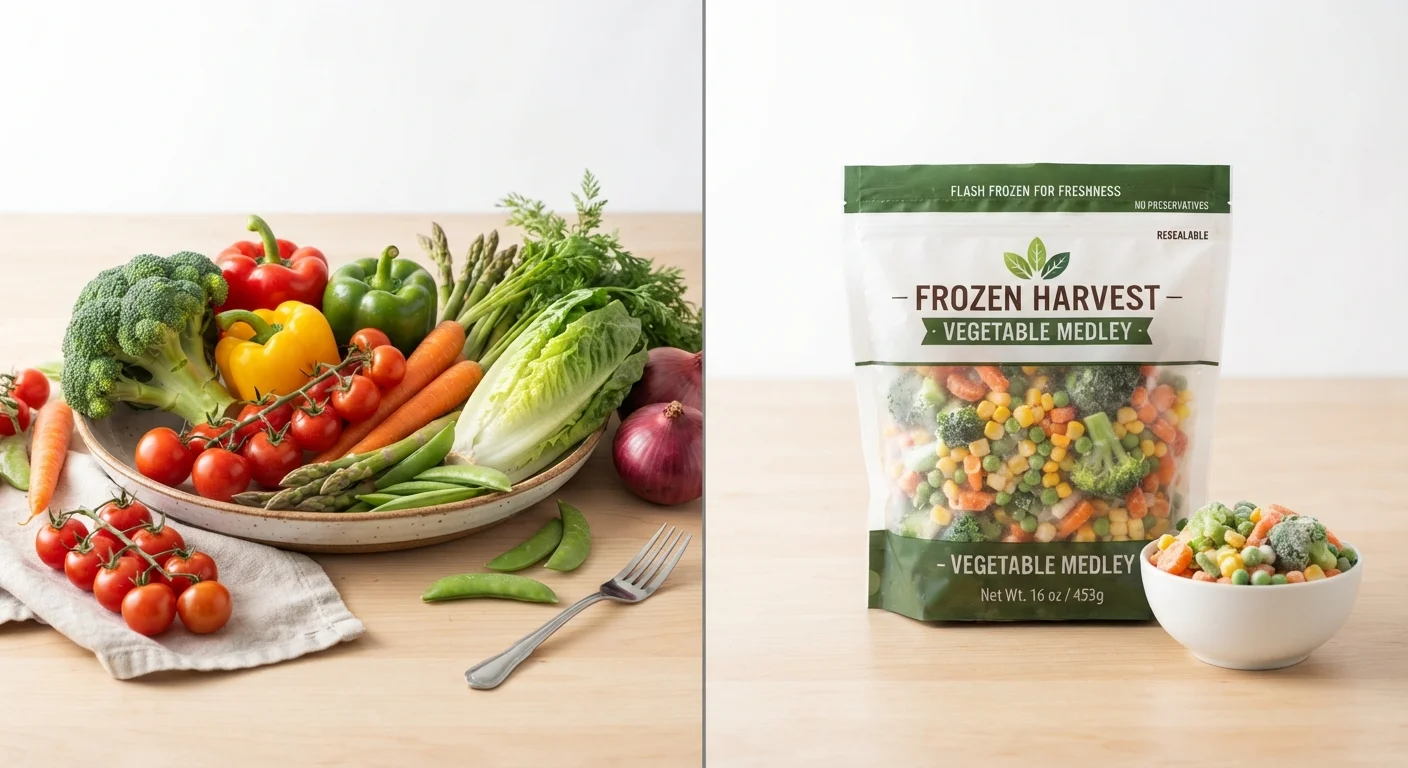
Photo: HorizonMetric.com | One Destination For Everyday Insights editorial
—— In This Article
Key Takeaways
- Frozen produce is typically flash-frozen within hours of harvest, preserving most vitamins and minerals.
- Fresh produce can lose significant nutrients during transport, storage, and time on store shelves.
- Neither option is universally superior — the best choice depends on season, dish, and lifestyle.
- Frozen vegetables are often more affordable and reduce household food waste.
- Both fresh and frozen produce support a healthy, balanced diet when eaten regularly.
What Happens to Nutrients Between Farm and Fork
The nutritional gap between fresh and frozen produce is smaller than most people assume — and in some cases, it tips in frozen's favor. Understanding why requires a quick look at what happens after harvest.
Fresh produce begins losing nutrients the moment it's picked. Water-soluble vitamins like vitamin C and several B vitamins are especially sensitive to heat, light, air, and time. By the time fresh spinach, broccoli, or green beans travel from farm to distribution center to grocery shelf to your refrigerator, days — sometimes over a week — may have passed. Studies published in peer-reviewed nutrition journals have found that some vegetables lose a measurable portion of key vitamins within just a few days of harvest under standard retail conditions.
Frozen produce follows a different path. Vegetables and fruits destined for freezing are typically harvested at peak ripeness and processed quickly, often within hours. They're blanched briefly (a short heat treatment to deactivate enzymes that cause spoilage) and then flash-frozen. The freezing process slows nutrient degradation significantly, effectively pausing the clock on vitamin loss.
Blanching: A Minor Trade-Off Worth Knowing
The brief blanching step before freezing can reduce levels of some heat-sensitive vitamins — particularly vitamin C and certain B vitamins — by a small amount. However, the freezing process that follows effectively halts further nutrient loss. On balance, most nutrition researchers consider frozen produce nutritionally comparable to fresh for the vast majority of vegetables.
This doesn't mean fresh produce is nutritionally poor. Produce purchased directly from a farmers market or grown locally can be harvested and in your kitchen within a day or two, minimizing nutrient loss entirely. The nutrient story is really about transit time, not the category itself.
Head-to-Head: How the Two Compare Across Key Factors
Choosing between fresh and frozen involves more than just vitamins. Consider cost, convenience, and how each option fits your cooking habits.
| Criterion | Fresh Produce | Frozen Produce |
|---|---|---|
| Nutrient retention | High if local/in-season; declines with transit time | Locked in at harvest via flash-freezing |
| Shelf life | Days to 1–2 weeks (refrigerated) | 8–12 months (frozen) |
| Cost per serving | Higher, especially off-season | Generally lower year-round |
| Texture in cooked dishes | Holds up well; versatile | Can soften; best in cooked applications |
| Food waste risk | Higher — spoils faster | Low — use only what you need |
| Seasonal availability | Limited to growing season locally | Available year-round regardless of season |
| Flavor at peak season | Superior when locally sourced | Good; slight texture difference |
~48 hrs
Typical time from harvest to freezing
Research from the University of California, Davis found that many frozen vegetables are processed within 12–48 hours of harvest, preserving peak nutrient levels.
15–55%
Vitamin C loss in fresh produce over days
Studies have shown fresh spinach and green beans can lose a significant percentage of vitamin C after several days of refrigerated storage.
~40%
Of U.S. households' fresh produce goes to waste
According to USDA estimates, food waste at the consumer level is a significant issue, with perishable produce among the most commonly discarded items.
For budget-conscious households, frozen produce is often a clear advantage. A bag of frozen peas, corn, or mixed vegetables typically costs less per serving than its fresh counterpart — and you're not paying for the portion that goes bad before you use it. As explored in our article on why healthy eating can feel expensive, frozen staples are one of the most practical ways to eat nutritiously without overspending.
Fresh produce shines in texture-dependent dishes. Roasted asparagus, a crisp salad, or fresh corn on the cob simply can't be replicated with frozen equivalents. If a recipe depends on the vegetable holding its structure, fresh is usually the better call.
Seasonal Timing Changes the Equation
Seasonality matters more than most people realize. When you buy fresh tomatoes in August at a local farm stand, you're getting produce at peak nutrition and flavor. When you buy those same tomatoes in January, they've likely been picked underripe, shipped long distances, and ripened artificially — a process that affects both taste and nutrient content.
Frozen tomatoes (or frozen spinach, corn, or berries) purchased in January were almost certainly frozen at a more nutritionally optimal point than their fresh grocery-store counterparts picked in the off-season. Understanding which fruits and vegetables are actually in season near you — and when to lean on frozen instead — is a practical skill. Our guide to eating with the seasons walks through how regional produce calendars work and how to use them in your everyday cooking.
A reasonable approach for most households: use fresh produce when it's local and in season, and rely on frozen the rest of the year. Both strategies support a nutritious diet — they just require different thinking about when and how you shop.
This article is for general informational purposes only and is not intended as medical or dietary advice. Consult a qualified healthcare or nutrition professional for guidance specific to your health needs.

Food Editorial Team
Food Editorial Team is the collective byline for our editorial team and contributor network. Articles published under this byline or an editorial pen name are researched, written, and reviewed according to our editorial standards for clarity, consistency, and independence before publication.
View author profile