
Eating with the Seasons: How Produce Calendars Actually Work in Your Region
Seasonal produce isn't the same everywhere. Learn how climate zones shape what's fresh near you and how to cook around that rhythm.
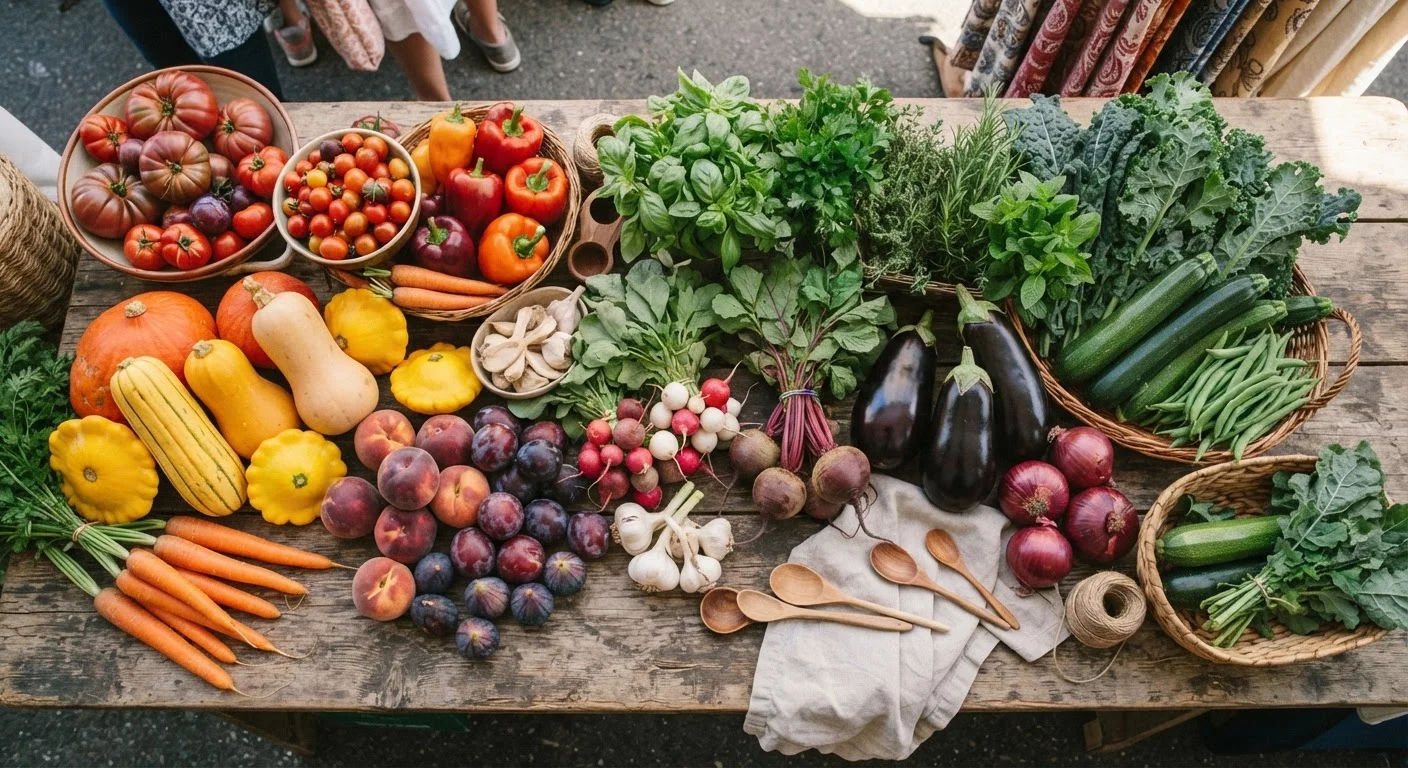
Photo: HorizonMetric.com | One Destination For Everyday Insights editorial
—— In This Article
Key Takeaways
- Seasonal produce varies dramatically by region — a single national calendar won't reflect what's fresh near you.
- Climate zones, frost dates, and local microclimates all determine what grows when in your area.
- Eating in season typically means better flavor, more nutrients at peak ripeness, and lower cost.
- Farmers markets and local extension offices are reliable sources for your region's actual harvest windows.
- Seasonal cooking is a skill you build gradually — starting with one or two familiar vegetables is enough.
Why One National Calendar Doesn't Tell the Whole Story
Pick up any general food magazine and you'll often see a seasonal produce chart presented as universal truth: strawberries in June, squash in October, citrus in December. The problem? That calendar was probably written with one region in mind — often the mid-Atlantic or Midwest — and it quietly ignores the enormous agricultural diversity of the United States.
In coastal Southern California and South Texas, strawberries arrive as early as February. In the upper Midwest and New England, they peak in late June or July. Florida produces tomatoes and cucumbers through winter, while Minnesota gardeners won't see ripe tomatoes until August. A Florida cook and a Minnesota cook are essentially eating in different seasons at the same time.
This isn't a minor footnote. It shapes what's flavorful, what's affordable, and what's worth buying from week to week. Understanding that produce seasonality is fundamentally regional is the first step toward actually eating with the seasons rather than just reading about it.
~330
Frost-free growing days in Phoenix, AZ annually
Compared to roughly 120 frost-free days in Duluth, MN — illustrating how dramatically growing windows differ across U.S. regions.
13
USDA Plant Hardiness Zones across the continental U.S.
Each zone represents a distinct temperature band that shapes which crops can be grown and when, according to the USDA Agricultural Research Service.
8,000+
Farmers markets operating across the U.S.
According to USDA data, farmers markets have grown substantially over recent decades, giving more Americans direct access to locally seasonal produce.
The Forces That Shape Your Local Growing Season
Three main factors determine what grows in your region and when: climate zone, frost dates, and local microclimates.
Climate Zones
The USDA Plant Hardiness Zone Map divides the country into zones based on average annual minimum winter temperatures. A grower in Zone 9 (central California, the Gulf Coast) has a vastly longer frost-free window than one in Zone 4 (northern Minnesota, Vermont). More frost-free days means more growing seasons per year, and sometimes year-round production of cold-sensitive crops like citrus and avocados.
First and Last Frost Dates
Frost dates are the practical bookends of a growing season. The last spring frost tells growers when it's safe to plant warm-season crops outdoors. The first fall frost signals the end of the line for tomatoes, peppers, and basil. In Phoenix, that window can stretch ten months. In Duluth, Minnesota, it might be barely four.
Microclimates
Even within a single state, geography creates pockets of difference. The Willamette Valley in Oregon produces different crops at different times than the Oregon coast just 50 miles away. Mountain valleys, lakeshores, and river bottoms all moderate temperature and humidity in ways that allow — or prevent — certain crops from thriving.
How to Find What's Actually in Season Where You Live
The most useful tool isn't a national app — it's your own state's agricultural resources. Cooperative extension services, run through land-grant universities, publish detailed regional planting and harvest guides for every corner of the country. These guides are written by agronomists who know your actual soil and climate, not a national editorial team.
Your local farmers market is an equally practical real-time guide. Whatever the vendors are selling that week is, almost by definition, what's in season near you. Strike up a conversation — most small-scale growers are happy to explain what's coming next and what just passed its peak.
Ask Your Farmers Market Vendors What's Next
Most farmers market growers are happy to tell you what crops are coming in the next few weeks. Asking "what should I be cooking right now?" or "what's peaking next month?" gives you a personalized, real-time produce calendar that no app can replicate. It also helps you plan meals a little further ahead and avoid seasonal regret — missing peak corn or peach season because you didn't know it was ending.
CSA (community-supported agriculture) subscriptions are another reliable entry point. When you sign up with a local farm for a weekly box, you hand the seasonal decision-making over to someone who understands your region intimately. It's also a low-pressure way to cook ingredients you might not have otherwise tried.
This kind of local food knowledge connects to something larger — the way regional identity in America has always been tied to what the land produces. Regional American food traditions like gumbo, clam chowder, and pozole each grew up around locally available ingredients, and they're still shaped by what's fresh and abundant in those places today.
Putting Seasonal Eating Into Practice
Eating seasonally doesn't require an overhaul of how you cook. It starts with one habit: before deciding what to make, check what's at its peak nearby. Then build the meal around that, rather than choosing a recipe and hunting for ingredients regardless of whether they're in season.
Flavor is the most immediate reward. A tomato grown in your region and harvested ripe tastes fundamentally different from one shipped across the country. The same applies to corn, peaches, melons, and leafy greens — there's a real sensory gap between produce at peak and produce that's merely available.
Cost follows flavor. When a crop is abundant locally, prices drop. Asparagus in April in the mid-Atlantic, blueberries in August in Michigan, or persimmons in November in Northern California — these are moments when quality is high and supply is generous.
It's also worth knowing when frozen makes smart sense. Frozen produce can match or exceed fresh in nutrition when frozen at peak ripeness — especially for out-of-season items or produce that's traveled a long distance to reach your store. Seasonal eating and smart use of frozen aren't in conflict; they work together across the full year.
Start with whatever vegetable or fruit is most visible and abundant at your nearest market right now. Cook it simply. Notice the difference. That's the whole practice — and it grows from there.
Frequently Asked Questions

Food Editorial Team
Food Editorial Team is the collective byline for our editorial team and contributor network. Articles published under this byline or an editorial pen name are researched, written, and reviewed according to our editorial standards for clarity, consistency, and independence before publication.
View author profile