
The Seasonal Garden Maintenance Calendar
A month-by-month reference covering what to plant, prune, fertilize, and protect — organized by season for U.S. home gardeners.
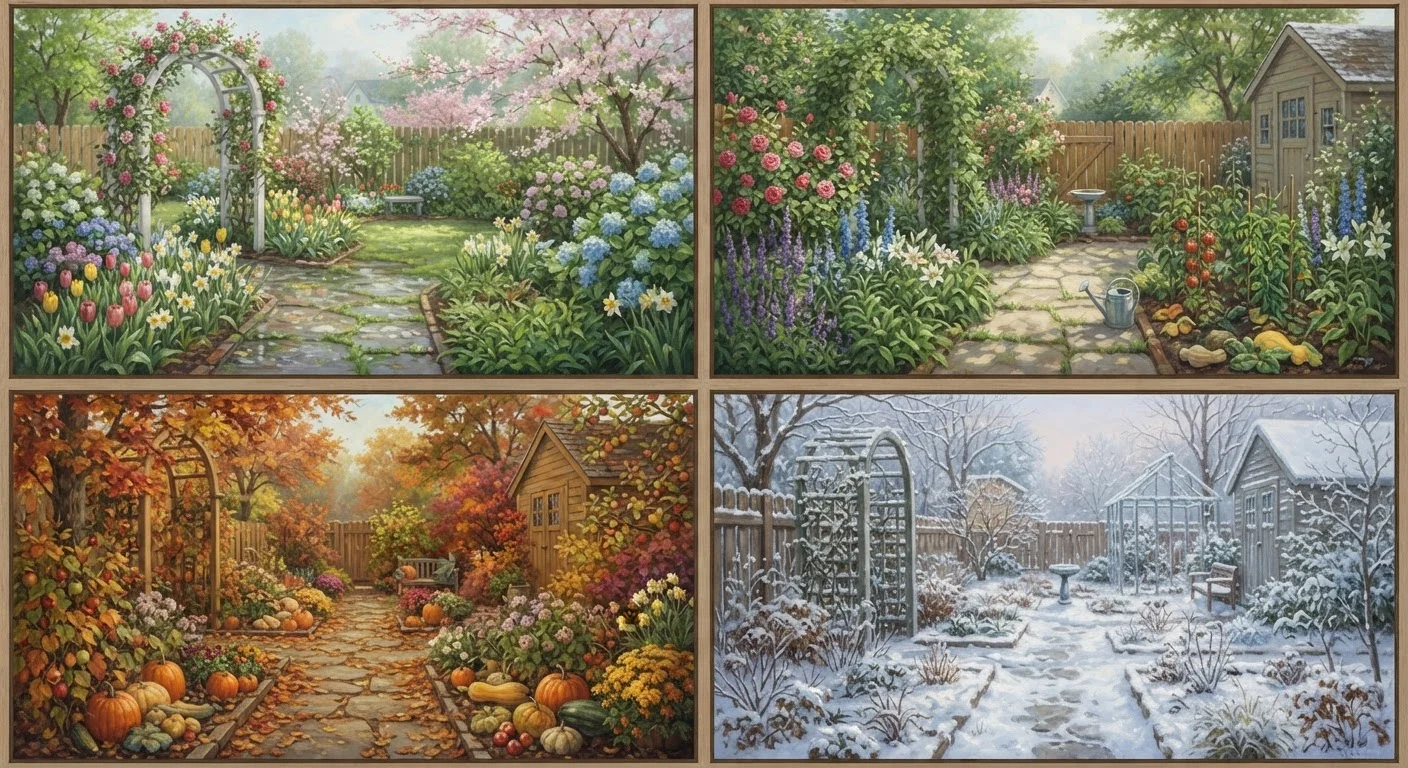
Photo: HorizonMetric.com | One Destination For Everyday Insights editorial
—— In This Article
Why a Seasonal Garden Calendar Works
Gardening success rarely comes from one big effort — it comes from consistent, timely action spread across the year. A seasonal calendar gives you a simple framework: know what needs doing, when to do it, and why it matters for your plants' health. Whether you're tending a small front-yard bed or a full vegetable garden, timing your tasks to the natural rhythms of each season reduces plant stress, limits pest problems, and makes the workload manageable.
Because the U.S. spans many climate zones, treat this calendar as a general guide. Gardeners in the Deep South or Pacific Coast will shift tasks earlier; those in the Upper Midwest or Mountain West should shift later. Your local frost dates — available from your county's cooperative extension office — are the single most important reference point to calibrate any planting or protective action.
| Average last frost (North) | Mid-April to mid-May (USDA Plant Hardiness Zone Map) |
| Average last frost (South) | Late January to mid-March (USDA Plant Hardiness Zone Map) |
| Ideal mulch depth | 2–3 inches (University cooperative extension general guidance) |
| Typical weekly water need | 1 inch per week (rain + irrigation) (General horticultural guidance) |
| Soil temp for cool-season sowing | Above 40°F |
| Bulb planting window (fall) | 6–8 weeks before hard frost |
Spring (March–May): Plant, Prepare, and Prevent
Early spring is the reset button for your garden. As soil temperatures rise above 40°F, roots begin waking up and cool-season crops can go in the ground.
- Soil prep: Turn compost into beds, test soil pH, and top-dress perennials with a balanced slow-release fertilizer.
- Planting: Direct-sow cool-season vegetables — lettuce, spinach, peas, and radishes — after your last frost date. Start warm-season transplants (tomatoes, peppers) indoors 6–8 weeks before that date.
- Pruning: Cut back ornamental grasses to 4–6 inches before new growth emerges. Prune dead wood from shrubs and roses once buds begin to swell.
- Pest prevention: Apply horticultural oil or dormant spray to fruit trees before buds break to smother overwintering scale insects and mite eggs.
- Lawn: Overseed thin spots and apply a pre-emergent weed control product before soil temps reach 55°F to suppress crabgrass.
Spring is also the best time to plan your plant combinations. See our guide to annuals vs. perennials to balance color and structure across the season.
Frost date
The average calendar date of the last killing frost in spring or first killing frost in fall for a given location. Used to time planting and protection tasks. Your local cooperative extension office can provide your specific dates.
Deadheading
The practice of removing spent or faded flowers from a plant to redirect energy toward new blooms rather than seed production, extending the flowering season.
Pre-emergent herbicide
A weed-control product applied to soil before weed seeds germinate. It forms a chemical barrier that prevents seedlings from establishing, rather than killing existing weeds.
Dormant spray
An oil-based pesticide applied to trees and shrubs while they are dormant (leafless) in late winter or early spring to smother overwintering insects and their eggs.
Slow-release fertilizer
A fertilizer formulated to break down gradually over weeks or months, providing a steady supply of nutrients to plants rather than a single large dose.
Summer (June–August): Maintain, Water, and Harvest
Summer tasks center on keeping established plants healthy under heat and drought stress.
- Watering: Water deeply and less frequently — typically 1 inch per week — to encourage deep root growth. Morning watering reduces fungal disease risk.
- Mulching: Maintain a 2–3 inch layer of organic mulch around plants to retain moisture and regulate soil temperature.
- Fertilizing: Feed heavy feeders like tomatoes and squash every 3–4 weeks with a balanced or low-nitrogen fertilizer once they begin flowering.
- Deadheading: Remove spent flowers from annuals and perennials to encourage continuous bloom.
- Harvest: Pick vegetables at peak ripeness; leaving overripe produce on plants signals them to slow production.
- Pest scouting: Check leaf undersides weekly for aphids, spider mites, and caterpillar eggs. Early intervention is far easier than controlling a large infestation.
1 inch
Weekly water needed by most garden plants
General horticultural guidance from university extension programs across the U.S.
55°F
Soil temperature threshold for crabgrass germination
Widely cited by turfgrass specialists as the trigger point for pre-emergent herbicide application.
2–3 inches
Mulch depth that significantly reduces soil moisture loss
Cooperative extension research consistently shows this depth cuts evaporation and moderates soil temperature.
Fall & Winter (September–February): Protect, Rest, and Plan
Fall is the second most active gardening season — and one of the most overlooked.
- Planting: Set out spring-flowering bulbs (tulips, daffodils, alliums) 6–8 weeks before hard frost. Fall is also ideal for planting trees, shrubs, and perennials so roots establish before winter.
- Lawn care: Aerate and overseed cool-season lawns in early fall; apply a winterizing fertilizer high in potassium in late fall.
- Clean-up: Remove diseased plant material from beds, but leave seed heads on native plants to support overwintering birds and beneficial insects.
- Protection: Wrap tender shrubs in burlap, mulch over perennial root zones after the first frost, and drain and store garden hoses and irrigation lines.
Winter is the planning season. Review what worked, order seed catalogs, and sketch out any bed changes. It's also a good time to sharpen and oil tools so they're ready in spring.
Garden maintenance pairs naturally with overall home care routines — check our seasonal home maintenance checklist to coordinate outdoor and indoor tasks by quarter.
Know Your USDA Hardiness Zone
The USDA Plant Hardiness Zone Map divides the U.S. into 13 zones based on average annual minimum winter temperatures. Knowing your zone helps you select plants rated to survive your winters and calibrate seasonal task timing. You can look up your zone for free on the USDA website using your ZIP code.

Home Editorial Team
Home Editorial Team is the collective byline for our editorial team and contributor network. Articles published under this byline or an editorial pen name are researched, written, and reviewed according to our editorial standards for clarity, consistency, and independence before publication.
View author profile