
Annuals vs. Perennials: Planning a Garden That Blooms Year After Year
Understand the key differences between annual and perennial plants — and how to combine both for color, structure, and long-term value.
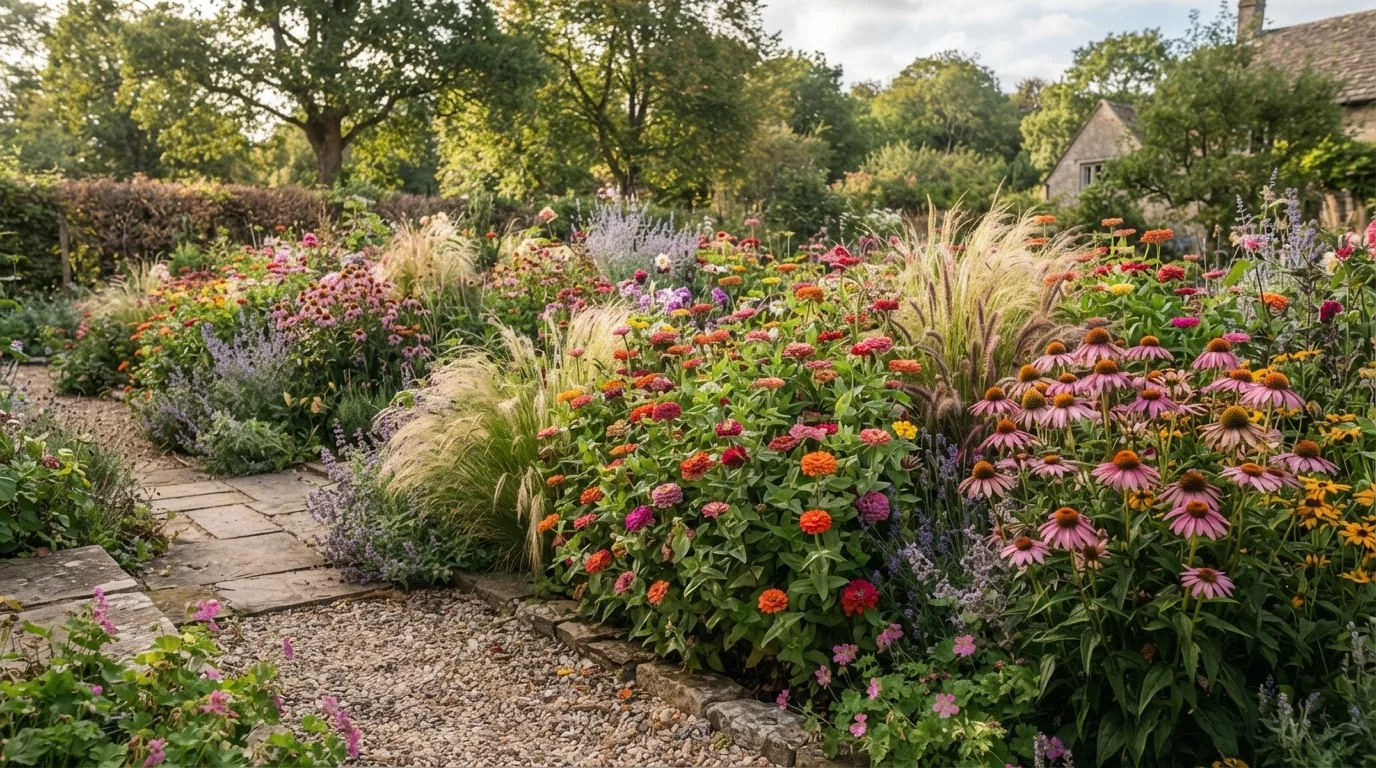
Photo: HorizonMetric.com | One Destination For Everyday Insights editorial
—— In This Article
Key Takeaways
- Annuals complete their entire life cycle in one growing season, requiring replanting each year.
- Perennials return year after year from the same root system, typically for three or more seasons.
- Annuals generally offer longer bloom periods; perennials often bloom for shorter windows but with less effort.
- Combining both types creates gardens with reliable structure and flexible seasonal color.
- Upfront costs favor annuals; long-term value typically favors perennials.
- Your climate, USDA hardiness zone, and maintenance preference should guide your plant mix.
What Sets Annuals and Perennials Apart
The difference between annuals and perennials comes down to lifespan. Annuals germinate, flower, set seed, and die — all within a single growing season. Common examples include zinnias, marigolds, petunias, and impatiens. Because they invest all their energy into producing flowers and seeds, they tend to bloom prolifically for months.
Perennials, by contrast, return from the same root system for multiple years. Their tops may die back in winter, but the roots survive and send up new growth each spring. Coneflowers, black-eyed Susans, hostas, and ornamental grasses are familiar examples. Most perennials bloom for a shorter window — often two to four weeks — but reward you with increasing fullness as they mature.
Before choosing either type, it helps to know your yard's conditions. Our outdoor space assessment checklist walks you through sun exposure, soil drainage, and frost dates — all of which influence which plants will thrive.
| Criterion | Annual Plants | Perennial Plants |
|---|---|---|
| Lifespan | One growing season | 3+ years from same roots |
| Bloom Duration | Months (often all season) | Weeks per season |
| Upfront Cost | Lower per plant | Higher per plant |
| Long-Term Cost | Higher (replant yearly) | Lower (divide and spread) |
| Maintenance | Regular deadheading, watering | Seasonal cutback, less watering once established |
| Design Flexibility | High — change each season | Lower — fixed placement |
| Establishment Time | Immediate impact | 2–3 seasons to mature |
Cost, Effort, and Long-Term Value
Annuals are typically inexpensive at the nursery, but those costs add up when you're purchasing new plants every spring. Perennials cost more upfront — sometimes significantly — but most divide over time, meaning you can propagate new plants from existing ones without spending more.
Labor considerations also differ. Annuals require seasonal replanting, regular deadheading (removing spent flowers to encourage new blooms), and consistent watering. Perennials demand more patience early on — the gardening adage "sleep, creep, leap" describes their typical three-year trajectory: minimal growth the first year, modest growth the second, and robust spread by the third.
3 Years
Typical perennial maturity timeline
Most perennials follow a "sleep, creep, leap" pattern, reaching full size and flower output around their third growing season.
2–4 Weeks
Average perennial bloom window
Unlike annuals, most perennials bloom for a limited period per season, making bloom-time sequencing an important planning consideration.
For gardeners interested in expanding their approach, matching your gardening method to your space can help you decide how annuals and perennials fit within your broader setup.
Designing a Garden That Uses Both
The strongest gardens typically blend both plant types. A practical approach: use perennials to establish the structure and seasonal rhythm of a bed, then fill gaps with annuals while the perennials mature. This strategy is especially useful in new beds, where perennials may take a season or two to fill in.
Consider sequencing bloom times when selecting perennials — choosing early, mid-, and late-season varieties so something is always coming into color. Then layer annuals in containers or at bed edges for continuous coverage between those windows.
If you're interested in plants that also support local wildlife and require less intervention over time, growing a native plant garden explores how regionally adapted perennials can anchor a low-maintenance planting scheme.
To keep your combined plantings on track through the seasons, our seasonal garden maintenance calendar offers a month-by-month guide for planting, pruning, and protection.
Know Your USDA Hardiness Zone
Whether a perennial actually returns each year depends on your local winter temperatures. The USDA Plant Hardiness Zone Map divides the U.S. into zones based on average annual minimum temperatures. A plant labeled "perennial" in Zone 8 may behave as an annual in Zone 5. Always check a plant's zone range before purchasing, and verify your zone at the USDA's official website.

Home Editorial Team
Home Editorial Team is the collective byline for our editorial team and contributor network. Articles published under this byline or an editorial pen name are researched, written, and reviewed according to our editorial standards for clarity, consistency, and independence before publication.
View author profile