
Backyard Composting, Container Gardening, Raised Beds, and More: Matching the Right Approach to Your Space
Not every gardening method suits every yard. Explore the major approaches — from containers on a balcony to full raised-bed systems — and what each requires.
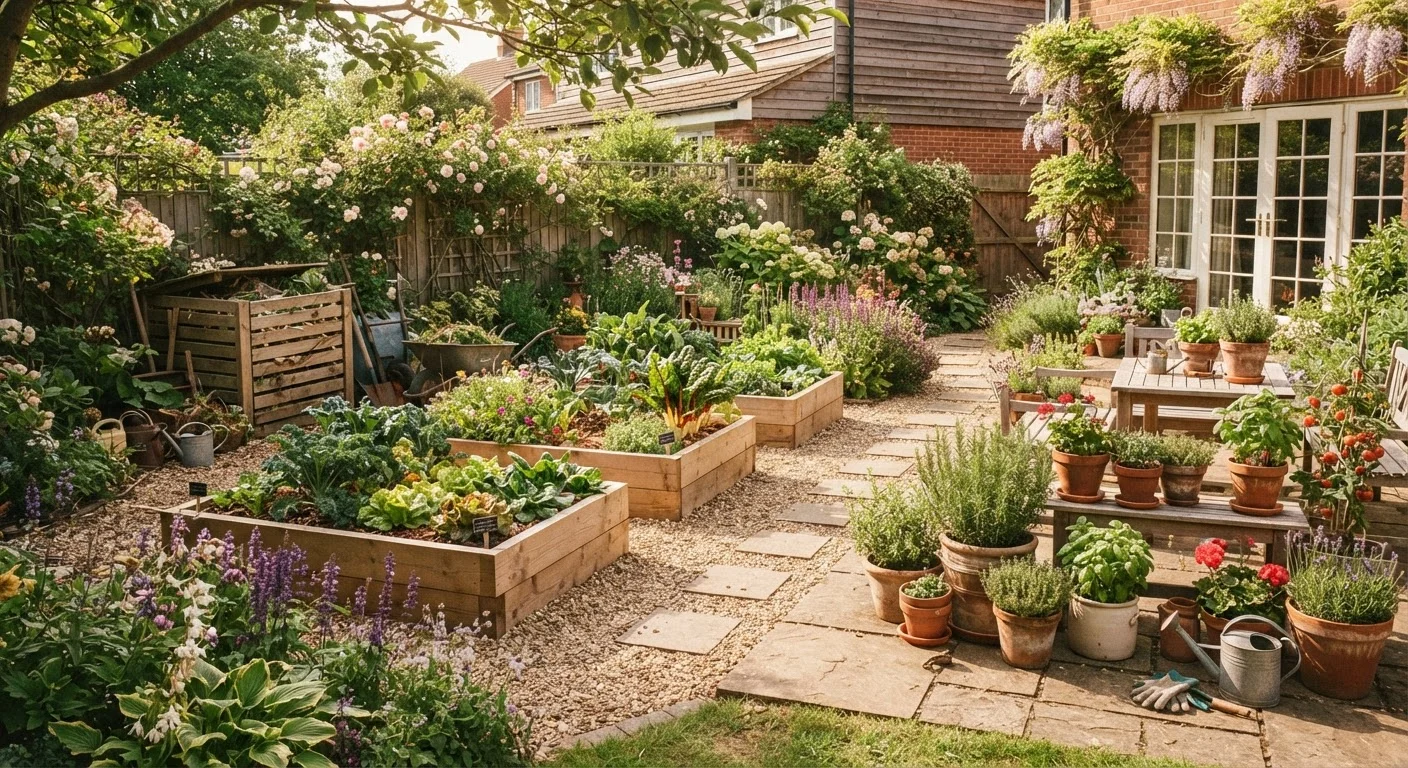
Photo: HorizonMetric.com | One Destination For Everyday Insights editorial
—— In This Article
Key Takeaways
- Container gardening works well for small spaces like balconies, patios, and renters' yards.
- Raised beds give you control over soil quality and drainage, ideal for poor or compacted ground.
- Backyard composting reduces waste and builds richer soil over time with minimal cost.
- In-ground gardening suits larger lots where scale and economy matter most.
- Matching your method to your space, climate, and commitment level sets you up for success.
One Garden, Many Approaches
There is no single right way to garden. Whether you have a sprawling suburban backyard, a narrow urban balcony, or something in between, a method exists that can work with your conditions — not against them. The challenge is knowing which approach fits your space, your soil, and how much time you want to invest.
This guide walks through the major gardening setups available to most American homeowners and renters, covering what each requires, where each excels, and where it falls short. If you have already been weighing raised beds against planting directly in the ground, our deeper look at raised beds vs. in-ground gardens covers the trade-offs in full detail.
Container Gardening
Container gardening is the most accessible entry point for anyone short on space. Pots, window boxes, fabric grow bags, and large planters can support herbs, lettuce, tomatoes, peppers, and flowers on a balcony, porch, or paved patio. Because every container is self-contained, you control the soil mix completely and can move plants to follow sunlight or protect them from frost.
The main limitations are water and nutrients. Containers dry out faster than ground soil, often requiring daily watering in summer, and nutrients wash out with repeated watering, so regular feeding is usually necessary. Choose containers with adequate drainage holes and use a quality potting mix rather than garden soil, which compacts poorly in pots.
Containers let you garden on any surface — no yard required.
Raised Bed Gardening
Raised beds are frames — typically wood, metal, or composite — filled with a blended growing medium and set on top of existing ground. They solve two common problems at once: poor native soil and inadequate drainage. Because you build the soil inside the bed, you are not stuck with clay, compaction, or contaminated ground beneath.
Raised beds also warm up faster in spring, which can extend your growing season. They work well for vegetables, herbs, and cut flowers, and their defined edges make maintenance feel manageable. The upfront cost of materials and soil is the main barrier. Beds typically need topping up with compost each season to replace what plants consume. For a side-by-side comparison with traditional planting, see raised beds vs. in-ground gardens.
Raised beds let you build the ideal soil regardless of what lies beneath.
In-Ground Gardening
Planting directly into the ground is the most traditional method and makes the most sense when you have good native soil, a large area to cultivate, and a long-term commitment to one location. It offers scale that containers and raised beds cannot easily match, and it is generally the least expensive approach once the ground is prepared.
The investment is in soil amendment. Most American yards benefit from added organic matter — compost, aged manure, or leaf mold — worked into the top 12 inches before planting. In-ground plots also require attention to drainage; low-lying areas that pool water can stress or kill most edible plants. If your yard receives limited rainfall or is in a drier region, pairing this method with water-wise landscaping principles can significantly reduce irrigation needs.
In-ground gardening offers the most scale for the least structural cost.
Backyard Composting
Composting is less a gardening style than a soil-building practice that supports every other method on this list. A backyard compost bin or pile turns kitchen scraps and yard waste into a dark, crumbly amendment that improves soil structure, feeds beneficial organisms, and reduces what goes to the landfill.
A functional compost setup requires a balance of carbon-rich "browns" (dried leaves, cardboard) and nitrogen-rich "greens" (vegetable scraps, grass clippings), adequate moisture, and occasional turning to introduce oxygen. Most backyard bins produce usable compost in three to six months under active management. Our companion guide on composting at home walks through the full process, including what to keep out of the bin.
Compost is the single most cost-effective way to improve any garden's soil.
Vertical and Wall Gardening
When horizontal space is the limiting factor, growing upward opens new possibilities. Trellises, wall-mounted pocket planters, tiered shelf systems, and fence-mounted planters can support strawberries, herbs, leafy greens, and climbing crops like beans and cucumbers in a fraction of the footprint of conventional beds.
Vertical systems require careful attention to watering — upper pockets or containers tend to dry out quickly — and to structural support, since a full, wet vertical planter can be surprisingly heavy. They work especially well for renters or homeowners with paved outdoor areas. Pair vertical growing with container soil mixes for best results, and position structures where they will receive at least six hours of sunlight daily for most edible crops.
Growing vertically can double usable planting space without expanding your footprint.
Integrated Mixed Planting
Rather than committing to one method, many home gardeners find success combining approaches to suit different zones of their yard. A raised bed near the back fence for summer vegetables, containers of herbs by the kitchen door, an in-ground perennial border along the fence line, and a compost bin in the corner can all function together as a coherent system.
Mixed planting also helps with long-term planning. Pairing annuals with perennials — plants that return each year — creates continuity without replanting everything from scratch each spring. Our article on annuals vs. perennials explains how to layer both for sustained color and structure throughout the growing season.
Combining methods lets each part of your yard work to its individual strengths.
Choosing the Setup That Works for You
The most effective garden is the one you can realistically maintain. A raised-bed system left to dry out or a compost bin that never gets turned will underperform even the simplest container setup tended with care. Before committing to any single method, consider how much outdoor space you have, whether you own or rent, what your soil is like, and how much time per week you can genuinely spare.
Start Small and Build From There
Gardening ambitions often outpace available time, especially in the first season. Starting with one raised bed or a handful of containers gives you a chance to learn what your space, soil, and schedule actually support before expanding. A well-maintained small setup will nearly always outperform an overgrown, neglected large one.
Many gardeners combine approaches — containers near the door for herbs, a raised bed for vegetables, and a compost bin to feed both. There is no rule against mixing methods as your confidence and space allow. If you are thinking about reducing lawn area to make room for more planting, our article on the trade-offs of a lawn-free yard offers an honest assessment of what that shift actually involves.

Home Editorial Team
Home Editorial Team is the collective byline for our editorial team and contributor network. Articles published under this byline or an editorial pen name are researched, written, and reviewed according to our editorial standards for clarity, consistency, and independence before publication.
View author profile