
Raised Beds vs. In-Ground Gardens: Which Setup Actually Works Better?
Raised beds offer drainage and control; in-ground plots offer scale and economy. Here's how to decide which suits your yard and goals.
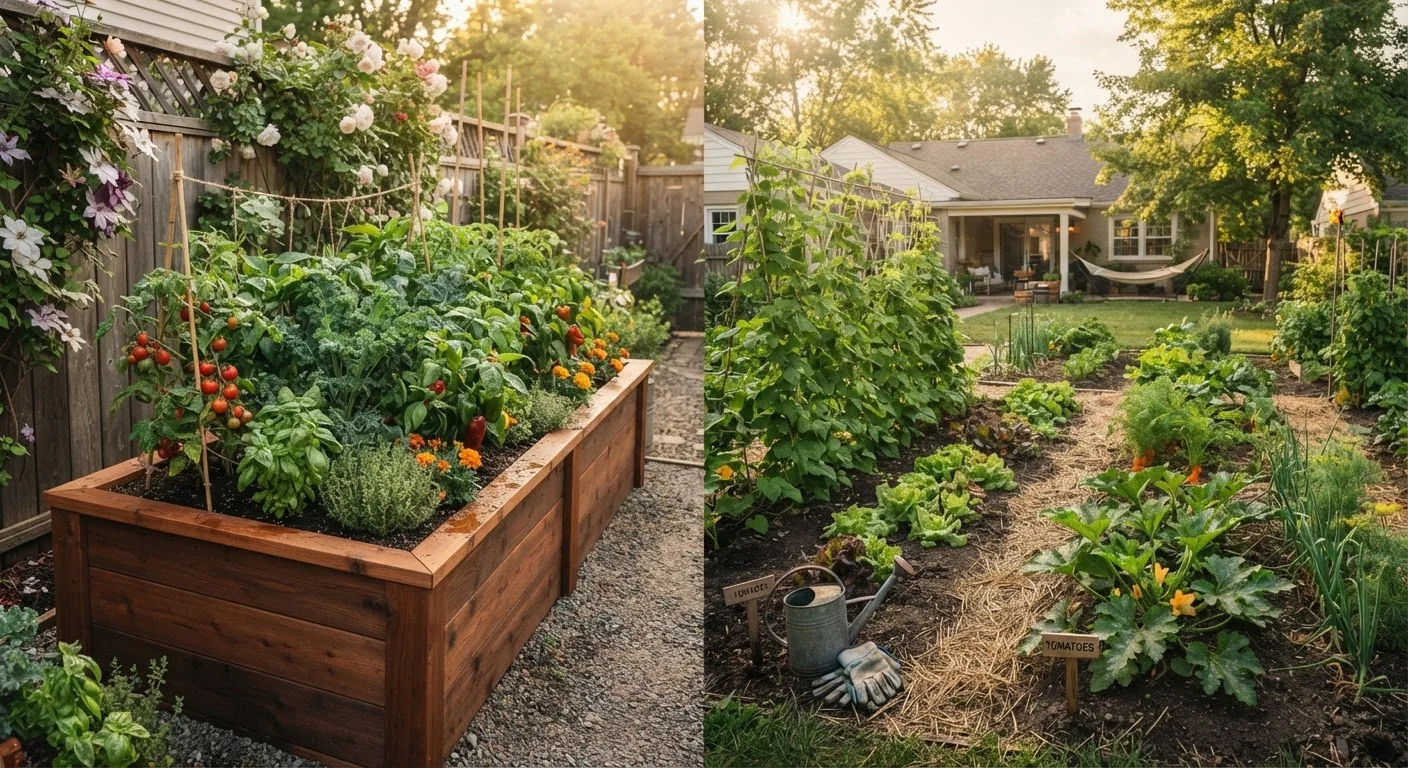
Photo: HorizonMetric.com | One Destination For Everyday Insights editorial
—— In This Article
Key Takeaways
- Raised beds give you full control over soil quality, drainage, and weed pressure from day one.
- In-ground gardens cost less to establish and can accommodate larger planting areas more easily.
- Your existing soil health is the single biggest factor in deciding which approach makes sense.
- Raised beds can reduce physical strain with their elevated growing surface, benefiting gardeners with mobility challenges.
- In-ground plots often support deeper-rooted crops and perennial plantings more naturally over time.
- Many homeowners ultimately combine both methods to match different crops and garden zones.
What Actually Separates These Two Approaches
At their core, raised beds and in-ground gardens are simply different strategies for putting plants in soil. A raised bed is a contained structure — typically wood, metal, or composite — filled with imported growing medium and positioned on top of your existing ground. An in-ground garden uses the earth already beneath your feet, amended as needed but fundamentally native.
That distinction has real consequences. Raised beds give you a blank slate: you control the soil composition, drainage rate, and even the starting weed-seed population. In-ground gardens connect you directly to your yard's existing ecosystem — its microbial life, earthworm activity, and moisture-retention patterns. Neither is universally superior. The better choice depends heavily on what you're starting with and what you want to grow.
For a broader look at how these options fit alongside container gardening and composting systems, see our guide to matching the right gardening approach to your space.
Soil, Cost, and Setup: The Practical Numbers
| Criterion | Raised Beds | In-Ground Gardens |
|---|---|---|
| Upfront cost | Higher (materials + fill soil) | Lower (amendments only) |
| Soil control | Complete — you choose every ingredient | Partial — amend native soil over time |
| Drainage | Excellent — drains freely | Varies by native soil type |
| Scalability | Limited by cost and space | Easily expanded |
| Weed pressure | Lower initially | Higher, especially at first |
| Root depth | Restricted by bed depth | Unrestricted |
| Accessibility | Easier — reduced bending | Requires kneeling or bending |
| Soil warming in spring | Faster — elevated beds warm early | Slower — depends on exposure |
Raised beds demand an upfront investment that in-ground gardens simply don't. A basic 4-by-8-foot bed requires framing material plus enough quality fill mix — typically a blend of compost, topsoil, and an aerating amendment like perlite — to fill it to a useful depth of at least 10 to 12 inches. Costs vary widely by region and material choice, but the framing and soil together represent real expenditure before a single seed goes in.
In-ground gardens, by contrast, may need compost worked in and possibly a pH adjustment based on a soil test, but the ground itself is already there. For larger plots — anything beyond a few raised beds — the economics of in-ground gardening are hard to argue with.
10–12 in.
Minimum useful raised bed depth for most vegetables
Most cooperative extension guidelines recommend at least 10 inches of growing medium to support healthy root development in raised beds.
4x8 ft
Standard raised bed size for home gardens
This dimension is widely recommended because it allows a gardener to reach the center from either side without stepping into the bed, protecting soil structure.
6.0–7.0
Ideal soil pH range for most vegetables
Whether you garden in-ground or in raised beds, achieving a pH in this range supports nutrient availability; a simple soil test can confirm your starting point.
Drainage, Weeds, and Growing Conditions
One of the clearest advantages of raised beds is drainage. Elevated growing medium dries out faster after heavy rain, which matters enormously for crops like tomatoes and peppers that are prone to root rot in waterlogged conditions. In regions with heavy clay soils, this alone can be the deciding factor.
Weed pressure also tends to be lower in a new raised bed — at least initially — because you're not working with seed-laden native topsoil. However, wind-borne seeds and perennial weeds from below can eventually colonize any unlined bed, so this advantage diminishes over time without consistent management.
In-ground gardens retain moisture more naturally in dry periods, which can reduce irrigation needs — a meaningful advantage in drought-prone areas. Our guide to drought-tolerant landscaping principles explores how garden design choices affect water use more broadly.
Which Crops Thrive Where — and What to Plant Next
Shorter-season vegetables — salad greens, radishes, herbs, bush beans — perform brilliantly in raised beds. The warm, well-drained soil encourages fast germination and gives you a head start in spring. Root vegetables like carrots and parsnips do well too, provided the bed is deep enough to prevent crowding or forking.
Deep-rooted crops and perennials are a different story. Asparagus, artichokes, and most fruit trees or shrubs establish better in-ground, where roots can reach freely for moisture and nutrients without hitting a frame boundary. Many gardeners find a hybrid approach most useful: raised beds for annuals that benefit from soil control, and in-ground space for long-term plantings.
If you're still working out what to plant in either setup, our guide to annuals vs. perennials can help you think through plant selection alongside your garden structure choices. And if you're considering replacing lawn area to make room for garden beds of either type, The Trade-Offs of a Lawn-Free Yard offers an honest look at what that shift involves.

Home Editorial Team
Home Editorial Team is the collective byline for our editorial team and contributor network. Articles published under this byline or an editorial pen name are researched, written, and reviewed according to our editorial standards for clarity, consistency, and independence before publication.
View author profile