
Drought-Tolerant Landscaping: Principles Behind Water-Wise Yards
Xeriscaping and drought-tolerant design aren't just for dry climates. Explore the core ideas that reduce water use without sacrificing beauty.
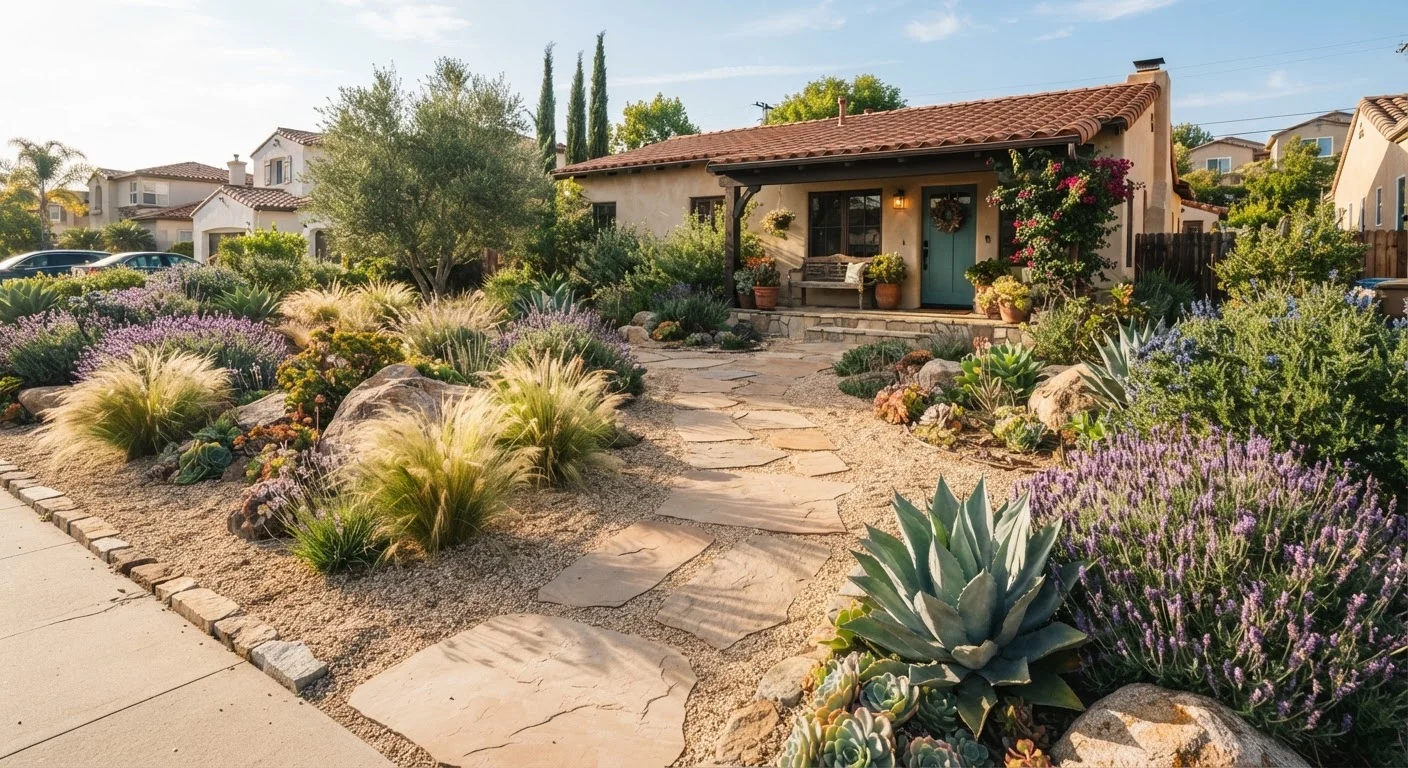
Photo: HorizonMetric.com | One Destination For Everyday Insights editorial
—— In This Article
Key Takeaways
- Drought-tolerant landscaping applies to all U.S. climates, not just deserts or dry regions.
- Soil health and mulching are as important as plant selection for water retention.
- Grouping plants by water needs — called hydrozoning — reduces waste and stress on plants.
- Reducing turf grass area is one of the fastest ways to cut outdoor water use.
- Drought-tolerant yards can be lush and colorful with thoughtful plant choices.
- A yard assessment before planting helps you match plants to your site's actual conditions.
Why Water-Wise Design Matters Beyond the Desert
Outdoor water use accounts for a substantial share of household consumption in the U.S. — and a large portion of that goes toward keeping lawns and gardens green during the warmest months. Drought-tolerant landscaping addresses this directly, not by making yards look sparse or barren, but by rethinking which plants and materials belong there in the first place.
The approach is relevant well beyond the Southwest. Seasonal dry spells, municipal water restrictions, and rising utility costs make water-wise design a practical consideration for homeowners in the Midwest, Southeast, and Mid-Atlantic as well. If you've ever watched an irrigation system run during a rainstorm, or replaced a plant that wilted despite regular watering, the underlying principles here will resonate.
Before choosing a single plant, it helps to understand your yard's existing conditions — sun exposure, drainage, and soil type all shape what will actually thrive. Our outdoor space assessment checklist walks through exactly this process.
30–60%
Share of household water used outdoors
According to the U.S. Environmental Protection Agency, outdoor water use — primarily lawn and garden irrigation — accounts for roughly 30 to 60 percent of total household consumption in many U.S. regions during summer months.
50%
Outdoor water often wasted through inefficiency
The EPA estimates that as much as half of all outdoor water use is lost to evaporation, runoff, or overwatering, making landscape design one of the most impactful areas for conservation.
2–3 inches
Recommended mulch depth for moisture retention
Most university extension programs and landscape professionals recommend maintaining a 2–3 inch layer of organic mulch around plantings to meaningfully reduce soil moisture loss.
The Core Principles of Drought-Tolerant Design
Drought-tolerant landscaping isn't a single technique — it's a set of overlapping principles that work together.
1. Match Plants to Your Climate and Soil
Native plants are the foundation of most water-wise landscapes. Because they evolved in your region, they're adapted to its natural rainfall cycles, soil chemistry, and temperature swings. That said, regionally adapted non-natives can also perform well. The key is choosing plants whose natural habitat resembles your yard's conditions — not fighting the site.
2. Improve the Soil Before You Plant
Even drought-tolerant plants struggle in compacted, nutrient-poor soil that sheds water rather than absorbing it. Working compost into planting beds improves soil structure, helping it retain moisture longer between rain events. Healthy soil is the infrastructure that makes everything else work.
3. Mulch Consistently
A 2–3 inch layer of organic mulch — wood chips, shredded bark, or straw — dramatically slows evaporation from the soil surface. It also suppresses competing weeds and moderates soil temperature. Mulching is one of the highest-impact, lowest-cost steps in any water-wise yard.
4. Hydrozone Your Plantings
Hydrozoning means grouping plants by their water needs. Place thirsty plants near the house or in naturally low-lying areas that collect runoff; put drought-tolerant species in drier, sunnier spots. This prevents the common mistake of watering an entire yard to meet the needs of just a few demanding plants.
5. Reduce or Rethink Turf
Traditional lawns are among the highest water consumers in the residential landscape. Replacing portions of lawn with ground covers, native meadow plantings, or permeable gravel beds can significantly cut irrigation demands. For an honest look at what this trade-off involves, see our article on the trade-offs of a lawn-free yard.
Start with One Zone, Not the Whole Yard
Converting an entire yard to a drought-tolerant landscape at once can feel overwhelming and expensive. Instead, pick one bed or border to redesign using water-wise principles. Observe how the plants perform through a full growing season before expanding. This approach lets you learn what works in your specific microclimate without committing to a complete overhaul.
Watering Smarter, Not Less
Drought-tolerant landscaping doesn't mean abandoning irrigation entirely — particularly while plants establish. What it changes is how and when you water. Deep, infrequent watering encourages roots to grow deeper into the soil, where moisture is more stable. Shallow, frequent watering does the opposite, producing surface-dependent roots that dry out quickly.
Drip irrigation and soaker hoses deliver water directly to the root zone with minimal evaporation loss, making them a natural fit for water-wise yards. Timing matters too — watering in the early morning reduces evaporation compared to midday or evening. For a deeper look at common irrigation mistakes, our piece on everything gardeners get wrong about watering covers the evidence behind several widely held misconceptions.
“The best time to water is early morning, when temperatures are cooler and winds are calmer — this reduces evaporation and gives foliage time to dry before nightfall, which discourages fungal disease.”
— University Cooperative Extension Service, Landscape and horticulture education resource
Making It Work for Your Specific Yard
No two yards are identical, and drought-tolerant design should reflect your site's actual conditions — not a template imported from another region or climate. A south-facing slope in full sun has different needs than a shaded north-facing border or a clay-heavy flat yard prone to standing water.
If you're considering integrating raised beds into your water-wise landscape, our guide on raised beds vs. in-ground gardens can help you weigh how each approach handles drainage and moisture retention. For broader questions about which gardening method suits your space, our overview of matching gardening approaches to your space covers the full range of options.
The most durable drought-tolerant yards are built incrementally. Starting with one bed or border, observing how plants perform through a full growing season, and expanding from there is a more reliable path than overhauling everything at once. The principles are consistent — the application is always local.
Frequently Asked Questions

Home Editorial Team
Home Editorial Team is the collective byline for our editorial team and contributor network. Articles published under this byline or an editorial pen name are researched, written, and reviewed according to our editorial standards for clarity, consistency, and independence before publication.
View author profile