
The Trade-Offs of a Lawn-Free Yard
Replacing grass with ground cover, gravel, or garden beds has real advantages — and real drawbacks. Here's an honest look at both sides.
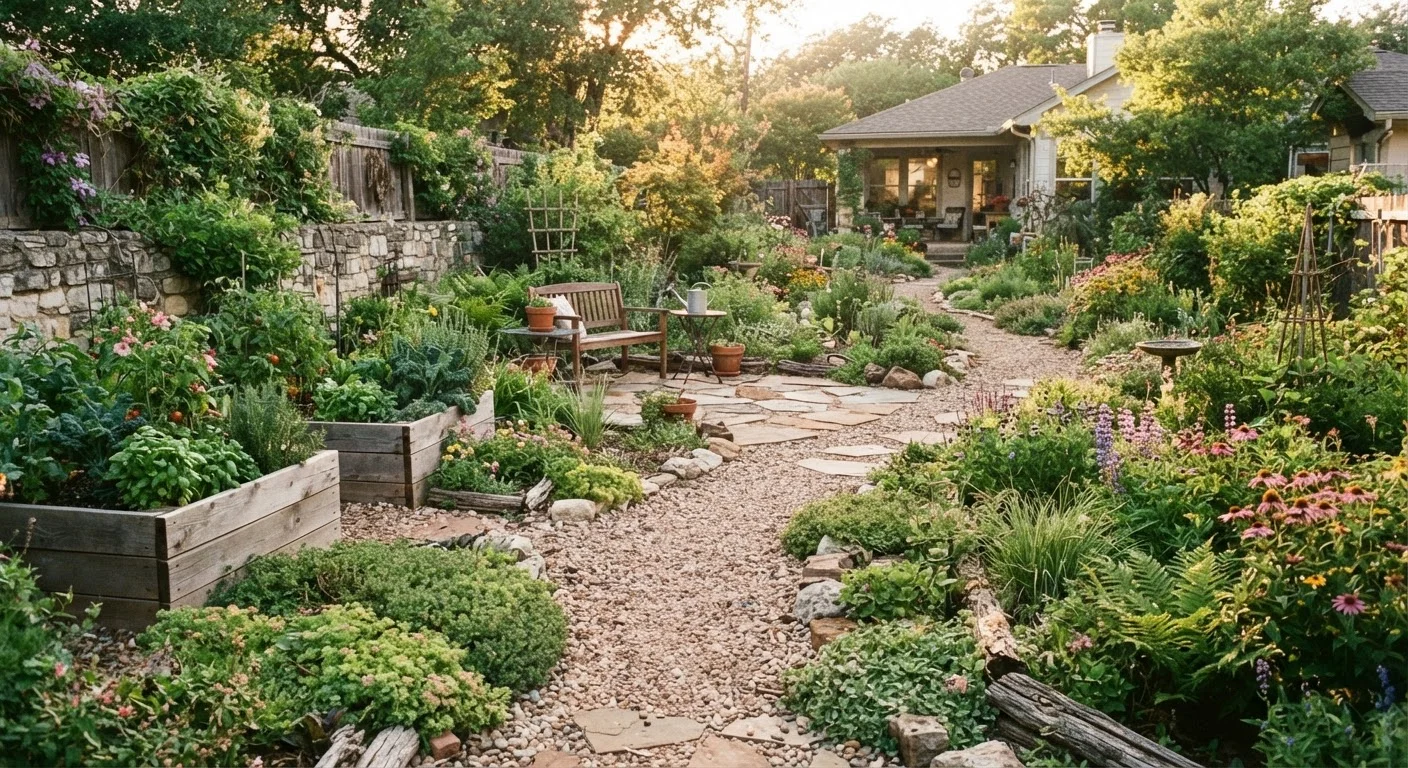
Photo: HorizonMetric.com | One Destination For Everyday Insights editorial
—— In This Article
Key Takeaways
- Removing lawn can significantly reduce water use, mowing time, and chemical inputs.
- Lawn alternatives like gravel, mulch, or ground cover each carry their own maintenance demands.
- HOA rules, local ordinances, and neighbor perceptions can complicate the transition.
- Upfront conversion costs are often higher than many homeowners anticipate.
- The right choice depends heavily on your climate, yard use, and long-term goals.
Substantially lower water consumption over time
Traditional turfgrass is one of the highest water consumers in residential landscapes. Replacing it with native plants or gravel can reduce landscape irrigation by 30–60% depending on the alternatives chosen and local climate.
Eliminates routine mowing and edging
Without grass, weekly or biweekly mowing becomes unnecessary. This saves time, reduces fuel or electricity costs, and removes a significant source of noise and air pollution from your property.
Reduces reliance on fertilizers and pesticides
Maintaining a lawn typically requires repeated chemical inputs. Ground covers and native plants adapted to local conditions generally thrive with little to no supplemental feeding or pest control.
Supports pollinators and local biodiversity
Replacing monoculture turfgrass with diverse native plantings provides food and habitat for bees, butterflies, and beneficial insects that traditional lawns largely cannot support.
Can reduce long-term maintenance costs
After the upfront conversion investment, many lawn alternatives — especially well-established native beds — require less ongoing spending than grass, which demands regular inputs of seed, fertilizer, and equipment.
High upfront conversion costs
Removing existing sod, amending soil, installing hardscape, and purchasing plants or materials can add up quickly. Depending on yard size and chosen materials, costs can range from hundreds to several thousand dollars.
Alternative surfaces have their own maintenance
Gravel needs periodic raking and replenishment; ground covers need trimming and occasional replanting; mulched beds require topping up annually. 'Low maintenance' rarely means 'no maintenance.'
HOA or local code restrictions may apply
Many communities have appearance standards that limit how radically you can alter your front yard. Violating these can result in fines or mandatory restoration of conventional lawn.
Loss of functional open space
Lawns provide a flexible surface for play, gatherings, and recreational activities. Many lawn alternatives cannot comfortably support the same level of foot traffic or informal use.
Weed pressure can increase during transition
Disturbed soil after sod removal is highly vulnerable to weed colonization. Managing weeds through the establishment phase requires consistent attention and can be labor-intensive.
What 'Lawn-Free' Actually Means
Going lawn-free doesn't simply mean neglecting your yard. It means intentionally replacing traditional turfgrass with alternatives — ground cover plants, native plantings, garden beds, gravel, decomposed granite, permeable pavers, or some combination of these. Each approach has a different look, feel, and set of requirements.
The motivations vary widely. Some homeowners are responding to water restrictions. Others want to reduce the time and cost of weekly mowing. Many are drawn to the ecological benefits of replacing chemically maintained monoculture grass with diverse, habitat-supporting plants. Whatever the reason, the decision deserves a clear-eyed look at both sides.
For a deeper understanding of how your existing or future plant beds will perform, it helps to know what's happening below the surface. Our guide to soil health underground explains how soil structure and microbes affect plant success at every stage.
The Case For Going Lawn-Free
There are solid, evidence-backed reasons why more American homeowners are making the switch away from traditional grass.
Substantially lower water consumption over time
Traditional turfgrass is one of the highest water consumers in residential landscapes. Replacing it with native plants or gravel can reduce landscape irrigation by 30–60% depending on the alternatives chosen and local climate.
Eliminates routine mowing and edging
Without grass, weekly or biweekly mowing becomes unnecessary. This saves time, reduces fuel or electricity costs, and removes a significant source of noise and air pollution from your property.
Reduces reliance on fertilizers and pesticides
Maintaining a lawn typically requires repeated chemical inputs. Ground covers and native plants adapted to local conditions generally thrive with little to no supplemental feeding or pest control.
Supports pollinators and local biodiversity
Replacing monoculture turfgrass with diverse native plantings provides food and habitat for bees, butterflies, and beneficial insects that traditional lawns largely cannot support.
Can reduce long-term maintenance costs
After the upfront conversion investment, many lawn alternatives — especially well-established native beds — require less ongoing spending than grass, which demands regular inputs of seed, fertilizer, and equipment.
~30–60%
Potential reduction in landscape water use
According to the EPA's WaterSense program, landscape irrigation accounts for nearly one-third of all residential water use, and much of it is applied inefficiently to turfgrass.
~40 million
Acres of lawn in the United States
Researchers estimate there are roughly 40 million acres of turfgrass across the U.S., making it one of the most irrigated and chemically managed crops in the country.
Ground covers like creeping thyme, clover, or sedge can fill space beautifully while requiring far less water than cool- or warm-season turfgrasses. Gravel and mulched beds, when properly installed, also suppress weeds effectively over time. For homeowners interested in a water-wise approach, see our overview of drought-tolerant landscaping principles.
The Real Drawbacks to Consider
Lawn-free yards are not a maintenance-free shortcut. Each alternative to grass introduces its own set of challenges that are frequently underestimated at the planning stage.
High upfront conversion costs
Removing existing sod, amending soil, installing hardscape, and purchasing plants or materials can add up quickly. Depending on yard size and chosen materials, costs can range from hundreds to several thousand dollars.
Alternative surfaces have their own maintenance
Gravel needs periodic raking and replenishment; ground covers need trimming and occasional replanting; mulched beds require topping up annually. 'Low maintenance' rarely means 'no maintenance.'
HOA or local code restrictions may apply
Many communities have appearance standards that limit how radically you can alter your front yard. Violating these can result in fines or mandatory restoration of conventional lawn.
Loss of functional open space
Lawns provide a flexible surface for play, gatherings, and recreational activities. Many lawn alternatives cannot comfortably support the same level of foot traffic or informal use.
Weed pressure can increase during transition
Disturbed soil after sod removal is highly vulnerable to weed colonization. Managing weeds through the establishment phase requires consistent attention and can be labor-intensive.
One commonly overlooked issue is weed management. Bare soil and gravel areas can actually harbor more persistent weeds than a healthy, dense lawn. Landscape fabric — often recommended as a solution — degrades over time and can complicate future planting decisions. For mulched areas, proper depth and material selection matter significantly. Our guide on mulching done right covers what to do and what to avoid.
Navigating Rules, Neighbors, and Resale
Even a well-designed lawn-free yard can run into friction. Homeowners associations (HOAs) in many communities maintain rules about yard appearance, and some explicitly require a minimum percentage of maintained turfgrass. Before removing any significant portion of your lawn, check your HOA covenants and local municipal codes — some jurisdictions have begun relaxing these rules to encourage water conservation, while others have not.
Check Local Rules Before You Dig
HOA restrictions and municipal codes vary widely — and they are changing in many states. Some jurisdictions now offer rebate programs or legal protections for homeowners who replace turfgrass with water-efficient landscaping. Contact your local water utility or municipality to find out what incentives or regulations apply in your area before beginning any conversion project.
Resale value is another consideration that lacks a simple answer. A thoughtfully designed native garden may appeal strongly to some buyers and put off others who prefer traditional grass. In most markets, curb appeal is subjective, and a lawn-free yard's reception will depend on local norms and how professionally it is executed.
Planning a Conversion That Works for Your Yard
If you decide to move forward, a phased approach tends to work better than wholesale removal all at once. Start with one section — a side yard, a strip along the street, or a shaded area where grass already struggles. This lets you test materials, understand local weed pressure, and refine your design before committing the full yard.
Think carefully about how you actually use your outdoor space. If you have children or pets who need open running room, some turf may be worth keeping. Alternatives like permeable pavers or compacted decomposed granite can handle foot traffic, but they feel different underfoot than grass.
For homeowners who want to incorporate productive growing areas alongside ornamental ground covers, our comparison of raised beds vs. in-ground gardens can help you decide what structure suits your space and goals.

Home Editorial Team
Home Editorial Team is the collective byline for our editorial team and contributor network. Articles published under this byline or an editorial pen name are researched, written, and reviewed according to our editorial standards for clarity, consistency, and independence before publication.
View author profile