
Mulching Done Right: Coverage, Depth, and What Not to Do Around Tree Bases
Mulch protects soil moisture and suppresses weeds — but piling it against tree trunks causes real damage. Here's how to apply it correctly.
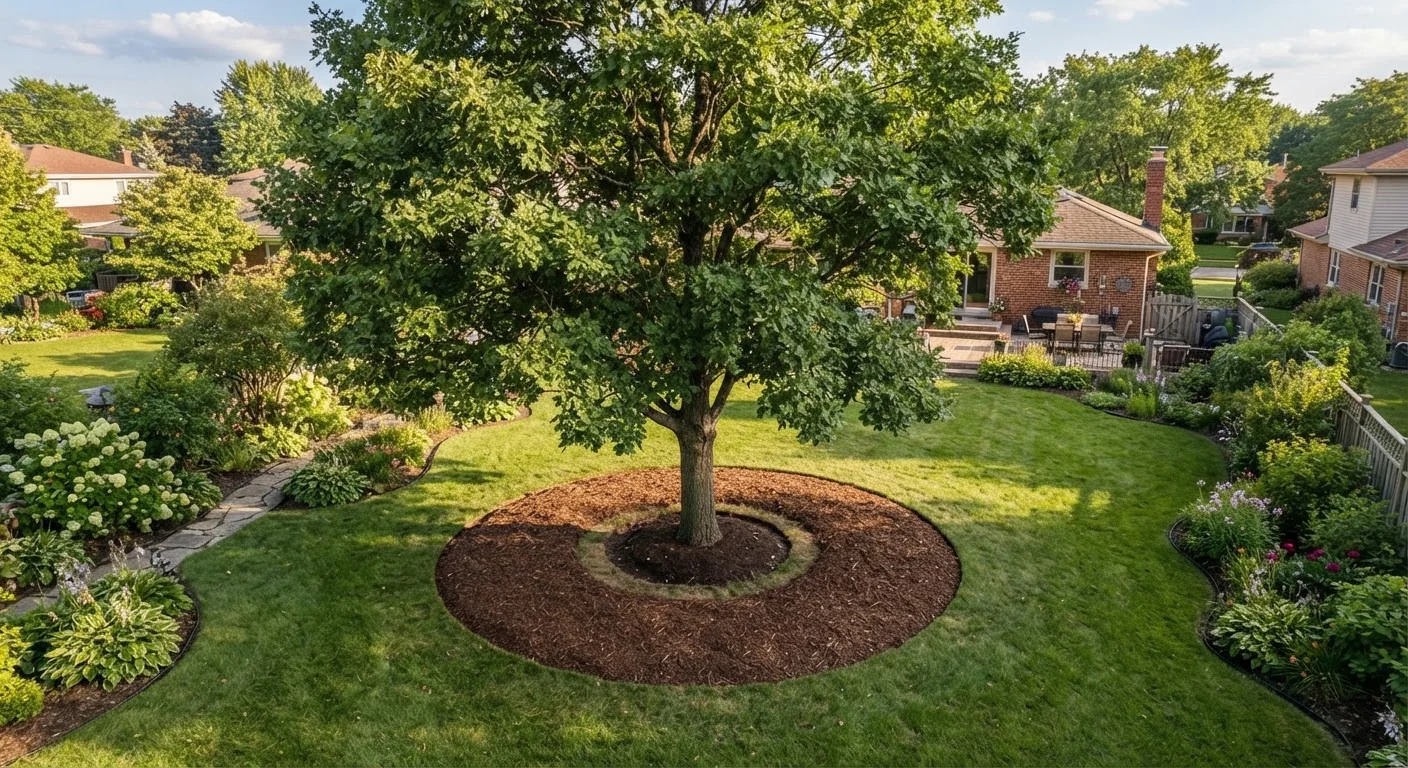
Photo: HorizonMetric.com | One Destination For Everyday Insights editorial
—— In This Article
Key Takeaways
- Apply mulch 2–4 inches deep — any deeper traps moisture and suffocates roots.
- Always leave a 3–6 inch gap between mulch and the tree trunk to prevent rot and disease.
- Spread mulch in a wide ring, ideally reaching the tree's drip line, not just a narrow collar.
- Volcano mulching — piling mulch against the trunk — is one of the most common and damaging landscaping mistakes.
- Organic mulches like wood chips break down over time and feed the soil beneath.
Why Mulching Matters (and Where It Goes Wrong)
Mulch is one of the most effective tools a homeowner has for protecting trees and garden beds. Applied correctly, it conserves soil moisture, moderates soil temperature, suppresses weed growth, and — as it decomposes — feeds the underground ecosystem that keeps plants healthy. For a deeper look at what's happening below the surface, see our guide to soil health.
But mulch is also one of the most frequently misapplied landscaping materials in American yards. The single most damaging mistake is something arborists call volcano mulching — piling mulch in a cone shape directly against a tree's trunk. It looks tidy, but it causes serious long-term harm that often isn't visible until the tree is already in decline.
Spot Volcano Mulching in Your Neighborhood
Take a walk around your block and you'll likely spot volcano mulching — mulch piled in a cone shape right up against tree trunks. It's extremely common because it looks intentional and tidy. Now you know to do the opposite: flat, wide, and pulled away from the bark.
The Right Depth: Not Too Much, Not Too Little
Depth is where many well-meaning gardeners go wrong in both directions. Too little mulch — under an inch — dries out quickly and barely suppresses weeds. Too much — over four inches — creates a barrier that prevents rain and irrigation from reaching roots, traps excess moisture against the soil surface, and can actually discourage the fine feeder roots trees depend on.
2–4"
Ideal mulch depth around trees
University extension programs across the U.S. consistently recommend this range as the effective zone for moisture retention without oxygen restriction.
3–6"
Required clear gap from trunk to mulch
Arborists recommend maintaining this minimum gap to protect bark from persistent moisture, disease, and rodent activity.
The target range is 2 to 4 inches of mulch across the bed. When you're refreshing existing mulch rather than starting fresh, pull back old material and measure before adding more. It's easy to accidentally accumulate 6 or more inches over several seasons without realizing it.
Use a ruler or your hand as a guide — four inches is roughly the length from your fingertip to your first knuckle.
Coverage Area: Think Wide, Not Just Deep
Most homeowners mulch too close to the trunk and stop too soon. A narrow collar of mulch around the base of a tree — sometimes called a "mulch ring" — provides minimal benefit compared to a broad, flat bed that mirrors the spread of the tree's root system.
Roots extend outward, often well beyond the canopy edge (called the drip line — the outermost reach of the branches overhead). Ideally, mulch should cover the area from a few inches away from the trunk all the way out to the drip line, or as far as is practical in your yard. Even extending the mulched area a few feet wider than you currently have will meaningfully improve moisture retention and reduce competition from grass and weeds.
For younger or newly planted trees, a mulched bed at least 3–4 feet in diameter provides solid early support while the root system establishes.
Maintain a visible root flare by keeping mulch pulled 3–6 inches away from the tree trunk at all times.
The root flare — where the trunk widens at the base — must remain exposed to allow gas exchange and prevent moisture buildup against bark. Continuous contact between mulch and bark creates conditions for rot, fungal disease, and insect damage.
Keep mulch depth between 2 and 4 inches, measuring before you add more each season.
Mulch that's too deep restricts oxygen and water movement to roots, while mulch that's too shallow evaporates quickly and provides little weed suppression. Measuring before topping off prevents gradual depth creep over years.
Extend your mulched area outward toward the tree's drip line rather than keeping a tight ring near the trunk.
Tree roots spread widely and benefit from moisture retention and weed suppression across a broad area. A wide mulch bed also reduces lawn-mower and string-trimmer damage near the trunk, which is a common cause of bark wounds.
Choose organic mulch materials such as wood chips, shredded bark, or composted leaves around trees.
Organic mulches decompose into the soil, gradually improving soil structure, supporting microbial life, and providing slow-release nutrients. This breakdown process mirrors the natural leaf-litter layer found on a healthy forest floor.
Rake and loosen compacted mulch before adding fresh layers each season.
Older mulch can mat down and form a hydrophobic crust that repels water rather than channeling it to roots. Breaking up this surface layer restores permeability and allows new material to integrate more effectively.
What Not to Do: Protecting the Trunk
The trunk of a tree is not designed to be buried. The area where the trunk meets the soil — called the root flare — needs air circulation and should be visible above the mulch line. When mulch piles up against the bark, several damaging things happen:
- Persistent moisture softens the bark, creating entry points for fungal disease and rot.
- Some tree species respond by sending roots upward into the mulch layer — these girdling roots can eventually wrap around the trunk and restrict water and nutrient flow.
- Insects and rodents use deep mulch mounds as cover, and some species will gnaw bark at the base of the tree.
The fix is straightforward: pull mulch back so there is a clear, visible gap of 3 to 6 inches between the mulch and the trunk. The mulch surface should be flat or gently sloped away from the tree, never mounded toward it.
Newly Planted Trees Need Extra Care
Young and newly planted trees are especially vulnerable to trunk damage from improper mulching because their bark is thinner and their root systems are still establishing. For new trees, be particularly diligent about keeping the root flare visible and the mulch layer at the shallow end of the recommended depth range. If you're unsure about a tree's condition, a certified arborist can assess it.
Choosing and Maintaining Your Mulch
Organic mulches — wood chips, shredded bark, pine needles, or composted leaves — are generally preferred around trees because they break down gradually, improving soil structure and feeding beneficial microbes. Hardwood and arborist wood chips are widely available and perform well in most climates.
Avoid dyed rubber mulch near trees; it doesn't improve soil and may introduce compounds that aren't beneficial to plant roots. Avoid fresh grass clippings piled thickly, as they mat down and block water penetration.
Plan to check mulch depth once a year and replenish as needed. Over time, organic mulch naturally compacts and decomposes — that's a good thing — but it means you'll need to top it off periodically to maintain the 2–4 inch target. Rake existing mulch to break up any surface crust before adding fresh material.
If you're rethinking the broader landscape around your trees and considering alternatives to traditional lawn, our article on the trade-offs of a lawn-free yard walks through what to weigh before making big changes.

Home Editorial Team
Home Editorial Team is the collective byline for our editorial team and contributor network. Articles published under this byline or an editorial pen name are researched, written, and reviewed according to our editorial standards for clarity, consistency, and independence before publication.
View author profile