
Soil Health 101: What's Actually Happening Underground in Your Garden
Discover how soil structure, microbes, and nutrients work together — and why healthy soil is the foundation of any thriving garden.
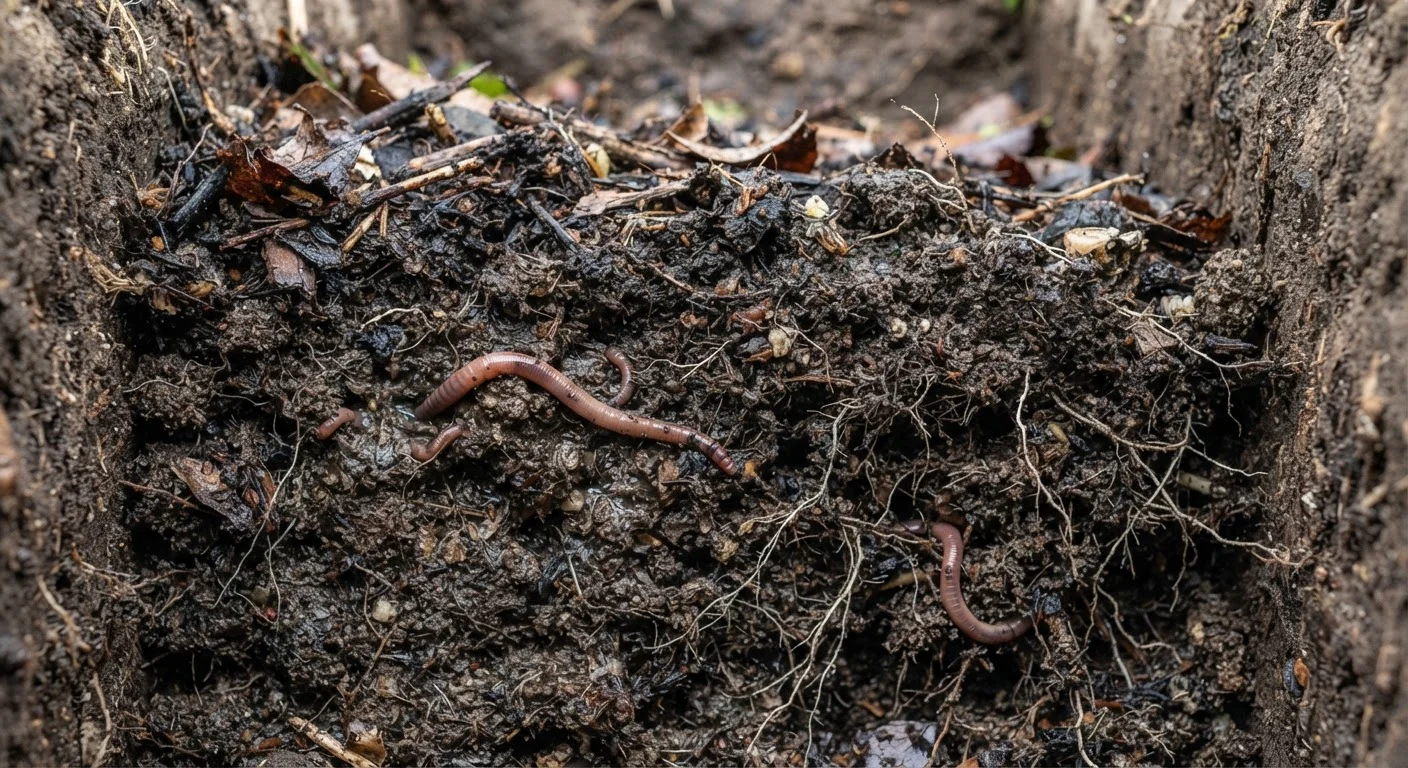
Photo: HorizonMetric.com | One Destination For Everyday Insights editorial
—— In This Article
Key Takeaways
- Healthy soil contains billions of microorganisms per teaspoon that help plants absorb nutrients.
- Soil structure — how particles clump together — determines drainage, aeration, and root growth.
- Organic matter is the single most impactful thing you can add to improve almost any soil type.
- Soil pH affects which nutrients are available to plants, regardless of how much you fertilize.
- Compaction and tilling can destroy the soil structure that took years to build.
- Simple tests can reveal your soil's pH, texture, and nutrient levels before you plant.
The Living World Beneath Your Feet
When most gardeners think about improving their garden, they look up — at the plants, the sunlight, the weather. But the most important work happens underground. Soil is not an inert growing medium; it's a densely populated living system where the real business of gardening takes place.
A single teaspoon of healthy garden soil can harbor billions of bacteria, miles of fungal threads called hyphae, along with nematodes, protozoa, and earthworms. Each plays a role: bacteria and fungi break down organic matter and release nutrients in forms plant roots can absorb; earthworms aerate the soil and pull organic material deeper; protozoa consume bacteria and excrete nitrogen close to plant roots. This underground food web is what makes plants grow — far more so than any single fertilizer application.
“Soil is not just a growing medium — it is an ecosystem. How we treat the soil surface determines the health of everything that grows from it.”
— Elaine Ingham, Soil microbiologist and founder of the Soil Food Web approach to soil biology
If you're just starting out, our beginner's vegetable garden guide walks through how to factor soil preparation into your first planting season.
Soil Structure: Why Texture and Aggregates Matter
Soil is made up of mineral particles in three sizes: sand (largest), silt (medium), and clay (finest). The proportion of each gives your soil its texture — from sandy soils that drain quickly but hold few nutrients, to clay-heavy soils that retain moisture but can suffocate roots when waterlogged.
What matters even more than texture, though, is soil structure — how those particles clump together into aggregates. Well-structured soil has a loose, crumbly quality that allows water to infiltrate, air to reach roots, and plant roots to push through easily. This structure is built and maintained largely by microbial activity and organic matter. When soil is compacted — by foot traffic, heavy equipment, or excessive tilling — those aggregates collapse and the pore spaces that roots and water depend on disappear.
Test Before You Amend
Adding lime, sulfur, or fertilizer without knowing your starting point can do more harm than good. A basic soil test — often available through your local cooperative extension service for a modest fee — gives you pH, nutrient levels, and specific amendment recommendations tailored to what you want to grow. It's the single most cost-effective step before any new garden bed.
Understanding structure also helps you choose between garden setups. If your native soil is heavily compacted clay, our overview of raised beds vs. in-ground gardens can help you decide whether working with your existing soil or starting fresh in a raised bed makes more sense.
Nutrients, pH, and What Your Plants Can Actually Use
Plants need a range of nutrients to grow, typically grouped as macronutrients (nitrogen, phosphorus, potassium) and micronutrients (iron, manganese, zinc, and others). These exist in soil in varying amounts — but their availability to plants depends heavily on soil pH.
pH is measured on a scale of 0 to 14. Most garden plants thrive in a slightly acidic to neutral range of 6.0–7.0. Below or above that range, nutrients become chemically bound in forms plant roots can't absorb. This means a garden can be fertilized heavily and still show nutrient deficiency symptoms if the pH is off. Adjusting pH — typically by adding garden lime to raise it or sulfur to lower it — is one of the highest-leverage moves a gardener can make.
1 billion+
Bacteria per teaspoon of healthy soil
USDA Natural Resources Conservation Service estimates suggest a single teaspoon of productive soil contains between 100 million and 1 billion bacteria alone.
~5%
Organic matter in high-quality topsoil
Many agricultural extension programs consider soil with 3–5% organic matter content to be in good health; most suburban garden soils start well below this level.
6.0–7.0
Ideal pH range for most garden plants
Most vegetables, herbs, and common ornamentals perform best within this slightly acidic to neutral pH range, according to general horticultural guidance.
Before adding any amendments, an inexpensive soil test (available through your local cooperative extension office or garden center) will tell you your current pH and nutrient levels, so you're not guessing.
Building Better Soil: What Actually Works
The most reliable way to improve nearly any soil type is to consistently add organic matter — compost, aged manure, leaf mold, or cover crop residue. Organic matter feeds soil microbes, improves structure in both sandy and clay soils, increases water retention, and slowly releases nutrients over time. It's not a quick fix, but the results compound season after season.
Composting kitchen scraps and yard waste is one of the most accessible ways to generate your own organic matter at home. Beyond compost, consider these practices:
- Mulch planting beds with leaves, straw, or wood chips to protect soil from erosion, moderate temperature, and feed organisms as it breaks down.
- Avoid compaction by designating permanent paths and never walking on your planting areas.
- Minimize tilling to preserve fungal networks and aggregate structure.
- Plant cover crops in off-season beds to hold soil in place and add organic matter when turned in.
Gardeners growing native plants may find their local soil already supports well-adapted microbial communities. Our guide to growing a native plant garden explores how plant selection can work with your existing soil conditions rather than against them.
Finally, don't overlook watering habits — overwatering can suffocate soil microbes and destroy structure just as surely as drought. See common watering mistakes gardeners make for what the evidence says about irrigation practices.
Frequently Asked Questions

Home Editorial Team
Home Editorial Team is the collective byline for our editorial team and contributor network. Articles published under this byline or an editorial pen name are researched, written, and reviewed according to our editorial standards for clarity, consistency, and independence before publication.
View author profile