
Why Your Tomatoes Keep Cracking Before You Can Pick Them
Fruit cracking is one of the most common tomato frustrations. Learn the real causes — and the watering and mulching habits that prevent it.
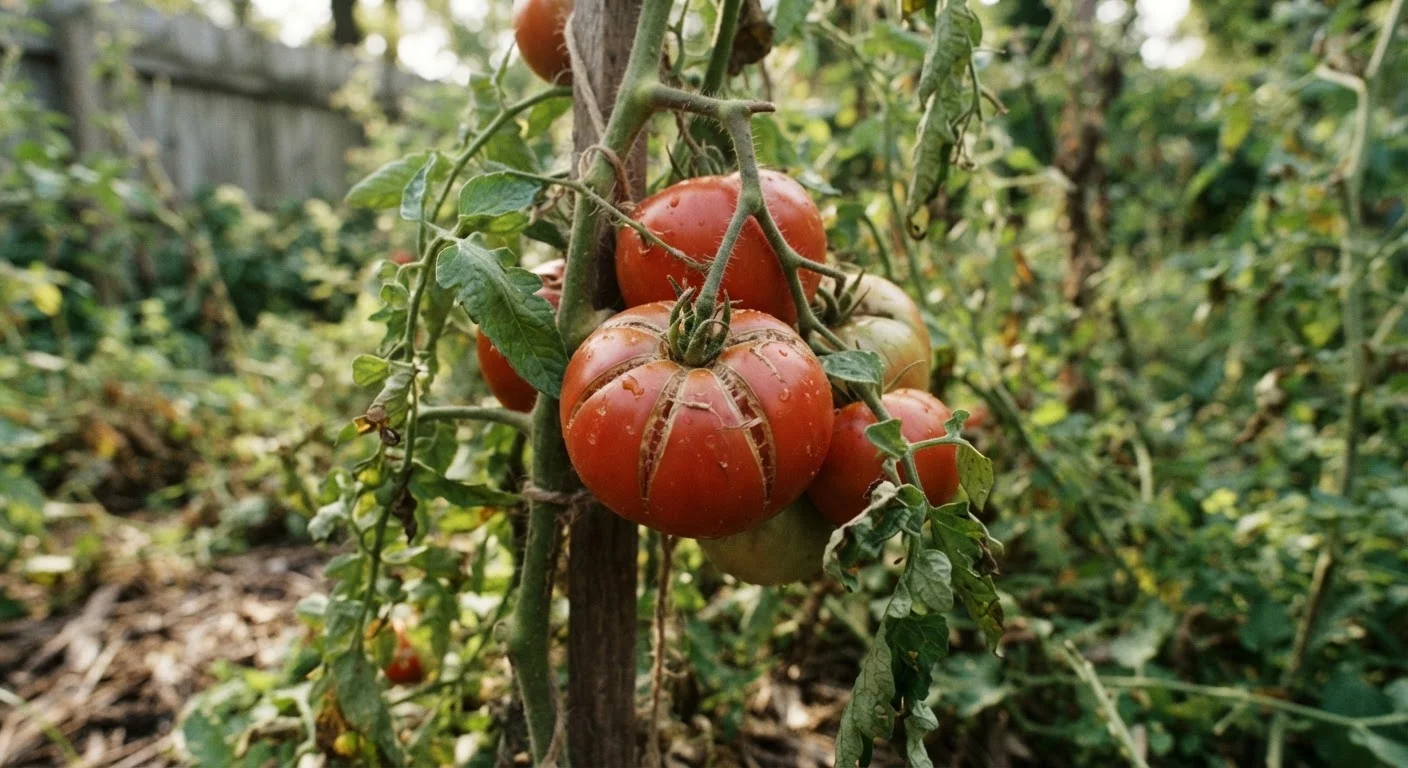
Photo: HorizonMetric.com | One Destination For Everyday Insights editorial
—— In This Article
Key Takeaways
- Tomato cracking is caused by sudden, irregular water uptake that outpaces skin elasticity.
- Consistent soil moisture — not just frequent watering — is the key to prevention.
- A 2–3 inch layer of mulch dramatically stabilizes soil moisture between waterings.
- Harvesting tomatoes slightly early, once color breaks, avoids the highest-risk cracking window.
- Overfertilizing with nitrogen accelerates rapid fruit growth that skins cannot keep up with.
What's Actually Causing Those Cracks
Tomato cracking isn't random bad luck — it has a straightforward biological explanation. When a tomato plant absorbs water rapidly after a period of dryness, the interior of the fruit expands quickly. The outer skin, which has firmed up and lost some elasticity as the fruit matured, can't stretch fast enough. The result is a split: either radial cracks running from the stem downward, or concentric rings circling the top of the fruit.
Both types are responses to the same root problem — inconsistent moisture delivery. Understanding that helps clarify why the fixes all circle back to stabilizing how water reaches your plants.
1 inch
Weekly water tomatoes need to thrive
University cooperative extension programs consistently cite approximately one inch of water per week — from rain and irrigation combined — as the baseline for healthy tomato development.
2–3 inches
Recommended mulch depth around tomatoes
Horticultural guidance from multiple land-grant university extension services recommends this mulch depth to meaningfully reduce soil moisture fluctuation and surface evaporation.
The Mistakes That Lead to Cracking — and How to Stop Making Them
Most cracking problems trace back to a handful of predictable habits. Identifying which ones apply to your garden is the first step toward a crack-free harvest.
Watering on an irregular, boom-or-bust schedule rather than consistently.
Why it happens: Many gardeners water only when they notice wilting or remember to check, creating cycles of drought followed by heavy moisture delivery.
Skipping mulch or using too thin a layer around tomato plants.
Why it happens: Mulching can feel like an optional extra step, especially when seedlings are small and the soil seems moist enough.
Overfertilizing with high-nitrogen fertilizer mid-season.
Why it happens: Gardeners often assume more fertilizer means healthier plants and bigger fruit, so they apply nitrogen-heavy feeds throughout the growing season.
Leaving fully ripe tomatoes on the vine too long.
Why it happens: It feels wrong to pick a tomato before it looks perfectly red and ripe — gardeners want the full vine-ripened experience.
Planting only crack-susceptible varieties without considering the local climate.
Why it happens: Seed and seedling selection often prioritizes flavor or size over disease and crack resistance, particularly for home gardeners new to tomato growing.
Cracking Happens Fast After Rain
A single heavy rainstorm after a dry spell is one of the most common triggers for widespread cracking. The fruit absorbs a sudden flood of water and the skin simply can't stretch fast enough. If rain is forecast after a dry period, consider harvesting any tomatoes that have already begun to color — they will ripen fully indoors without cracking.
Building a Garden Routine That Protects Your Harvest
The good news is that preventing tomato cracking doesn't require expensive equipment or complicated techniques. The most effective approach combines three habits: consistent watering, generous mulching, and timely harvesting. Together, these practices remove the conditions that cause cracking in the first place.
If your schedule makes daily garden checks difficult, consider installing a simple timer on a soaker hose system. Even a basic setup can deliver water on a predictable schedule, removing the boom-or-bust pattern that stresses fruit. Just as consistency matters in home maintenance — much like how irregular attention to vulnerable surfaces leads to the kind of failures described in understanding why materials crack and fail — the same principle applies in the garden. Steady, preventive care outperforms reactive fixes every time.
Keep a small notebook or use a phone app to log when you water and how much rain fell. After one season of tracking, most gardeners can spot the gaps in their routine that correlate with cracking. Small adjustments — adding mulch, shifting to earlier morning watering, or picking fruit a day sooner — add up to a noticeably better harvest.

Home Editorial Team
Home Editorial Team is the collective byline for our editorial team and contributor network. Articles published under this byline or an editorial pen name are researched, written, and reviewed according to our editorial standards for clarity, consistency, and independence before publication.
View author profile