
Bathroom Caulking, Grout, and Sealant: What Each One Actually Does
These three products look similar but serve very different purposes. Here's when to use each one correctly.
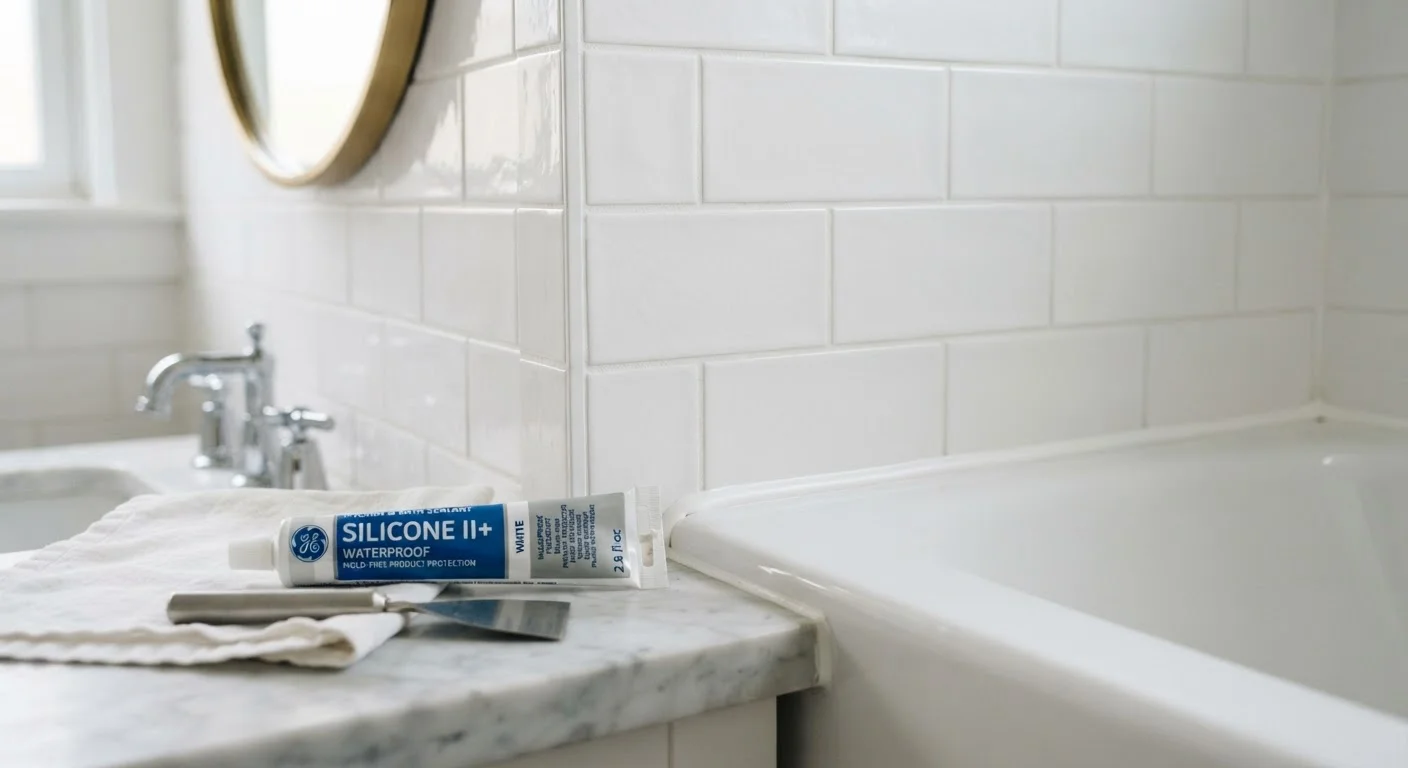
Photo: HorizonMetric.com | One Destination For Everyday Insights editorial
—— In This Article
Three Products, Three Jobs
Walk down any hardware store aisle and you'll find caulk, grout, and sealant sitting close together — and for good reason. All three help manage moisture in wet areas like bathrooms. But using the wrong one in the wrong place is one of the most common and costly DIY mistakes homeowners make. Understanding what each product is actually designed to do will save you from redoing the work a year later.
| What grout does | Fills joints between tiles; rigid once cured |
| What caulk does | Seals moving joints at corners and tub-wall seams; stays flexible |
| What sealant does | Penetrates and protects porous grout or stone from moisture and staining |
| Where NOT to use grout | Corners, tub-wall joints, or any two-surface meeting points |
| Grout resealing frequency | Typically every 1–3 years for cement-based grout |
| Best caulk for wet areas | 100% silicone or mold-resistant bathroom-labeled caulk |
Think of it this way: grout fills gaps between tiles, caulk bridges moving joints, and sealant protects porous surfaces. Each solves a different problem, and they're not interchangeable.
Grout: The Gap-Filler Between Tiles
Grout is a cement- or epoxy-based material that fills the joints between tiles. Its job is to lock tiles in place relative to each other, prevent debris from falling into gaps, and give the surface a finished, uniform look.
Sanded grout
A cement-based grout containing fine sand particles, used to fill tile joints wider than 1/8 inch. The sand prevents shrinkage and cracking in larger gaps.
Unsanded grout
A smooth, cement-based grout used for narrow tile joints of 1/8 inch or less. Sand-free to avoid scratching delicate or polished tile surfaces.
Silicone caulk
A highly waterproof, flexible sealant made from silicone polymer. It adheres well to non-porous surfaces and is the preferred choice for tub and shower joints.
Penetrating sealant
A liquid product that soaks into porous materials like grout or natural stone, reducing water and stain absorption without changing the surface appearance.
Cured
The process by which a product fully hardens or sets after application. Curing time varies by product and must be complete before the surface gets wet.
There are two main types you'll encounter in bathrooms:
- Sanded grout — used for joints wider than 1/8 inch. The sand particles help fill the larger gap without cracking.
- Unsanded grout — used for narrow joints (1/8 inch or less), such as those found on wall tiles. Sand would scratch polished or delicate tile surfaces.
Grout is not flexible once it cures. That's why it should never be used at corners, along the tub-wall joint, or anywhere two different surfaces meet at an angle — those spots move slightly with temperature and humidity changes, and rigid grout will crack there.
Caulk: The Flexible Seal for Moving Joints
Caulk is a flexible, waterproof compound designed specifically for joints that experience movement. In a bathroom, the most critical spots include the seam between the bathtub and the tile wall, corners where two tiled walls meet, and where the floor meets the baseboard or tub surround.
Because caulk stays slightly pliable after curing, it can absorb the minor flexing that happens when a tub fills with water and adds weight, or when framing shifts with seasonal humidity changes. Rigid grout in those same spots would crack — often within months.
Silicone caulk is the most waterproof option and adheres well to non-porous surfaces like glass, metal, and glazed tile. Latex or acrylic caulk is easier to tool and paint but typically less durable in high-moisture zones. For shower and tub applications, look for caulk specifically labeled for bathroom or kitchen use with mold-resistant additives.
If your caulk is cracking, peeling, or showing mold, it's telling you something important. See our guide to why caulk fails for a full breakdown of causes and how to re-caulk correctly before water damage sets in.
Sealant: Protection for Porous Surfaces
Sealant in the bathroom context is most often a penetrating liquid applied over grout or natural stone tile — not into a joint. Its purpose is to reduce porosity so that water, soap, and staining agents don't soak in and cause damage or discoloration.
Does Your Tile Need Sealing at All?
Glazed porcelain and ceramic tiles have a factory-applied glaze that is already non-porous, so the tile surface itself doesn't need a sealant. However, the cement-based grout between those tiles almost always does. Natural stone tiles — marble, travertine, slate, and similar — are porous and typically need both the tile surface and the grout sealed.
Unglazed ceramic tile, natural stone (such as travertine, marble, or slate), and cement-based grout all benefit from periodic sealing. Glazed porcelain tile, by contrast, generally doesn't need a surface sealant because the glaze itself is already non-porous.
Applying sealant is straightforward: the surface must be clean and fully dry, the product is wiped or brushed on, allowed to penetrate briefly, and then the excess is buffed off. Most bathroom grout sealants need reapplication every one to three years depending on product and traffic level — check the manufacturer's guidance for the specific product you use.
A simple water-bead test tells you when it's time to reseal: drip a few drops of water on the grout or stone. If the water beads up, protection is still active. If it absorbs quickly and darkens the surface, it's time to reseal.

Home Editorial Team
Home Editorial Team is the collective byline for our editorial team and contributor network. Articles published under this byline or an editorial pen name are researched, written, and reviewed according to our editorial standards for clarity, consistency, and independence before publication.
View author profile