
Engineered Hardwood vs. Solid Hardwood Flooring
Both look beautiful, but they behave very differently across climates, subfloors, and budgets. Here's an honest side-by-side.
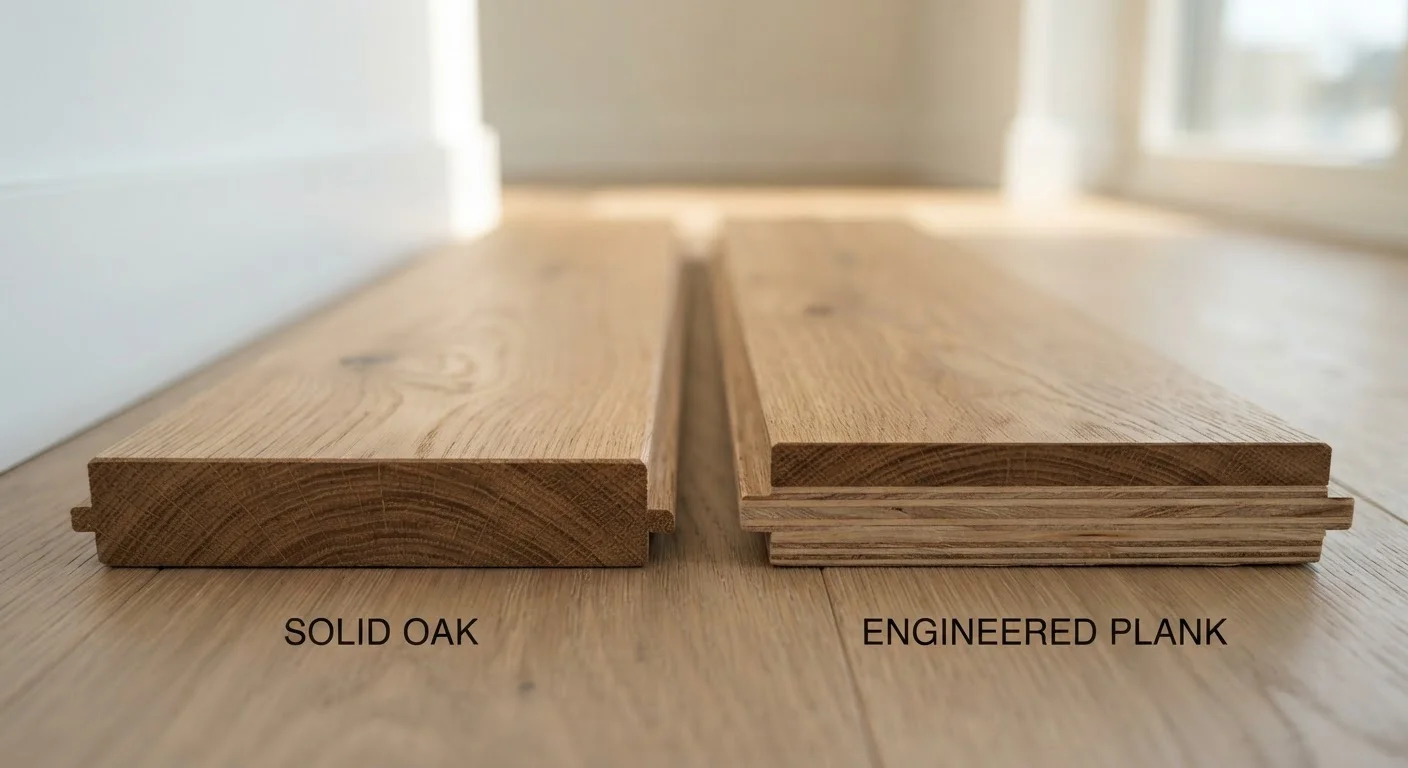
Photo: HorizonMetric.com | One Destination For Everyday Insights editorial
—— In This Article
Key Takeaways
- Engineered hardwood handles moisture and temperature swings better than solid hardwood due to its layered plywood core.
- Solid hardwood can be sanded and refinished more times over its lifespan, potentially lasting over a century with care.
- Engineered hardwood is often easier for DIY installation, including floating and glue-down methods over concrete.
- Both products look virtually identical on the surface — the difference lies beneath the wear layer.
- Neither option is recommended for full bathrooms or other consistently wet areas.
What's Actually Inside Each Plank
The surface of engineered and solid hardwood can look nearly indistinguishable — same species, same stain, same finish sheen. The real difference is in the cross-section.
Solid hardwood is exactly what it sounds like: a single piece of milled timber, typically ¾ inch thick. Every layer of that plank is the same species of wood, from top to bottom.
Engineered hardwood is a layered product. A genuine hardwood veneer — called the wear layer — sits on top of several plies of cross-directional plywood or high-density fiberboard (HDF). This construction is intentional: alternating grain directions stabilize the plank, preventing it from moving as much when humidity changes.
The thickness of the wear layer on engineered products varies — generally between 2mm and 6mm. Thicker wear layers allow for more sanding and refinishing down the road, which is worth asking about when evaluating products.
| Criterion | Engineered Hardwood | Solid Hardwood |
|---|---|---|
| Construction | Hardwood veneer over plywood core | Single solid wood plank |
| Moisture resistance | Better — more dimensionally stable | Lower — expands and contracts more |
| Subfloor compatibility | Concrete, plywood, some below-grade | Wood subfloor only (above grade) |
| Refinishing potential | 1–3 times (depends on wear layer) | 4–6+ times over lifespan |
| DIY installation ease | Easier — floating option available | Harder — nail-down required |
| Typical lifespan | 25–50+ years with care | 75–100+ years with refinishing |
| Suitable for basements | Often yes, with moisture control | Generally no |
How Climate and Subfloor Change Everything
Wood is a natural material that expands and contracts with changes in moisture and temperature. This behavior is at the center of every installation decision.
Solid hardwood moves considerably with seasonal humidity shifts. In dry winters it contracts; in humid summers it swells. This is manageable with proper expansion gaps and climate control, but it makes solid hardwood a poor candidate for areas prone to moisture — including basements, most below-grade installations, and direct applications over concrete slabs.
Engineered hardwood is significantly more dimensionally stable. Its cross-ply construction limits expansion and contraction, making it suitable for over-concrete and below-grade installations when the moisture levels are appropriate. It still isn't waterproof — neither product belongs in a wet area like a full bathroom. For those spaces, see our comparison of tile and luxury vinyl plank for more appropriate options.
Neither Option Belongs in Wet Areas
Even though engineered hardwood handles humidity better than solid wood, it is not waterproof and should not be installed in full bathrooms, laundry rooms, or kitchens without careful waterproofing measures. Prolonged standing water will damage both products. If you're flooring a moisture-prone space, consider tile or luxury vinyl plank instead.
Installation, Longevity, and Practical Trade-Offs
Installation: Solid hardwood must be nailed or stapled to a wood subfloor. This means it generally isn't suitable for direct-to-concrete installation without a plywood subfloor system built above it. Engineered hardwood offers more flexibility — it can be nailed, glued down, or floated depending on the product, making DIY installation more achievable in a wider range of situations.
Longevity and refinishing: A well-maintained solid hardwood floor can last well over 75–100 years and be sanded and refinished many times. Engineered hardwood's refinishing potential is limited by its wear layer — thin products may only tolerate one light sanding, while thicker-veneered products can handle two or three. Once the wear layer is gone, the floor cannot be refinished.
Cost: Material prices vary widely for both types depending on species, grade, and finish. Installation labor for solid hardwood tends to be higher because it requires nail-down methods and often more subfloor preparation. Engineered products with floating installation can reduce professional labor costs significantly.
¾"
Typical solid hardwood plank thickness
Standard solid hardwood planks are ¾ inch thick, allowing multiple refinishing cycles across the floor's lifetime.
2–6mm
Engineered hardwood wear layer range
Wear layer thickness is the primary factor determining how many times an engineered floor can be sanded and refinished.
100+ years
Potential lifespan of solid hardwood
With regular refinishing and proper care, solid hardwood floors in older American homes have remained serviceable for over a century.
Both options represent meaningful long-term investments in your home. The right choice depends less on which is objectively better and more on your specific subfloor, climate, budget, and how long you plan to stay in the home.

Home Editorial Team
Home Editorial Team is the collective byline for our editorial team and contributor network. Articles published under this byline or an editorial pen name are researched, written, and reviewed according to our editorial standards for clarity, consistency, and independence before publication.
View author profile