
Interior Paint Finishes Explained: Flat, Eggshell, Satin, and Beyond
Not all paint sheens are created equal. Here's how each finish performs in real rooms and why it matters.
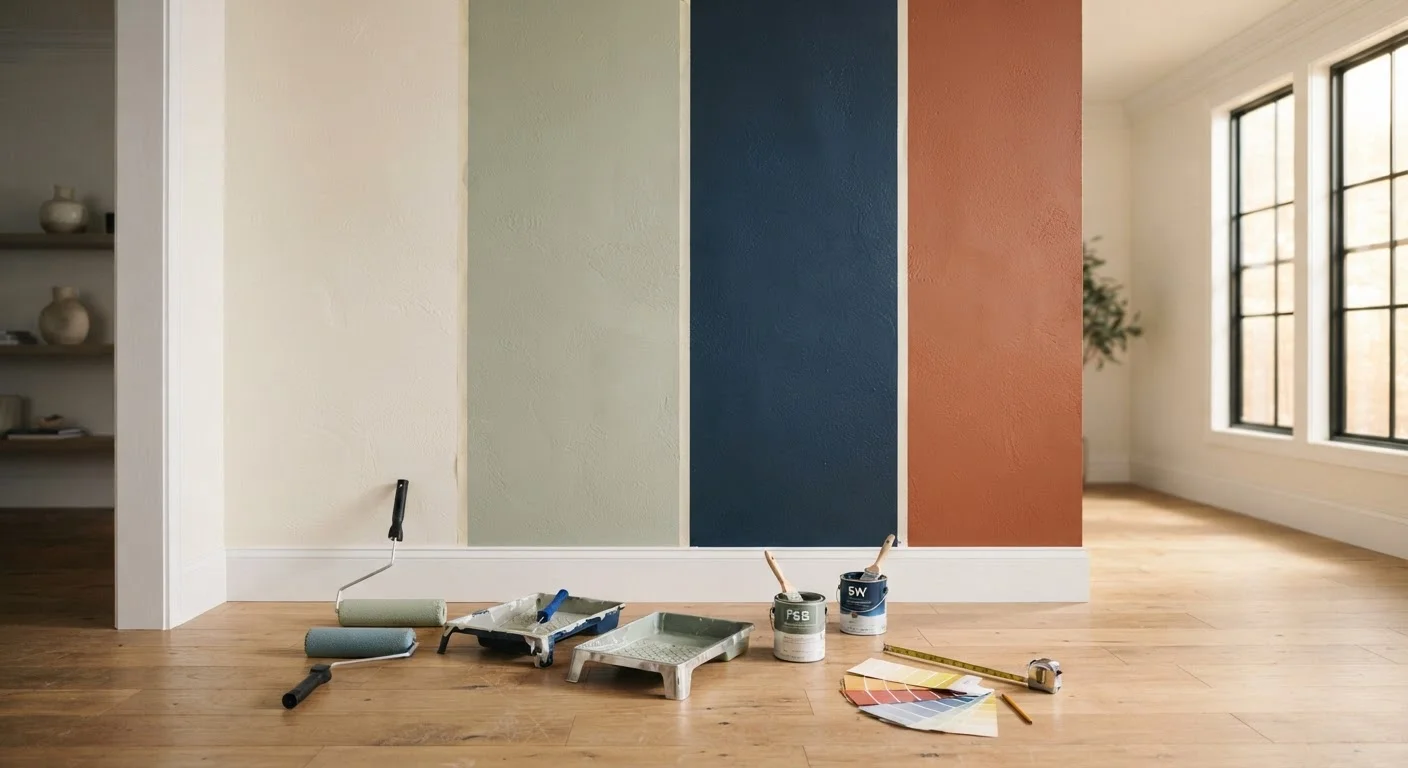
Photo: HorizonMetric.com | One Destination For Everyday Insights editorial
—— In This Article
Key Takeaways
- Flat paint hides wall imperfections well but is harder to clean — best for low-traffic areas.
- Eggshell offers a subtle glow and mild washability, making it a popular choice for living rooms and bedrooms.
- Satin handles moisture and cleaning better, suiting kitchens, bathrooms, and hallways.
- Semi-gloss and gloss are reserved for trim, doors, and high-wear surfaces due to their durability.
- Matching finish to room function — not just preference — extends the life of your paint job.
Why Paint Finish Matters as Much as Color
Walk into any paint aisle and you will find the same color available in four or five different finishes. Many homeowners pick one instinctively — or default to whatever is on sale — without realizing the finish affects far more than appearance. It determines how well your walls stand up to scrubbing, steam, and everyday scuffs. It also influences how much light a room reflects and whether minor wall flaws become glaringly obvious after the paint dries.
Understanding each finish puts you in control of the outcome, whether you are repainting a single bedroom or working through every room in the house.
Test Your Finish Before Committing
Before painting an entire room, apply a small section of your chosen finish on an inconspicuous wall and observe it at different times of day. Morning and afternoon light reveal sheen levels and surface imperfections very differently. This simple test can save you from a finish you will want to repaint within a year.
Flat and Matte: The Imperfection-Hiders
Flat paint (sometimes labeled matte) has zero or near-zero sheen. Because it scatters rather than reflects light, it is the most effective finish at masking minor surface flaws like small dings, texture variations, or old repair patches. That quality makes it a go-to choice for ceilings — which is why most ceilings are painted with flat white — and for formal dining rooms or adult bedrooms that see little physical contact with walls.
The trade-off is cleanability. Flat paint is porous and can absorb stains rather than letting you wipe them away. Repeated scrubbing often removes the paint itself rather than the mark. Save flat finishes for low-traffic spaces and surfaces that will not need frequent washing.
~80%
Interior walls painted in eggshell or flat finishes
Industry estimates suggest the large majority of residential interior walls use low-to-mid sheen finishes, with eggshell being the most commonly specified finish for living spaces.
2–3×
More washable scrub cycles in satin vs. flat
Paint industry testing standards (such as ASTM D2486) measure scrub resistance; satin and semi-gloss formulations consistently outperform flat finishes in the number of wet scrubs before the film breaks down.
Eggshell and Satin: The Everyday Workhorses
Eggshell sits one step above flat on the sheen scale. Its name describes its appearance well — the faint, soft glow of an eggshell rather than a mirror. This finish strikes a practical middle ground: it looks refined, holds up to occasional cleaning without chipping, and works in most moderate-traffic areas. Living rooms, bedrooms, and home offices are natural fits.
Satin reflects noticeably more light than eggshell and has a smoother, silkier surface. That denser film resists moisture, mildew, and grease — which is why it is widely recommended for kitchens, bathrooms, laundry rooms, and hallways. Satin can be cleaned repeatedly without losing its finish. One thing to keep in mind: because it reflects more light, it will show roller marks or brush strokes if the application is uneven, so good technique matters.
Semi-Gloss and Gloss: High-Performance Finishes
Semi-gloss is the standard finish for interior trim, baseboards, window frames, and doors. Its higher sheen gives woodwork a crisp, intentional contrast against flatter walls, and its hard surface film stands up to the constant touching, bumping, and wiping those surfaces receive. Bathrooms and kitchens sometimes use semi-gloss on walls as well, particularly in older homes where tile does not extend all the way to the ceiling.
High-gloss is the most reflective and most durable finish available. It is rarely used on large wall surfaces in residential interiors because it amplifies every imperfection dramatically. Instead, it appears on cabinet doors, furniture, and exterior doors where maximum toughness and a lacquer-like appearance are desired.
If you are renovating a basement that includes a bathroom or laundry area, finish selection becomes especially important in those spaces. For broader considerations on basement projects, see our guide to finishing a basement before you begin.
Primer and Finish Work Together
Switching from a high-sheen finish to a flat one — or painting over a dark color — typically requires a primer coat first. Skipping primer in these situations can result in uneven coverage, sheen inconsistency, and paint that chips sooner than expected. Check your paint manufacturer's guidance on when primer is necessary for your specific surface and finish combination.
Choosing the Right Finish Room by Room
A simple room-by-room framework helps make the decision straightforward:
- Ceilings: Flat or matte
- Bedrooms and living rooms: Eggshell or matte
- Kitchens and bathrooms: Satin or semi-gloss
- Hallways and kids' rooms: Satin (for wipeability)
- Trim, doors, and baseboards: Semi-gloss
- Cabinets and furniture: Semi-gloss or high-gloss
Within these guidelines, personal preference still plays a role. If you love the look of a flatter finish in a kitchen and are willing to repaint more often, that is a reasonable trade-off. The goal is to go in knowing what each finish will and will not handle — so the choice is deliberate, not accidental.
“The finish is not decoration — it is performance specification. Match the sheen to how the surface will actually be used, and the paint job takes care of itself.”
— Bob Vila, Home improvement authority and television host
Frequently Asked Questions

Home Editorial Team
Home Editorial Team is the collective byline for our editorial team and contributor network. Articles published under this byline or an editorial pen name are researched, written, and reviewed according to our editorial standards for clarity, consistency, and independence before publication.
View author profile