
Pressure Washing Your Home's Exterior: Approaches That Protect Rather Than Damage
Too much pressure on the wrong surface can cause real damage. Learn the techniques that clean effectively without creating new problems.
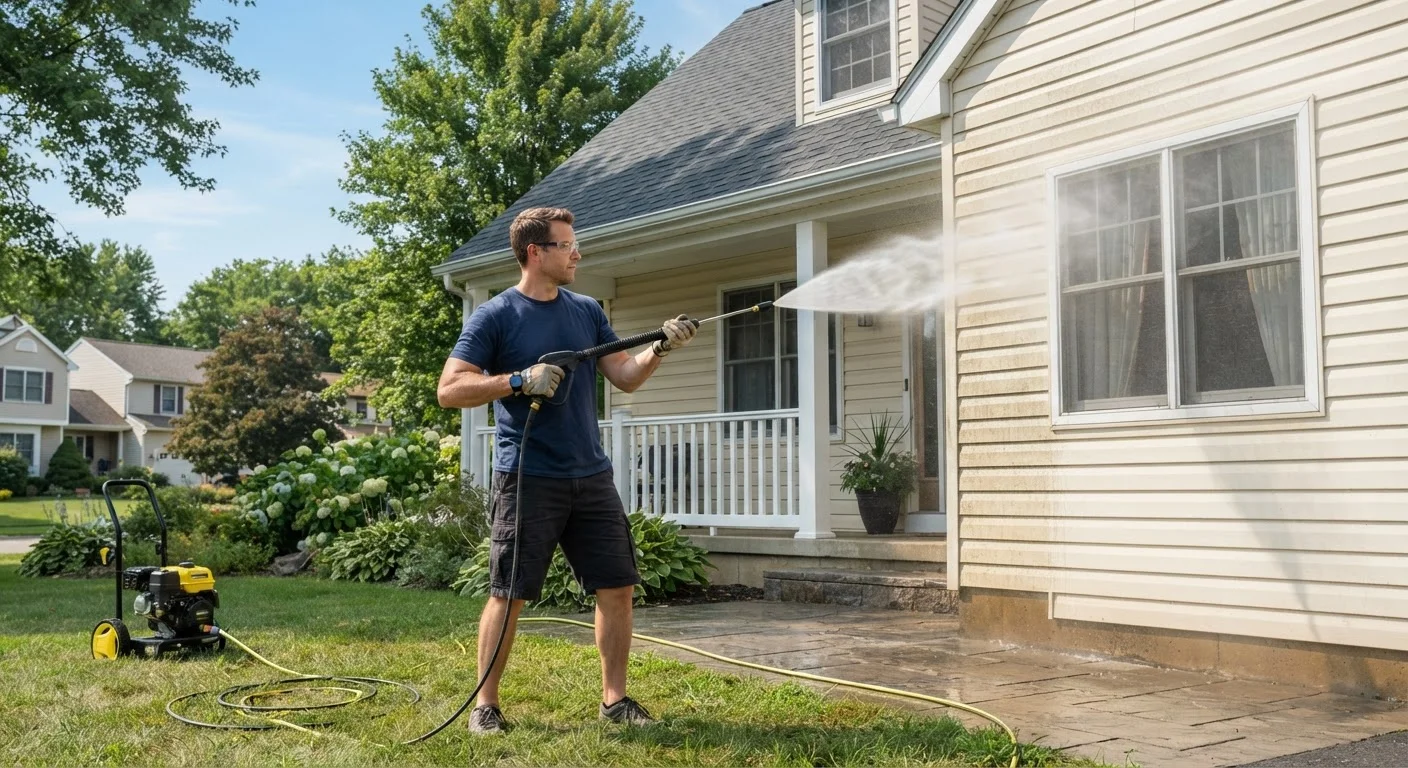
Photo: HorizonMetric.com | One Destination For Everyday Insights editorial
—— In This Article
Key Takeaways
- Using too much pressure on the wrong surface can cause lasting damage to siding, wood, and mortar.
- Matching nozzle type and PSI setting to each surface is the most critical pressure washing decision you'll make.
- Always work top-to-bottom and keep the wand moving to avoid streaks and surface gouging.
- Certain surfaces — including old mortar, soft wood, and painted trim — require low-pressure or hand-washing instead.
- Electrical fixtures, vents, and gaps around windows need protective covering before you begin.
Why Technique Matters More Than Power
Many homeowners assume a pressure washer works like a garden hose — point and spray. In practice, the wrong nozzle or too much pressure can strip paint, gouge soft wood, blast water behind siding panels, or erode mortar between bricks. The machine doesn't know what it's hitting; you have to.
Pressure washers are rated in PSI (pounds per square inch) and GPM (gallons per minute). Consumer-grade units typically run between 1,300 and 2,800 PSI. That's enough to clean most exterior surfaces effectively — and enough to damage them if you're not deliberate about nozzle selection and working distance.
“The most common mistake with pressure washing isn't using too little pressure — it's using too much, too close, on a surface that didn't need it. The goal is clean, not blasted.”
— General guidance from professional exterior cleaning educators, Industry consensus among certified exterior cleaning professionals
Match Your Nozzle and Pressure to the Surface
Nozzles are color-coded by spray angle. A narrower angle concentrates more force; a wider angle disperses it. Use this as your starting guide:
- Red (0°): A pinpoint jet — rarely appropriate for home exteriors. Can cut into wood or chip masonry.
- Yellow (15°): For stripping stubborn paint or cleaning concrete and asphalt. Use with caution on siding.
- Green (25°): A reliable all-purpose choice for vinyl siding, painted wood, and composite materials.
- White (40°): Wide, gentle fan — good for windows, screens, and delicate trim.
- Black (65°) or soap nozzle: Low-pressure delivery for applying detergent before rinsing.
For most residential siding, start with the green nozzle at 1,200–1,500 PSI and hold the wand at least 12 inches from the surface. If the surface looks clean without straining, don't increase the pressure.
Surface-Specific Approaches
Different exterior materials have different tolerances. Treating them the same leads to damage.
Vinyl Siding
Vinyl tolerates moderate pressure well, but always spray with the seams — never force water up behind overlapping panels, which can push moisture into wall cavities and promote mold growth.
Wood Siding and Trim
Wood requires a lighter touch. Use the white (40°) nozzle, keep your distance, and move continuously. Holding the wand still over wood even briefly can raise the grain, split paint, or splinter older boards. After washing, allow wood to dry fully before painting or staining.
Brick and Mortar
Brick is durable; the mortar between bricks often is not — particularly on older homes. High pressure aimed at mortar joints can erode them and create water intrusion points. Use a wide-angle nozzle and keep PSI under 1,500. If mortar is visibly crumbling, pressure wash only after repairs. Consider consulting a mason before washing historic or aging brick.
Concrete and Pavers
Driveways and walkways tolerate higher pressure, but start conservatively. Test a small area first; some concrete finishes and pavers can pit or discolor under sustained pressure.
Pre-Wash Preparation and Safety Steps
Skipping preparation is how most pressure washing damage occurs. Before you start the machine:
Just as you'd approach other exterior maintenance with a plan — similar to the careful thinking involved in roof maintenance tasks homeowners can safely handle themselves — pressure washing rewards a methodical approach over rushing.

Home Editorial Team
Home Editorial Team is the collective byline for our editorial team and contributor network. Articles published under this byline or an editorial pen name are researched, written, and reviewed according to our editorial standards for clarity, consistency, and independence before publication.
View author profile