
Paper Clutter: What It Is, Why It Piles Up, and How to Manage It
Mail, receipts, school forms — paper clutter has a way of taking over. Here's a clear explanation of why it happens and how to address it.
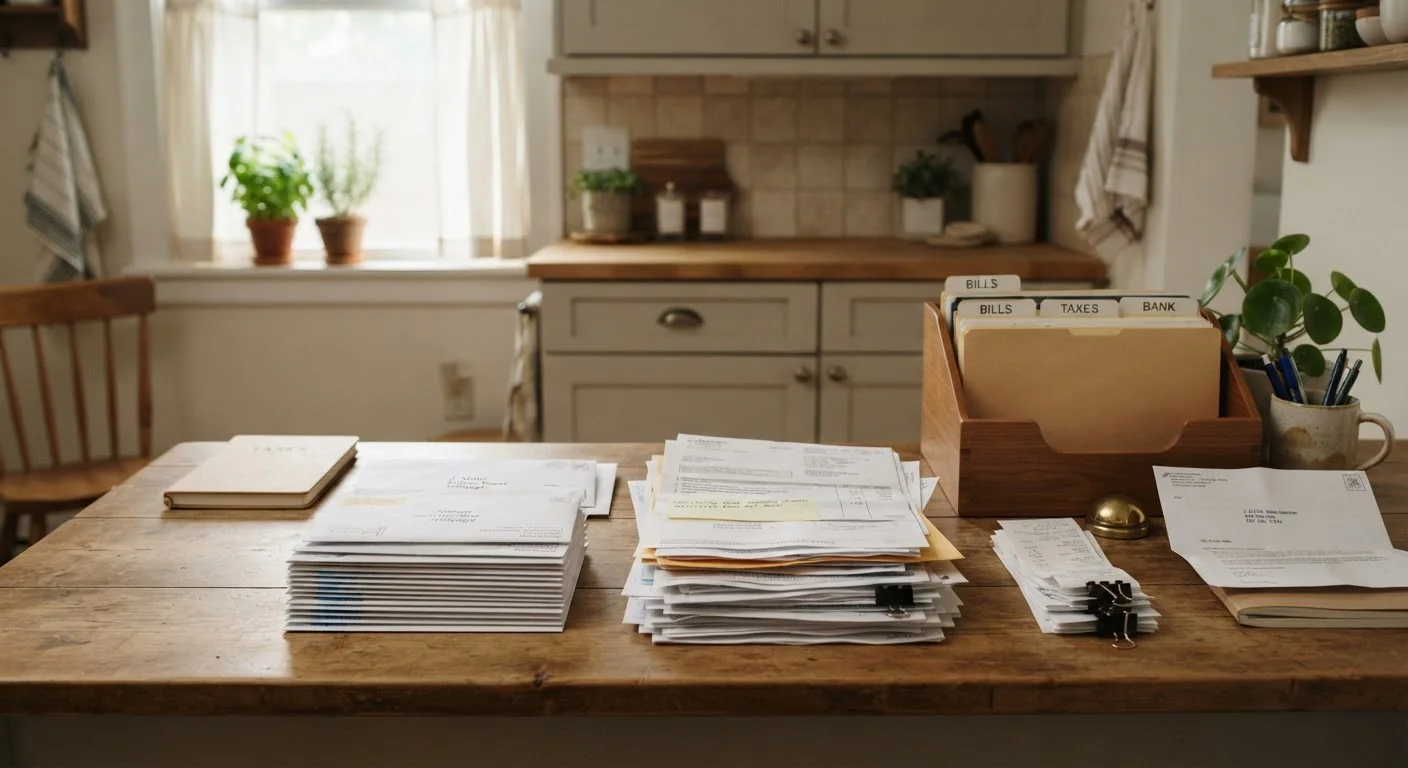
Photo: HorizonMetric.com | One Destination For Everyday Insights editorial
—— In This Article
Key Takeaways
- Paper clutter builds up because paper arrives daily but lacks a consistent sorting routine.
- Most paper that enters a home can be recycled or shredded immediately — very little needs permanent filing.
- A simple three-folder system (Act, File, Recycle) handles the majority of household paper.
- Going paperless for bills and statements significantly reduces incoming paper volume.
- Regular, brief sorting sessions prevent backlogs from becoming overwhelming piles.
Why Paper Keeps Finding Its Way Into Your Home
Paper arrives through the mail slot, in school backpacks, from shopping trips, at the doctor's office, and tucked into grocery bags. Unlike digital content, it has a physical presence that demands space. The sheer volume is the first problem: the average American household receives a substantial amount of junk mail alone each year, on top of bills, insurance documents, school notices, and receipts.
The second problem is decision fatigue. Every piece of paper requires a small choice — keep it, file it, act on it, or toss it. When those decisions pile up unanswered, the paper literally piles up with them. A single busy week can produce a stack that feels too large to tackle by the weekend.
~80%
Of filed papers never referenced again
Organization professionals frequently cite this estimate to illustrate that most paper people feel compelled to keep can safely be discarded.
41 lbs
Average junk mail per U.S. household per year
According to estimates from environmental advocacy groups tracking direct mail volume in American homes.
15 min
Weekly sorting time to prevent backlogs
Home organization experts generally recommend a short, consistent weekly session rather than infrequent large-scale purges.
Understanding this pattern makes it easier to address: paper clutter is less a storage problem and more a processing problem. The solution isn't more bins — it's a faster, more consistent decision routine.
The Three Categories Every Piece of Paper Falls Into
Sorting goes faster when you recognize that nearly all household paper fits into one of three buckets:
- Action required: Bills to pay, forms to sign, appointments to schedule, or items to respond to. These are time-sensitive and need a dedicated spot where they won't get buried.
- Reference (file it): Documents you don't need to act on now but may need later — insurance policies, tax records, medical summaries, and similar items. These belong in a labeled folder or binder, not loose on a counter.
- Recycle or shred: Everything else. This category is larger than most people expect. Junk mail, store receipts for ordinary purchases, expired coupons, and outdated manuals can almost always go immediately.
Sort Paper the Moment It Enters Your Home
The biggest driver of paper clutter is setting paper down with the intention of dealing with it 'later.' Place a small sorting tray near your front door or wherever mail lands and make it a rule to sort on contact — not after the pile has grown. Even a 60-second sort each day prevents backlogs from forming.
A three-slot desktop tray labeled with these categories — placed wherever paper lands in your home — creates the physical habit with minimal effort. The goal is to sort on contact, not later.
Building a Simple Paper Management Routine
The most effective paper systems share one trait: they require a decision the moment paper enters the home, not hours or days later. Here's a sustainable approach that works for most households:
- Open mail daily over the recycling bin or shredder. Junk mail never needs to land on a surface.
- Sort into your three categories immediately. If it takes under two minutes to act on (signing a permission slip, paying a bill online), do it then.
- File reference documents weekly into labeled folders. Categories like Taxes, Insurance, Medical, Home, and Vehicle cover most households' needs.
- Purge quarterly. Spend 15 minutes each season reviewing what's in your files and removing anything outdated. The Seasonal Decluttering Checklist is a helpful companion for making this a broader home habit.
Pair this routine with the one-in, one-out principle — for every new document you file, see whether an older one can be removed.
Going Paperless: Reducing Incoming Volume at the Source
The most powerful long-term strategy is reducing how much paper arrives in the first place. Switching to electronic statements for bank accounts, utilities, and credit cards eliminates some of the most consistent sources of household paper. Most providers offer this option in account settings at no cost.
Check Before Discarding Original Documents
Some documents — such as property deeds, legal agreements, original tax filings, and certain medical records — may need to be kept as physical originals rather than scans. Before discarding paper versions of important records, verify whether a digital copy will suffice for your needs. When in doubt, a financial planner or attorney can advise on document retention for your specific situation.
For paper that still comes in physically — school forms, medical documents, tax records — a simple document scanner or a smartphone scanning app lets you create digital copies for reference while recycling the originals. Just be sure your digital storage is backed up reliably before discarding original documents you might need later.
It's worth noting that paper clutter and digital clutter often mirror each other. If your email inbox is equally overwhelming, see the companion guide on reclaiming a cluttered inbox for parallel strategies.
Frequently Asked Questions

Home Editorial Team
Home Editorial Team is the collective byline for our editorial team and contributor network. Articles published under this byline or an editorial pen name are researched, written, and reviewed according to our editorial standards for clarity, consistency, and independence before publication.
View author profile