
Exercise Progressions: Moving from Easier to Harder Movements Over Time
Learn what exercise progression means, why it matters for continued improvement, and how to apply it to common home workout movements.
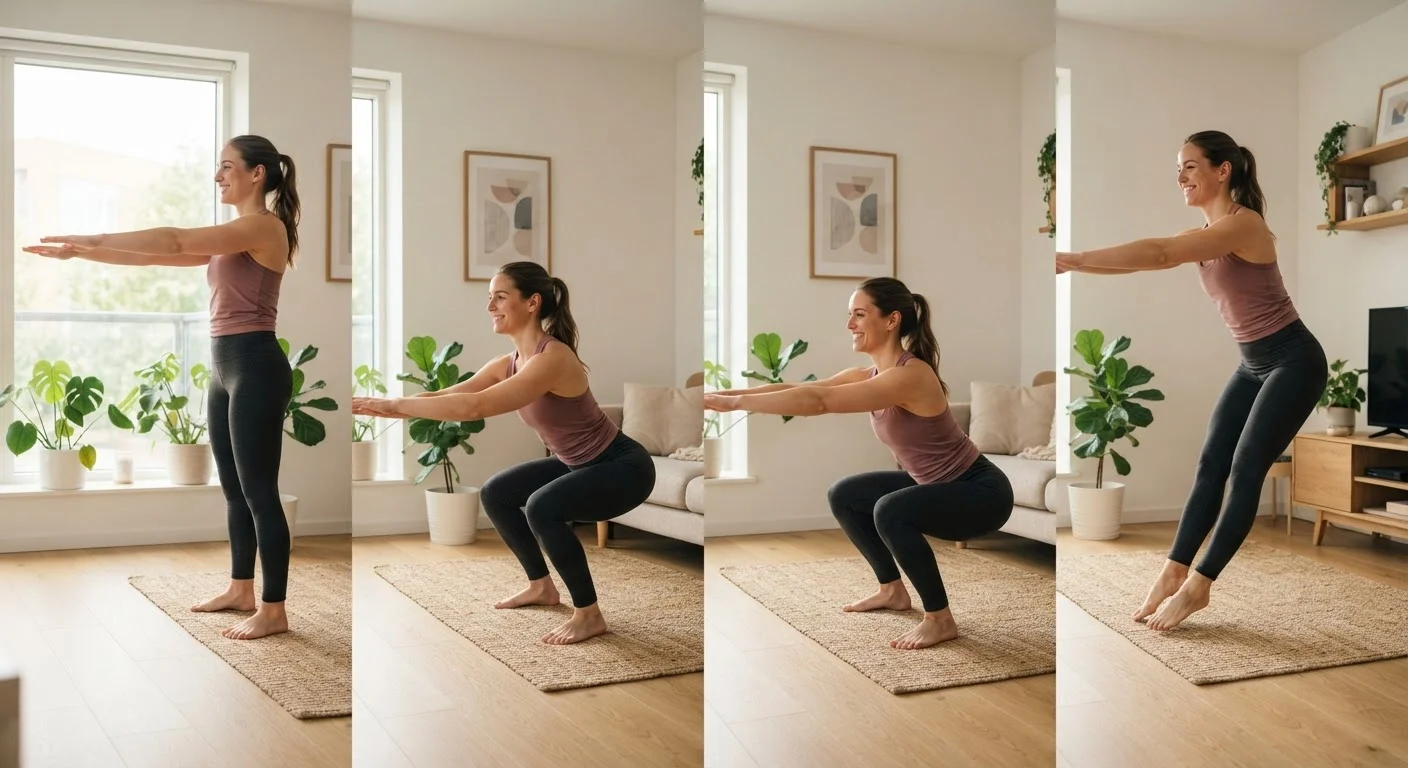
Photo: HorizonMetric.com | One Destination For Everyday Insights editorial
—— In This Article
Key Takeaways
- Progression means gradually adding challenge — not jumping to the hardest version of an exercise immediately.
- The body adapts to repeated stimulus, so staying at the same difficulty level eventually stops producing improvement.
- Progression can come from changing reps, sets, speed, range of motion, or movement complexity — not just weight.
- Rest and recovery are essential parts of any progression plan.
- You do not need a gym or equipment to apply effective progression principles at home.
Why the Same Workout Stops Working
When you first start exercising, almost any movement produces noticeable results. That is because the body is encountering a new stimulus and working hard to adapt. Over time, however, those same movements become familiar — the muscles, joints, and cardiovascular system grow efficient at handling them. The challenge decreases, and with it, the rate of improvement.
This is not a failure on your part. It is biology. The body is remarkably good at conserving energy by adapting to repeated demands. To keep improving — whether your goal is building strength, endurance, or general mobility — you need to gradually raise the bar. That is precisely what exercise progression is designed to do.
4–8 weeks
Typical adaptation window before a plateau
Exercise science literature commonly notes that the body adapts to a repeated stimulus within this timeframe, after which progression becomes necessary to continue improving.
~10%
Suggested weekly increase in training volume
Many fitness professionals reference a 10% guideline for incremental volume increases as a general framework for reducing overuse injury risk, though individual needs vary.
The Building Blocks of Progression
Progression does not only mean picking up heavier weights. For home exercisers without equipment, there are several effective levers to pull:
- Volume: Adding more repetitions or sets to an existing movement.
- Tempo: Slowing down the lowering phase of an exercise to increase time under tension.
- Range of motion: Deepening a squat or hinge over time as mobility improves.
- Leverage: Adjusting your body position to increase or decrease mechanical advantage — for example, elevating your feet during a push-up.
- Movement complexity: Advancing from a two-legged to a single-leg variation, such as moving from a standard squat toward a split squat or pistol squat.
These variables can be combined or adjusted individually, giving you a wide range of options even within a single exercise pattern.
Track to Progress Effectively
Keeping a simple training log — even a notes app on your phone — helps you spot when a workout is consistently feeling easy and when it is time to advance. Record the movement, sets, reps, and any notes on effort level. Patterns become obvious within a few weeks.
Common Progression Pathways for Home Workouts
Here are practical examples of how progression typically unfolds for foundational bodyweight movements:
- Push-up progression
- Incline push-up (hands elevated on a counter) → Standard push-up → Slow-tempo push-up → Archer push-up (shifting weight toward one arm)
- Squat progression
- Supported squat (holding a doorframe) → Bodyweight squat → Pause squat (3-second hold at bottom) → Bulgarian split squat
- Hinge progression
- Hip hinge with hand on wall → Romanian deadlift with a filled backpack → Single-leg Romanian deadlift
None of these require a gym. If you are setting up a home training space, our article on finding workout space at home covers how to make the most of different rooms.
Progression Without Burnout: The Role of Recovery
A common mistake is treating progression as always adding more. In practice, the body adapts during rest, not during the workout itself. Stacking harder sessions without adequate recovery time can stall progress, increase injury risk, and leave you feeling worn down rather than stronger.
Structured rest days are not optional extras — they are when muscle repair and strength gains actually occur. Our article on rest days as part of training explains the physiology behind recovery and how to plan it intentionally.
For a comprehensive look at how progression fits into a full home fitness plan — from space setup to long-term habit building — see Home Fitness From the Ground Up.
“The goal of training is to provide a stimulus, then allow the body to adapt. Progression is simply the process of ensuring that stimulus stays meaningful over time.”
— National Strength and Conditioning Association, Professional organization for strength and conditioning educators and practitioners
This article is for general informational purposes only and is not a substitute for advice from a qualified fitness or healthcare professional. Consult a professional before beginning a new exercise program, especially if you have existing health conditions or injuries.
Frequently Asked Questions

Beauty Editorial Team
Beauty Editorial Team is the collective byline for our editorial team and contributor network. Articles published under this byline or an editorial pen name are researched, written, and reviewed according to our editorial standards for clarity, consistency, and independence before publication.
View author profile