
A Room-by-Room Look at Where Home Workouts Actually Happen
Living room, bedroom, backyard, hallway — each space has real exercise potential. Here's what works where and what to watch out for.
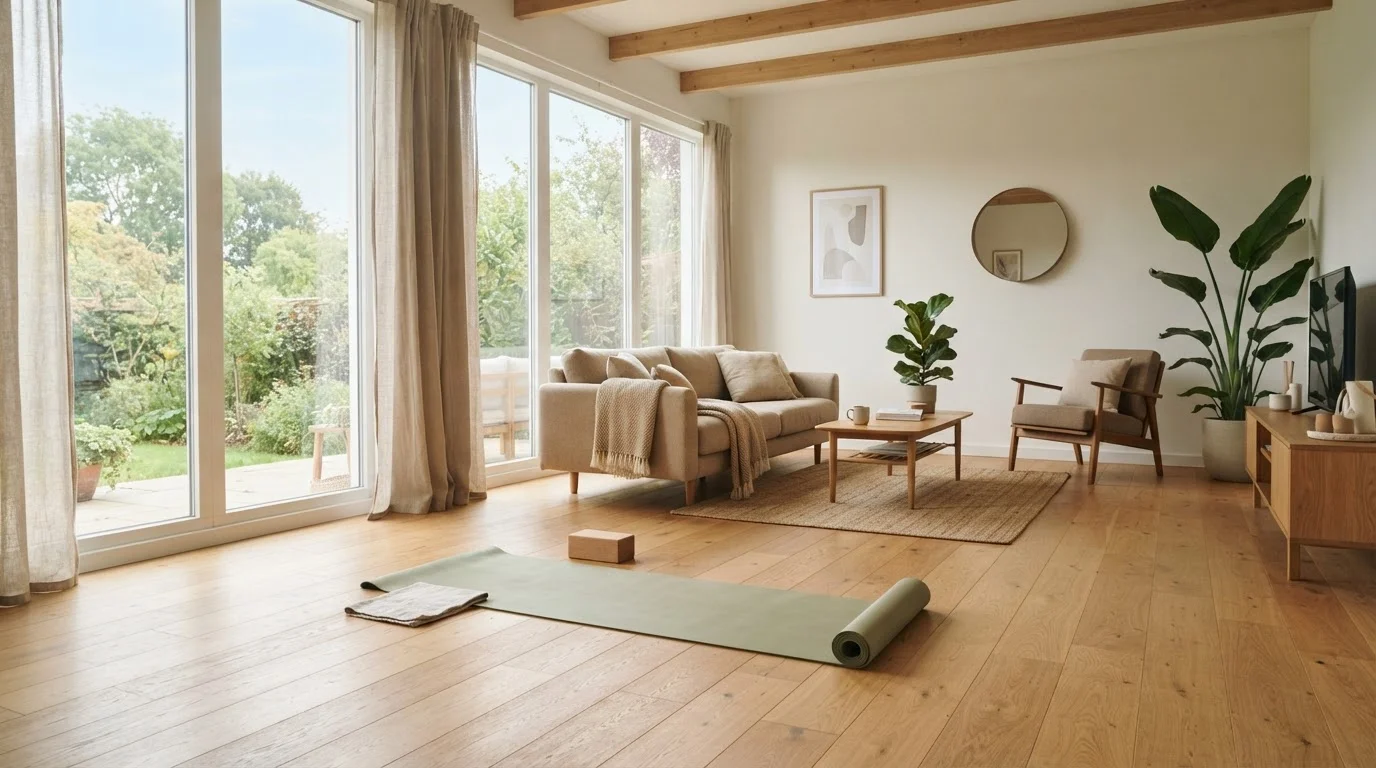
Photo: HorizonMetric.com | One Destination For Everyday Insights editorial
—— In This Article
Why Where You Work Out Actually Matters
Most people assume a dedicated gym room is the only way to train at home seriously. In practice, the room you choose affects what movements are safe, how much noise you generate, what equipment makes sense, and how consistently you'll actually show up. A mismatch between space and workout style is one of the most common reasons home routines quietly fall apart.
This guide breaks down the real exercise potential of the spaces most Americans already have — no renovations required. If you're new to training at home altogether, this beginner-friendly introduction is a helpful first read. And before choosing any space, review this safety checklist to make sure your environment is ready.
| Minimum clear floor space for most bodyweight exercises | 6 ft × 4 ft (roughly one yoga mat plus arm-width clearance) |
| Ceiling height needed for jumping exercises | At least 8 feet recommended |
| Most versatile home workout space | Living room (largest open floor area in most homes) |
| Best surface for floor exercises | Low-pile carpet or firm mat over hardwood; avoid slippery tile without footwear |
| Spaces suited to apartment dwellers | Bedroom, living room, hallway — prioritize low-impact movements |
| Outdoor surface concern | Wet decking and uneven grass increase slip and ankle-roll risk |
Room-by-Room Breakdown
Living Room
Best for: Cardio circuits, yoga, bodyweight strength, stretching.
Watch out for: Furniture edges, coffee tables, and low ceilings near light fixtures. Push furniture to one wall before starting.
The living room is typically the largest open floor area in an American home, making it the default home gym for a reason. It usually has enough ceiling height for jumping and enough floor space for a full yoga mat plus movement room. Cardio without equipment works especially well here — think marching in place, lateral shuffles, or dance-based movement.
Bedroom
Best for: Low-impact strength, stretching, mobility work, resistance band exercises.
Watch out for: Tight spaces between bed and walls; avoid explosive jumping where clearance is limited.
Bedrooms suit quieter, floor-based sessions well. Morning stretches, core training, and resistance band work all fit naturally in this space. The bed itself can support modified push-ups or seated movements for those working around joint sensitivity.
Kitchen or Hallway
Best for: Short movement breaks, calf raises, wall push-ups, balance work.
Watch out for: Slippery tile floors and limited turning room; wear non-slip footwear.
Narrow spaces aren't wasted space. A hallway is ideal for wall-supported exercises, and kitchen counter height works well for standing balance drills. Short movement sessions — even five minutes between tasks — genuinely accumulate over a day.
Backyard, Patio, or Balcony
Best for: Walking intervals, bodyweight circuits, jump rope, yoga in natural light.
Watch out for: Uneven surfaces, wet or slippery decking, and weather extremes. Check the ground for hazards before barefoot movement.
Outdoor spaces offer ventilation and natural light that indoor rooms can't match, both of which can improve mood and perceived effort. Even a small balcony supports stationary movements like squats, lunges, or low-intensity zone 2 cardio like slow marching.
Garage or Basement
Best for: Higher-impact movement, heavier equipment, louder workouts.
Watch out for: Poor ventilation, concrete floors (use a thick mat), and temperature extremes.
These spaces tolerate impact and noise better than living areas, making them suited for jump training or heavier resistance work. For tips on setting up any dedicated home workout space more formally, see this comprehensive setup guide.
Bodyweight exercise
Movement that uses your own body mass as resistance — such as push-ups, squats, or lunges — requiring no equipment. It's adaptable to most home spaces.
Low-impact movement
Exercise that keeps at least one foot on the ground at all times, reducing force on joints and floor noise. Examples include walking in place, step-touches, and modified squats.
Mobility work
Exercises designed to improve the usable range of motion in a joint. Often confused with stretching, mobility work also involves active muscle control through that range.
Zone 2 cardio
Low-to-moderate intensity aerobic exercise sustained for an extended period, typically at a pace where you can still hold a conversation. Associated with cardiovascular and metabolic health benefits.
Resistance band
An elastic loop or strip that creates tension when stretched, used to add resistance to exercises. Bands are compact, quiet, and suitable for small spaces like bedrooms.
Shared Spaces and Smaller Homes
If you share your space with others or live in an apartment, the room-by-room logic still applies — it just requires coordination. Morning or late-evening sessions in common areas, or floor-based workouts that avoid impact, reduce friction with housemates and neighbors. Exercising in a studio or small apartment requires a slightly different approach but is entirely achievable.
Organizing your space strategically also helps. Clearing a consistent area — even a corner — signals to your brain that movement happens there. Home organization strategies can make carving out that space much more practical than it sounds.
Finally, don't let imperfect spaces become reasons to skip movement. A hallway is enough for a meaningful stretch. A patch of carpet is enough for core work. The goal is consistency, not ideal conditions. For a broader view of what belongs in a balanced home routine, this comparison of stretching and strength training is worth reviewing.
This article is for general informational purposes only and is not medical or exercise advice. Consult a qualified healthcare professional before beginning any new physical activity program, especially if you have existing health conditions or injuries.
Noise and Neighbors: A Practical Note
Impact exercises like jumping jacks or burpees transmit significant sound and vibration through floors — a real concern in multi-story buildings or apartments. If noise is an issue, swap jumping movements for their low-impact equivalents: step-jacks instead of jumping jacks, or slow squat pulses instead of jump squats. This keeps your workout effective without creating friction with neighbors or housemates.

Beauty Editorial Team
Beauty Editorial Team is the collective byline for our editorial team and contributor network. Articles published under this byline or an editorial pen name are researched, written, and reviewed according to our editorial standards for clarity, consistency, and independence before publication.
View author profile