
Chemical Exfoliants vs. Physical Scrubs
AHAs, BHAs, and face scrubs all promise smoother skin — but they work very differently. Here's how to choose the right approach for your skin.
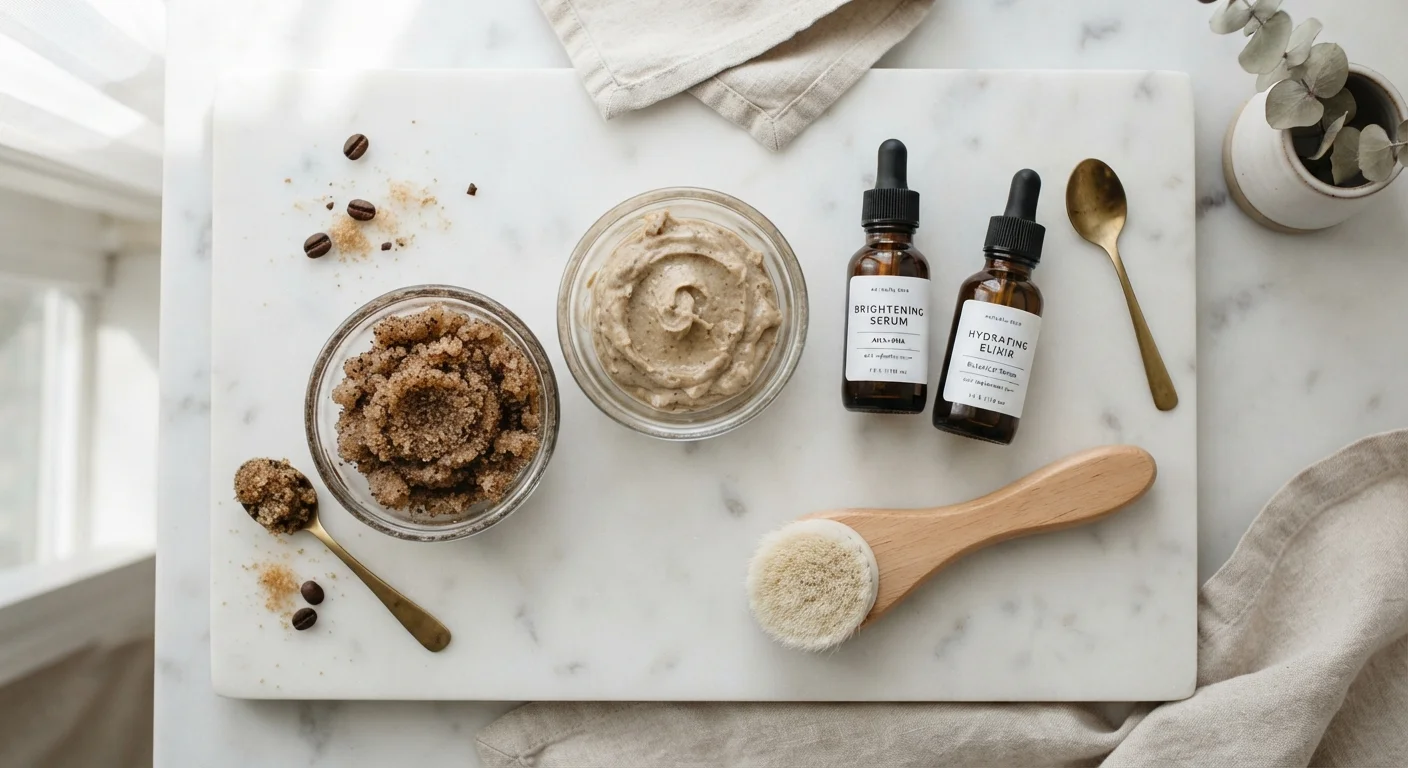
Photo: HorizonMetric.com | One Destination For Everyday Insights editorial
—— In This Article
Key Takeaways
- Chemical exfoliants dissolve dead skin cells using acids; physical scrubs remove them through manual abrasion.
- AHAs work on the skin's surface; BHAs penetrate into pores, making them useful for acne-prone skin.
- Physical scrubs can cause micro-tears if used too aggressively, especially on sensitive or inflamed skin.
- Both methods can be part of a healthy routine — skin type and frequency are the deciding factors.
- Over-exfoliation from either method can damage your skin barrier; less is often more.
How Each Method Actually Works
Exfoliation is simply the process of removing dead skin cells from the outer layer of skin. Those cells build up naturally, and when they accumulate too quickly, skin can look dull, feel rough, or develop clogged pores. The two main approaches — chemical and physical — both address this, but through completely different mechanisms.
Chemical exfoliants use acids or other active compounds to loosen the bonds that hold dead skin cells together. The two most common categories are AHAs — such as glycolic acid and lactic acid — and BHAs, the most widely used being salicylic acid. AHAs are water-soluble and work primarily on the skin's surface, making them useful for improving texture and fading discoloration. BHAs are oil-soluble, which means they can penetrate into pores and dissolve the sebum and debris inside — a key advantage for anyone dealing with breakouts or blackheads.
Physical scrubs work through friction. The product contains gritty particles — often sugar, salt, ground oats, or synthetic microbeads — that manually abrade the surface when massaged in. The benefit is immediate and tactile: skin often feels noticeably smoother right after use. The limitation is that the results stay entirely on the surface, and the scrubbing motion can cause irritation if the particles are too sharp or if pressure is too heavy. See our guide to skin types to understand which category your skin falls into before choosing.
| Criterion | Chemical Exfoliants | Physical Scrubs |
|---|---|---|
| Mechanism | Acid dissolves cell bonds | Particles abrade the surface |
| Results timeline | Gradual over days/weeks | Immediate smoothing |
| Pore-clearing ability | Yes (especially BHAs) | Surface only |
| Risk of micro-tears | Low | Moderate to high if coarse |
| Suitable for sensitive skin | Often yes, at low concentrations | Generally not recommended |
| Sun sensitivity after use | Yes — SPF required next day | Minimal added risk |
| Recommended frequency (face) | 1–3 times per week | 1–2 times per week |
Frequency, Safety, and Common Mistakes
The most frequent mistake with exfoliation — regardless of method — is doing it too often. More is not better. Over-exfoliating strips away the skin's natural protective barrier, leading to redness, tightness, flaking, and increased sensitivity. If your skin feels raw or looks irritated, that's a signal to scale back, not push through.
For chemical exfoliants, starting once or twice a week and observing how your skin responds is a reasonable approach for most people. Those with sensitive skin may do better with a lower concentration and less frequent use. Physical scrubs used more than two or three times a week on the face can cause cumulative micro-abrasion damage, especially if the particle texture is coarse or irregular.
A few practical safety notes worth remembering:
- After using AHAs, your skin becomes more sensitive to UV exposure. Applying a broad-spectrum sunscreen the following morning is important, not optional.
- Do not combine a chemical exfoliant and a physical scrub in the same session — layering two forms of exfoliation at once almost always causes over-exfoliation.
- If you use retinoids or other active ingredients, consult a dermatologist before adding exfoliating acids to your routine, as some combinations can cause significant irritation.
Understanding Ingredient Labels
If you're unsure whether a product contains AHAs, BHAs, or abrasive particles, the ingredient list is your best resource. Glycolic acid, lactic acid, and mandelic acid are all AHAs; salicylic acid is the most common BHA. Our guide to reading skincare labels can help you decode what you're actually buying before you commit.
For a broader look at where exfoliation fits within your routine, our skincare step breakdown explains the full sequence clearly.
This article is for general informational purposes only and is not a substitute for advice from a licensed dermatologist or skincare professional. If you experience persistent irritation or skin concerns, please consult a qualified healthcare provider.

Beauty Editorial Team
Beauty Editorial Team is the collective byline for our editorial team and contributor network. Articles published under this byline or an editorial pen name are researched, written, and reviewed according to our editorial standards for clarity, consistency, and independence before publication.
View author profile